

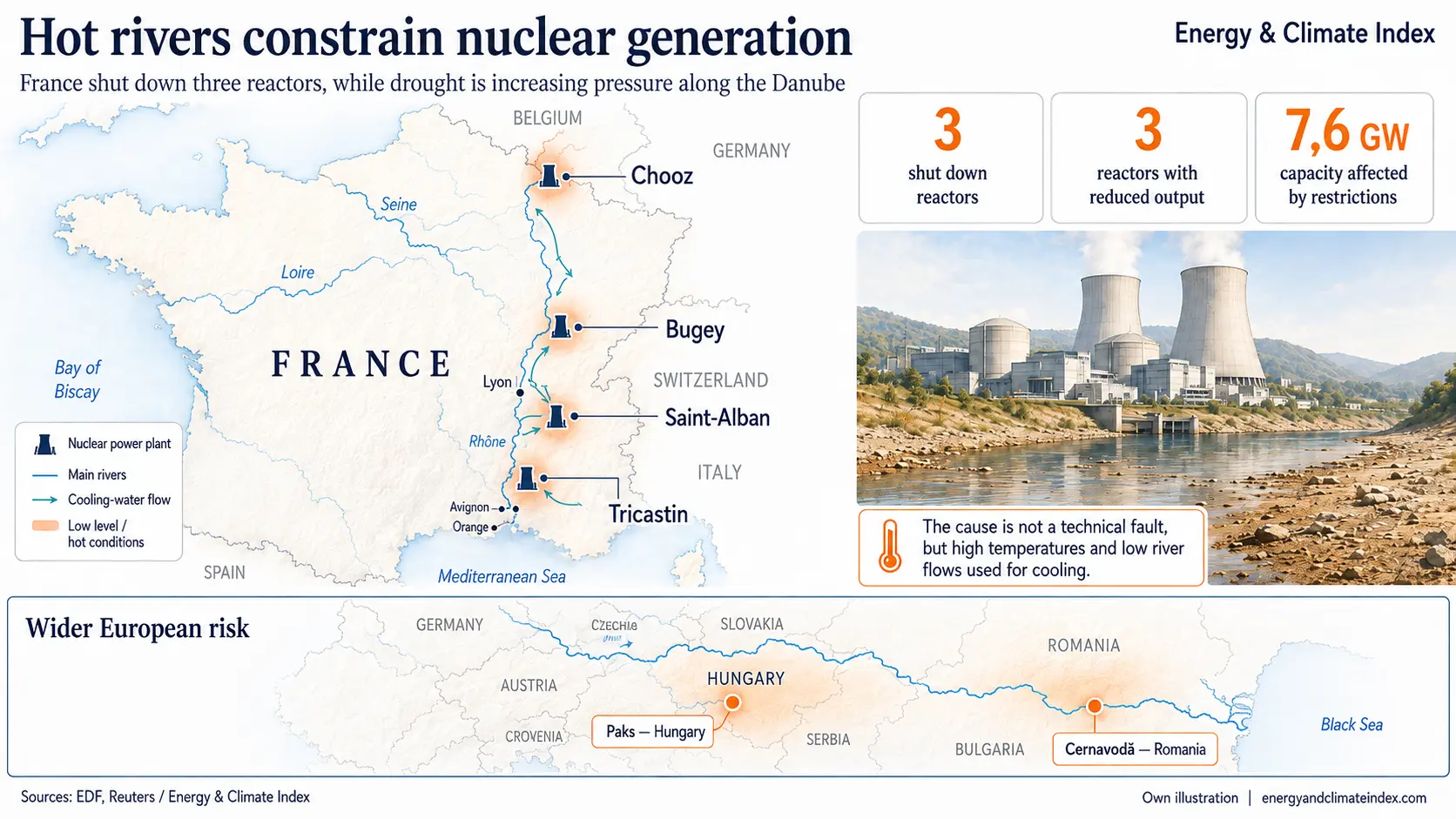
Extreme temperatures and reduced river flows are once again limiting electricity generation in France. EDF has temporarily shut down three nuclear reactors, while output at three others has been reduced.
The total capacity affected by the shutdowns and restrictions reached approximately 7.6 GW, equivalent to around 12% of France’s nuclear fleet. This does not mean that the entire capacity is offline, as some of the reactors continue operating at reduced power.
The restrictions affected the Chooz, Bugey, Tricastin and Saint-Alban nuclear power plants.


Тhe problem is cooling water
The reduction in generation was not caused by technical failures but by conditions in the rivers used to cool the plants.
When temperatures are high and river flows are low, the water has less capacity to absorb and remove heat from power plants. At the same time, returning warmer water to rivers could exceed regulatory temperature limits and damage aquatic ecosystems.
EDF must therefore reduce output or temporarily shut down reactors to comply with environmental restrictions. Similar measures were implemented during previous heatwaves, when production was constrained at Golfech, Bugey, Saint-Alban and other plants located along French rivers.
Dual pressure on the electricity system
Heatwaves create an unfavourable combination for the power system: cooling demand increases while the availability of nuclear and hydropower generation declines.
Lower nuclear output can also reduce France’s electricity export capacity, particularly during hours of weaker wind and photovoltaic generation. Under such conditions, a larger share of demand must be covered by gas-fired power plants and electricity imports, increasing pressure on short-term wholesale prices.
The consequences are also affecting EDF. The company expects heatwaves, reduced output and weaker market prices to weigh on its financial results in 2026. EDF has also announced €8.7 billion in investments to adapt its nuclear and hydropower infrastructure to rising temperatures.
Climate resilience becomes essential for energy security
The French case demonstrates that the stability of nuclear generation does not depend solely on the technical condition and availability of reactors. Water temperature, river flows and water availability are becoming equally important operational factors.
Record-low water levels in the Danube have caused serious disruptions to electricity generation in Romania, Hungary and Serbia. Nuclear reactors have been shut down in Romania and Hungary, while Serbia’s largest hydropower plant has reduced its output to around one-third of its usual level.
As heatwaves and droughts become more frequent, European countries will need to adapt cooling systems, water-resource management and generation planning. Climate resilience should be an integral part of energy strategy planning.
ECI