

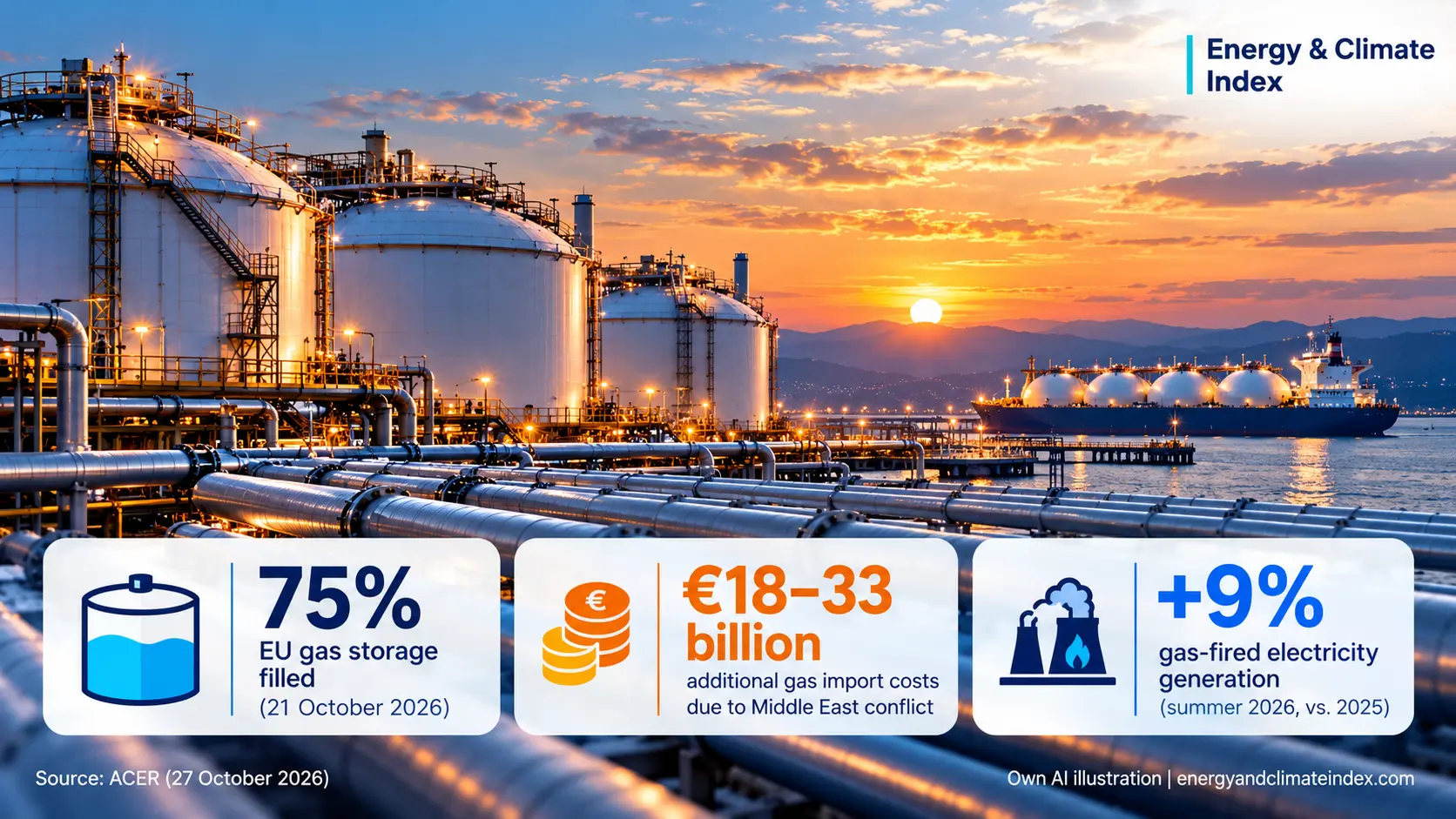
The European Union is entering the 2026/2027 winter season with natural gas storage facilities 75% full, significantly below historical averages, while disruptions to global liquefied natural gas (LNG) supplies are adding further pressure on prices. According to the latest monitoring report from the European Union Agency for the Cooperation of Energy Regulators (ACER), the conflict in the Middle East has increased Europe’s gas import bill by an estimated €18–33 billion.
Published on 27 October, the report examines developments in European wholesale gas markets during summer 2026 and the risks to security of supply ahead of winter. Key findings include slower storage injections, increasing dependence on US LNG and higher gas consumption in electricity generation.
Gas storage remains below historical averages as filling costs rise
As of 21 October 2026, EU underground natural gas storage facilities were 75% full. At the end of the previous winter season, storage levels stood at just 28%, compared with 34% a year earlier and a nine-year average of approximately 40%.


Slower injections during the summer reflected higher LNG import prices and limited commercial incentives for gas storage.
ACER estimates that the upper range of European gas storage filling costs reached €27 billion in 2026. Although considerably lower than the approximately €100 billion spent during the 2022 energy crisis, the average price of stored gas was the second highest in the past decade.
Additional pressure came from global LNG markets. According to ACER, the Middle East conflict resulted in an estimated €18–33 billion in additional costs for importing the same volume of natural gas into Europe. The range reflects different reference prices used for the Dutch Title Transfer Facility (TTF) gas market.
By mid-October, European wholesale gas prices had approached €90/MWh, further weakening the commercial economics of seasonal storage.
US LNG accounts for around 30% of Europe’s gas supply
Europe’s natural gas supply structure continues to change. US LNG now accounts for approximately 30% of total EU gas supply, while Russia’s share, including pipeline gas and LNG, stands at around 11%.
During summer 2026, total EU LNG imports declined by 14%. Russian LNG imports fell by 2%, while Russian pipeline gas imports decreased by 3% compared with the same period a year earlier.
At the same time, significant volumes of Qatari LNG did not reach the EU because of supply disruptions linked to the Middle East conflict and shipping constraints through the Strait of Hormuz.
These developments have increased Europe’s dependence on US deliveries and its exposure to competition with Asian buyers in global LNG markets.
ACER warns that additional gas volumes required during the winter months will likely need to come primarily from the United States, particularly amid reduced Qatari deliveries and the planned phase-out of Russian LNG imports from January 2027.
Gas-fired electricity generation increased by nearly 9%
One of the report’s most important findings concerns the increased use of natural gas in the electricity sector.
During summer 2026, high temperatures, droughts and lower river levels constrained hydropower generation and output from some nuclear power plants. Heatwaves also increased electricity demand for cooling.
Although solar generation helped meet additional demand, reduced hydroelectric and nuclear output led to greater reliance on gas- and coal-fired power plants.
According to ACER, gas-fired electricity generation increased by nearly 9% during the summer gas season compared with the same period in 2025. In August alone, the increase reached 20%.
This development highlights the continued importance of natural gas in European wholesale electricity price formation, particularly during hours when renewable generation and other available capacity are insufficient to meet demand.
Nevertheless, European natural gas consumption remains approximately 20% below pre-2022 energy crisis levels, partly reducing the risk of physical shortages.
ACER concludes that conditions during winter 2026/2027 will depend on weather patterns, global LNG availability and competition with Asian markets. Lower storage inventories and higher import costs increase the exposure of European consumers and industry to further price shocks.
ECI