

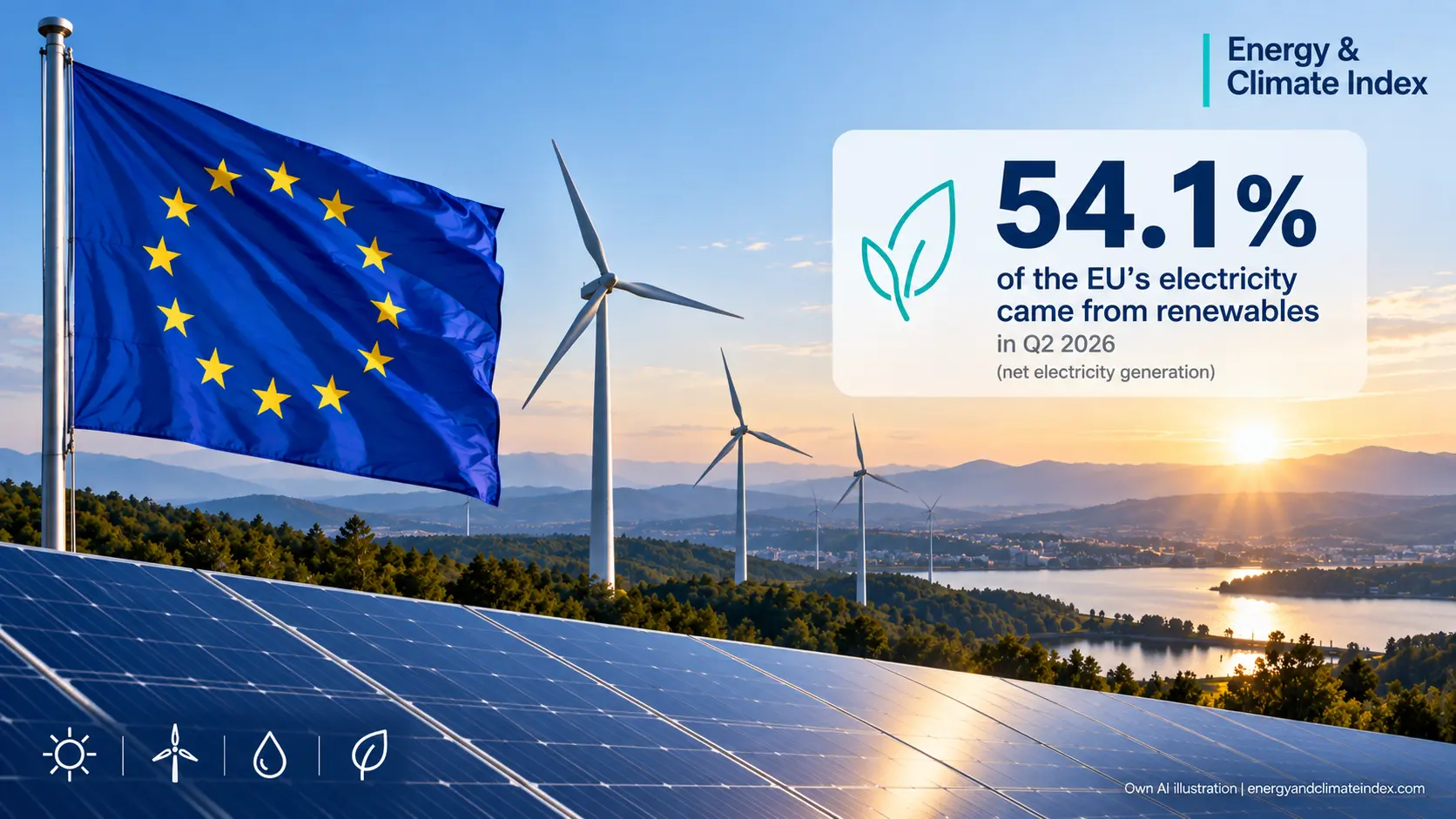
Renewable energy sources accounted for 54.1% of net electricity generation in the European Union in the second quarter of 2026, according to the latest data published by Eurostat.
The share remained broadly unchanged from the same period last year, when renewables accounted for 54.3%. However, the composition of renewable electricity generation continues to change, driven primarily by the rapid expansion of solar power.
Solar becomes the largest renewable electricity source
Solar power accounted for 41.6% of all electricity generated from renewable sources in the EU during the second quarter. A year earlier, its share stood at 37%.


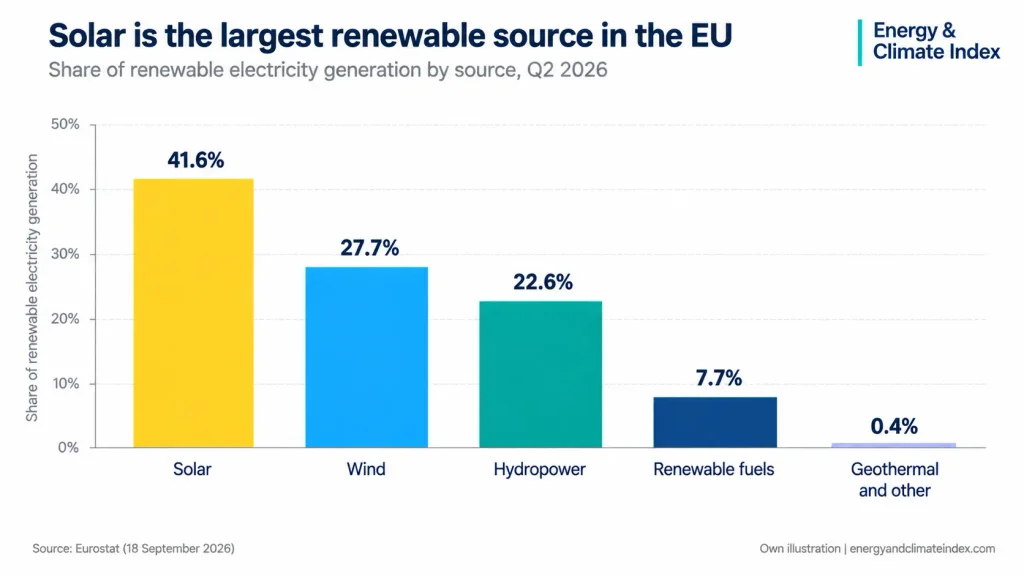
Wind was the second-largest renewable source, accounting for 27.7%, while hydropower contributed 22.6%.
Renewable fuels provided another 7.7%, while geothermal and other renewable sources together accounted for 0.4%.
The figures illustrate how rapidly solar PV is reshaping Europe’s electricity generation mix. Its contribution is particularly strong during the second quarter, when longer daylight hours and higher seasonal output boost solar generation.
Large differences between EU countries
Behind the EU average of 54.1% are significant differences between individual Member States.
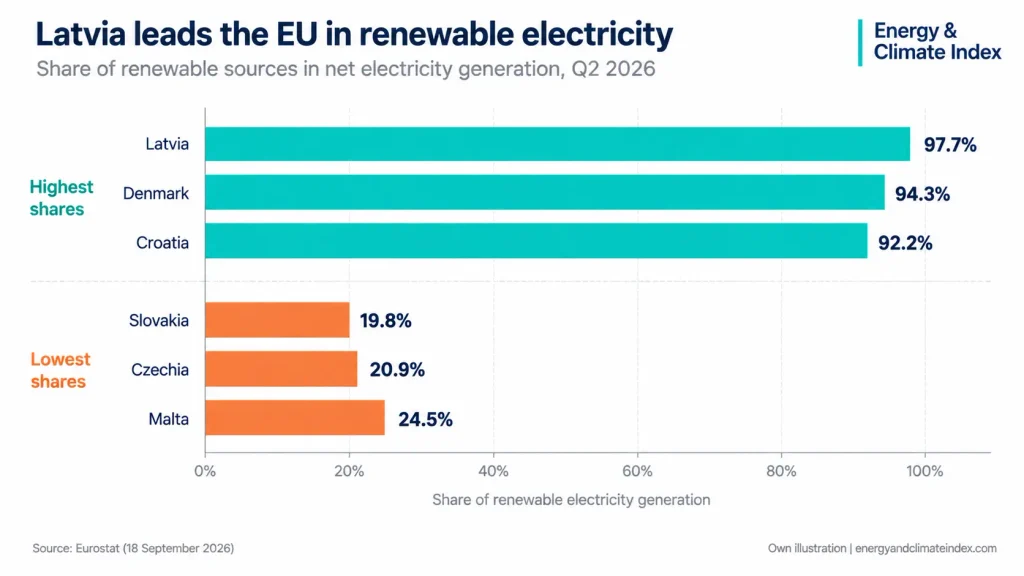
Latvia recorded the highest renewable share in net electricity generation at 97.7%, primarily supported by hydropower and solar.
It was followed by Denmark at 94.3%, where wind power dominates renewable generation, and Croatia at 92.2%, largely driven by hydropower.
At the other end of the ranking were Slovakia at 19.8%, Czechia at 20.9% and Malta at 24.5%.
The differences reflect the varying structure of national electricity systems, the availability of renewable resources and the different pace at which countries are adding new renewable capacity.
The 54.1% figure does not represent electricity consumption
Eurostat stresses that these figures should not be confused with the indicator measuring the share of renewables in gross electricity consumption used to monitor targets under the Renewable Energy Directive.
The 54.1% figure refers specifically to the share of renewable sources in the EU’s net electricity generation.
The methodology used for the Renewable Energy Directive indicator is different and includes, among other factors, multi-year normalisation of wind and hydropower generation to reduce the impact of weather variations.
Nevertheless, the latest figures confirm one of the most significant transformations taking place in Europe’s power system: more than half of the electricity generated in the EU during the second quarter came from renewable sources, with solar playing an increasingly important role in the generation mix.
ECI