

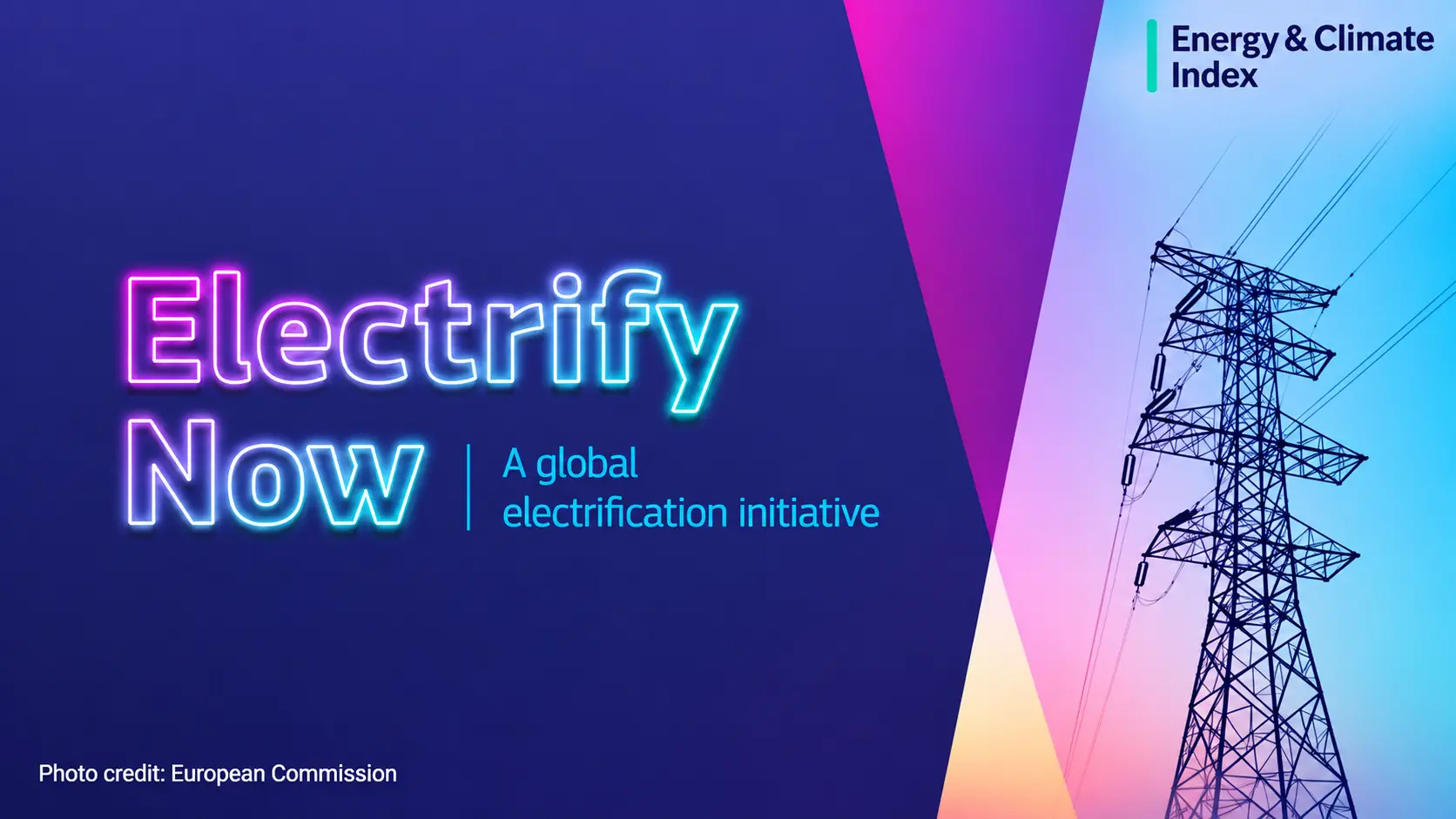
The new initiative, presented at COP31 in Antalya, aims to accelerate the electrification of urban transport, heating, buildings and public services. The European Commission and the Global Covenant of Mayors for Climate & Energy are placing local infrastructure at the centre of the energy transition.
The European Commission and the Global Covenant of Mayors for Climate & Energy presented the Electrify Cities initiative on 12 November 2026, during the COP31 climate conference in Antalya, Türkiye.
The initiative is part of the broader international Electrify Now platform, which aims to accelerate the use of electricity in sectors traditionally dependent on fossil fuels.


The event brought together representatives of cities, industry and local communities, with opening remarks delivered by European Commissioner for Energy and Housing Dan Jørgensen and Giorgia Rambelli, Managing Director of the Global Covenant of Mayors.
The main focus is on developing practical solutions for electrifying transport, heating and buildings, while improving energy security, air quality and reducing greenhouse gas emissions.
Electrification of transport, buildings and public services at the centre of the initiative
Electrify Cities envisages greater cooperation between municipal authorities, energy companies, industry and financial institutions to accelerate investment in electrification.
Priority areas include electric public transport, electric vehicle charging infrastructure, the electrification of heating and cooling, and improvements in energy efficiency in public and residential buildings.
According to the European Commission, electrification must be accompanied by additional clean electricity generation, the development of electricity grids and sufficient power system flexibility.
This is particularly important for cities, where the simultaneous increase in electric vehicles, heat pumps and other electrical appliances could significantly change electricity consumption patterns.
Global target: Electricity to account for 35% of final energy consumption by 2035
The presentation of Electrify Cities takes place within the framework of broader international efforts to accelerate electrification.
The COP31 Presidency is promoting the “35 by 2035” initiative, which aims to increase electricity’s share of global final energy consumption to 35% by 2035.
The target is based on analyses by the International Energy Agency (IEA) and the International Renewable Energy Agency (IRENA).
This ambition is linked to reducing the direct use of fossil fuels in transport, heating and industry by replacing them with more efficient electric technologies.
However, electrification does not simply mean replacing existing technologies with electrical equipment. It also requires the corresponding development of electricity generation capacity, power grids and demand management systems.
Cities to play a greater role in electricity infrastructure planning
One of the key aspects of the initiative is linking local climate policies with electricity infrastructure planning.
Increased electrification of transport and heating will create additional electricity demand, but also new opportunities for more efficient demand management.
For example, smart charging of electric vehicles, managing heat pump operation and local energy storage systems can help reduce peak loads and improve the utilisation of electricity infrastructure.
At the same time, local generation from solar power plants can help meet part of daytime electricity demand, although its contribution depends on weather conditions and the alignment between generation and consumption.
Successful electrification therefore requires coordination between local authorities, distribution system operators, electricity producers and consumers.
Electrify Cities aims to provide a platform for such cooperation through the exchange of practical solutions, technical experience and financing models.
ECI