

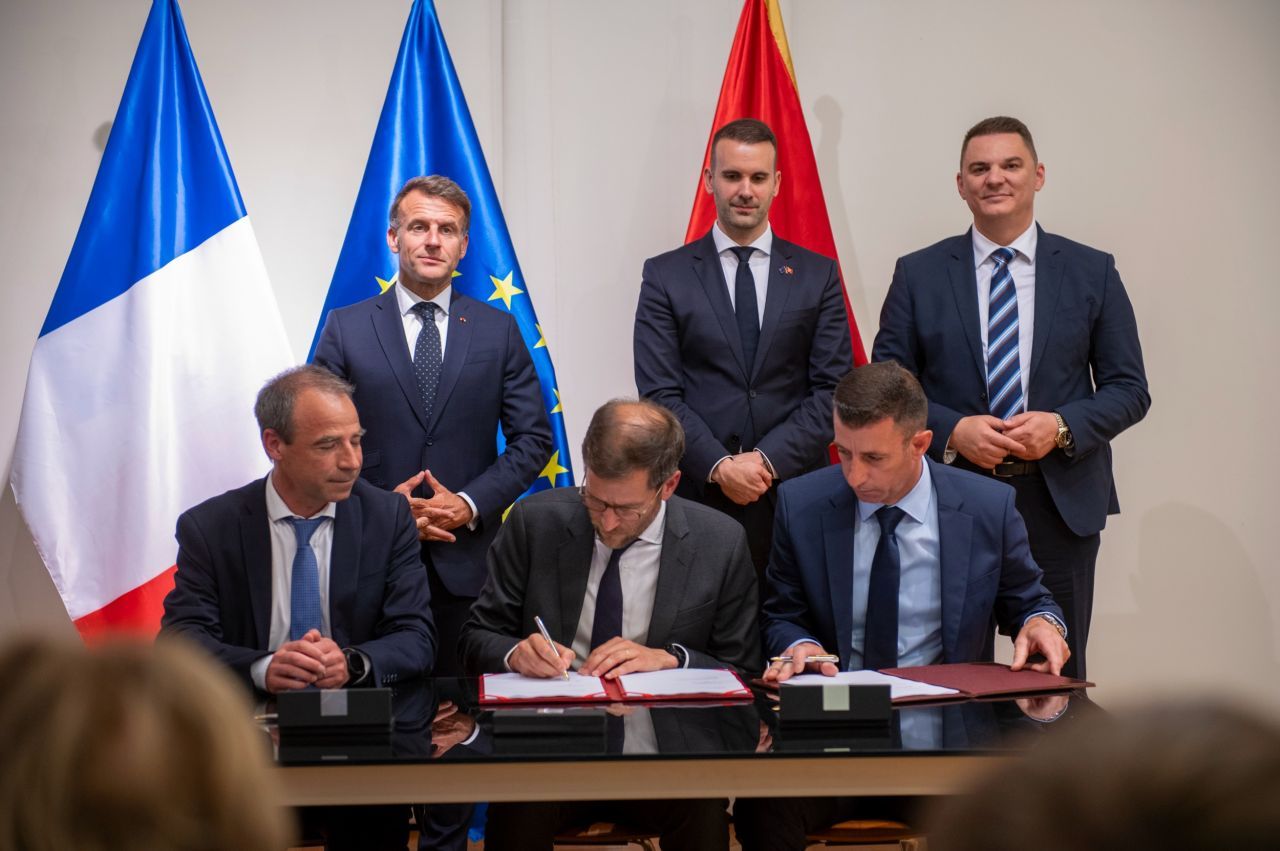
In the presence of French President Emmanuel Macron and Montenegrin Prime Minister Milojko Spajić, an important agreement was signed aimed at supporting the development of Montenegro’s energy sector.
Montenegro is taking a new step toward the modernization of its energy system through an agreement between the Montenegrin Electricity Distribution System, CEDIS, the French Development Agency, Agence Française de Développement, AFD, and EDF International Networks.
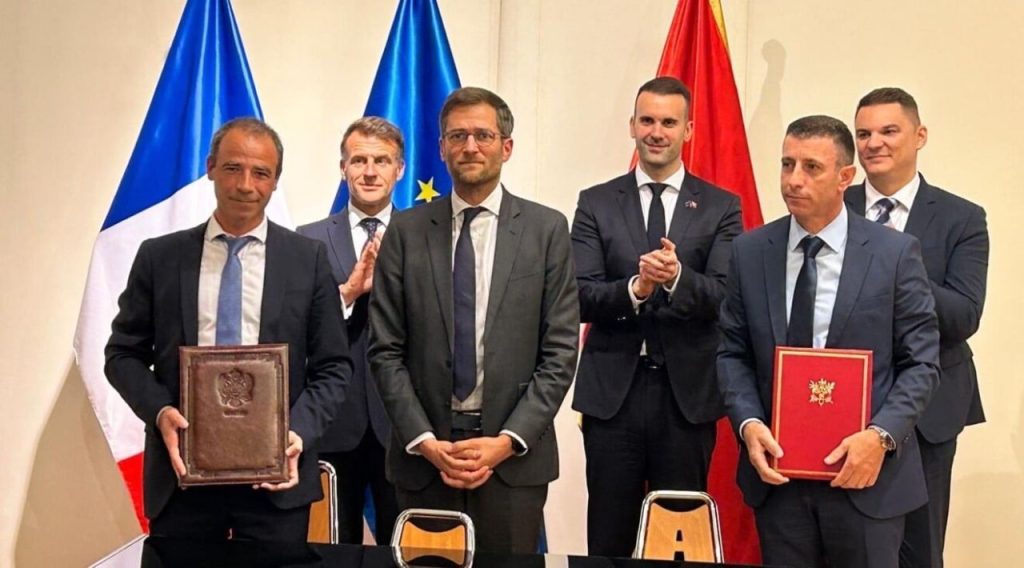
The signing was announced by Montenegro’s Minister of Energy and Mining, Admir Šahmanović, who stated that the agreement is intended to support the modernization of the distribution network, the development of smart systems, and the preparation of new investments in the energy sector.


According to him, this cooperation is not only about financial support, but also about expertise, modern technologies, and a shared commitment to building a more secure, more sustainable, and more European energy future for Montenegro.
The agreement was signed in the presence of French President Emmanuel Macron and Montenegro’s Prime Minister Milojko Spajić, which further underlines the political and strategic importance of this partnership.
The agreement is seen as an important step toward strengthening cooperation between Montenegro and France in the energy sector, especially in the modernization of infrastructure, digitalization of the grid, and preparation of new development projects.
Montenegro is building its energy transition through strategic partners and new investments
The agreement between CEDIS, AFD, and EDF International Networks should not be viewed as an isolated project, but as a continuation of a broader process in which Montenegro is positioning energy as one of the key sectors for strategic investment, European cooperation, and accelerated energy transition.
Over the past period, this partnership has built upon several agreements through which Montenegro is gradually creating a framework for strategic investments in the energy transition. Elektroprivreda Crne Gore previously signed a memorandum of cooperation with the French state-owned company EDF for the construction of the Kruševo hydropower plant, with a focus on long-term cooperation in the energy transition, low-carbon technologies, and the development of hydropower projects, where EDF may act as a strategic partner, investor, designer, and operator.
In addition, EPCG and Masdar established a joint company with equal 50:50 ownership, headquartered in Nikšić, for the development and management of large renewable energy projects, including photovoltaic and wind power plants, hydropower plants, pumped-storage hydropower plants, battery storage systems, and hybrid solutions. EPCG also signed a memorandum with Japan’s PowerX for strategic cooperation in the field of battery energy storage systems.
This is particularly important because the energy transition is no longer only a matter of building new photovoltaic power plants, wind farms, or hydropower capacities. It also requires a modern distribution network, smart systems, digital management, flexibility, electricity storage, and greater resilience of the power system.
This process positions Montenegro as an example in the region. Instead of treating the energy transition only as an obligation arising from European policies, the country is trying to turn it into an investment opportunity. Through partnerships with European financial institutions, technology companies, and global energy groups, Montenegro is creating space for new capital, new expertise, and new development models.
Editorial Office