

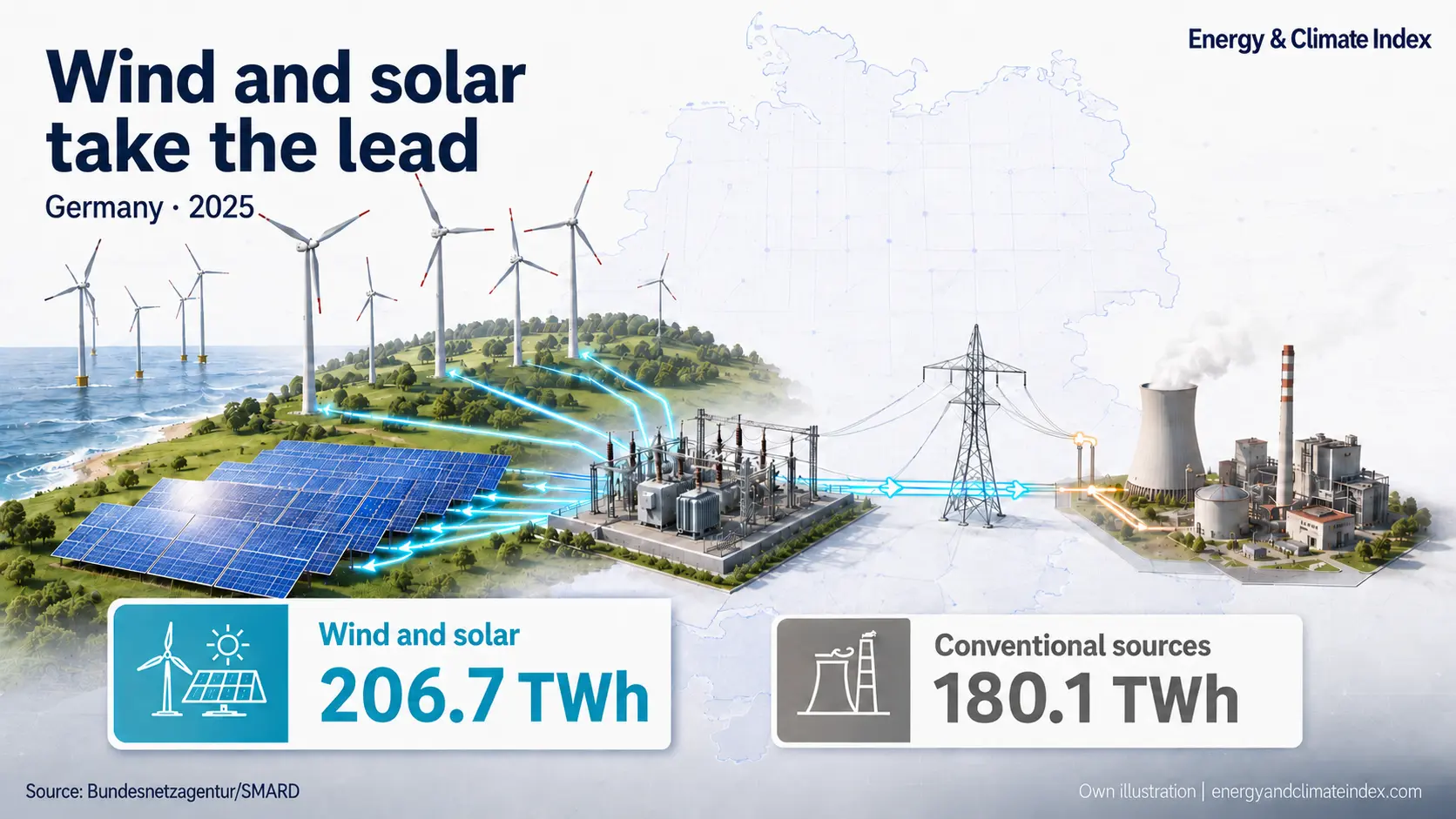
Wind and solar power plants in Germany generated a combined 206.7 TWh of electricity in 2025, surpassing the 180.1 TWh produced by all conventional energy sources.
This is shown by the official annual data published by Germany’s Federal Network Agency – Bundesnetzagentur, based on information from the SMARD electricity market data platform.
Germany’s total net electricity generation fed into the public grid amounted to 437.6 TWh in 2025, remaining almost unchanged from 437.7 TWh in the previous year.


Wind and solar generated 26.6 TWh more
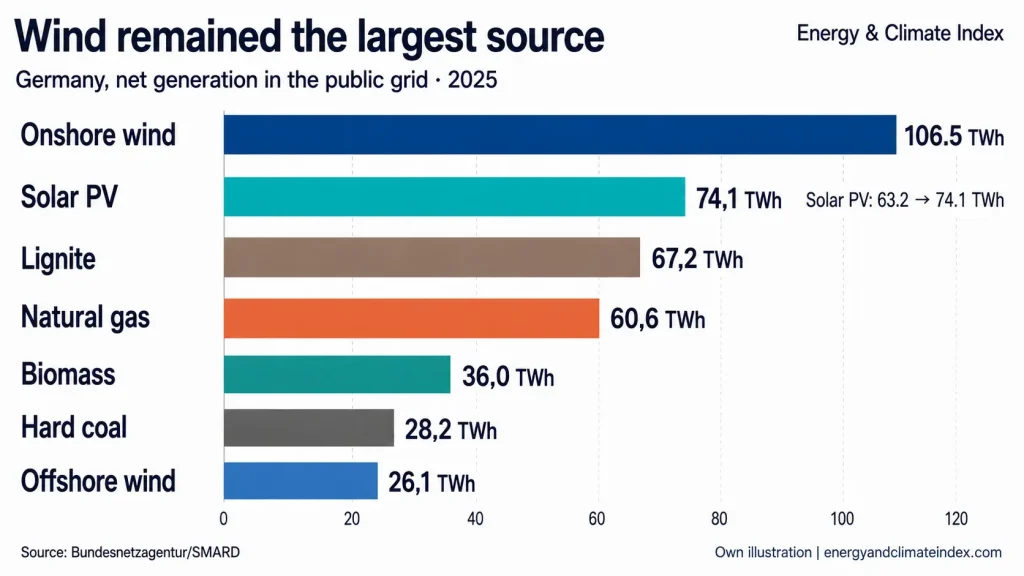
Onshore wind farms supplied 106.5 TWh of electricity to the public grid, while offshore wind farms produced an additional 26.1 TWh. Total wind generation reached 132.6 TWh, leaving wind power as the largest individual source in Germany’s electricity system.
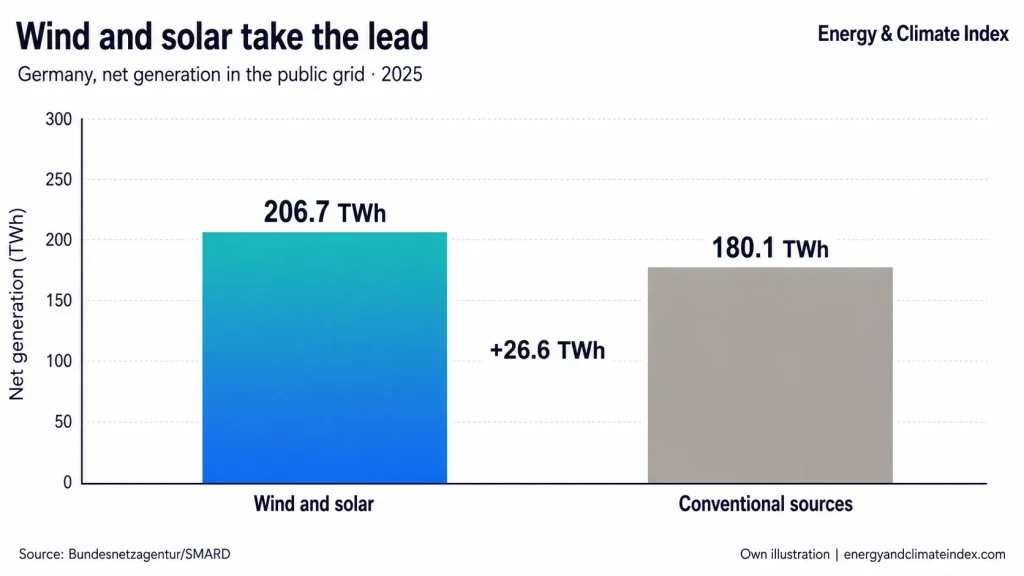
Photovoltaic installations supplied 74.1 TWh, a significant increase from 63.2 TWh in 2024. According to Bundesnetzagentur, the growth was driven by expanding installed capacity and an above-average number of sunshine hours during the summer.
Together, wind and solar generated 206.7 TWh—26.6 TWh more than total generation from conventional sources.
Renewables reached a 58.8% share
Total electricity generation from renewable sources reached 257.5 TWh in 2025, accounting for 58.8% of the electricity generated and fed into the public grid.
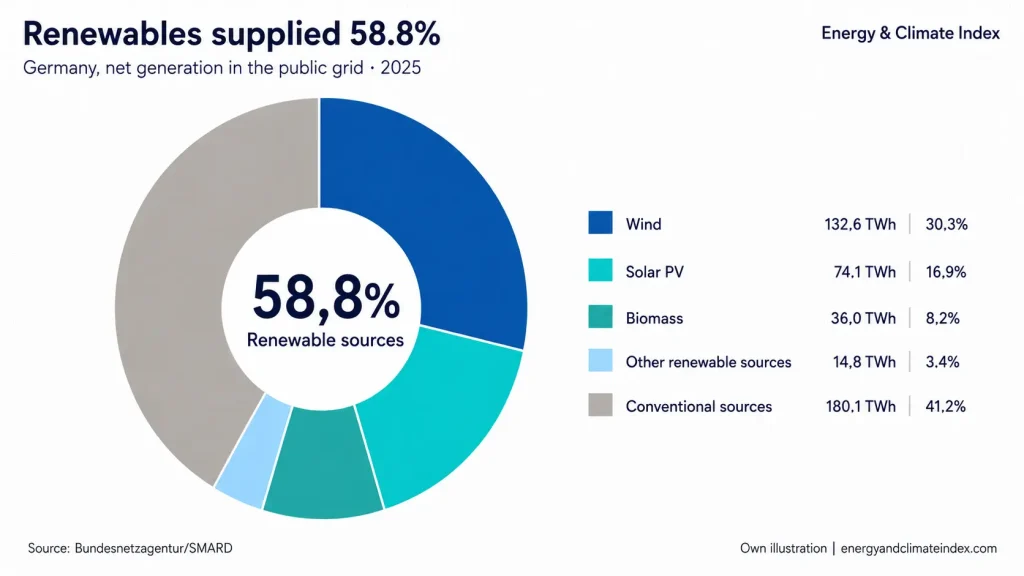
Their share stood at 58.5% in 2024, meaning renewables further strengthened their leading position in Germany’s electricity mix.
In addition to wind and solar, biomass plants produced 36 TWh. Other renewable sources, including hydropower, accounted for approximately 14.8 TWh.
The 2025 generation structure shows that wind supplied around 30.3% of total electricity generation, photovoltaics 16.9%, biomass 8.2% and other renewable sources approximately 3.4%. Conventional sources accounted for 41.2%.
Less lignite, but more natural gas
Electricity generation from conventional sources declined by 0.7% compared with 2024, falling to 180.1 TWh. However, individual energy sources followed different trends.
Lignite-fired generation decreased by 5.4% to 67.2 TWh. By contrast, hard-coal power plants generated 28.2 TWh, representing an increase of 3%.
The largest increase was recorded in natural gas. Gas-fired power plants generated 60.6 TWh, or 6.4% more than in the previous year. Natural gas consequently supplied 13.8% of Germany’s total electricity generation, compared with 13% in 2024.
The growth in gas-fired generation partly offset the decline in lignite, leaving total conventional generation only slightly lower than a year earlier.
Electricity prices increased by 13.8%
Despite the high share of renewable energy, the average wholesale price on Germany’s day-ahead market increased to €89.32/MWh in 2025.
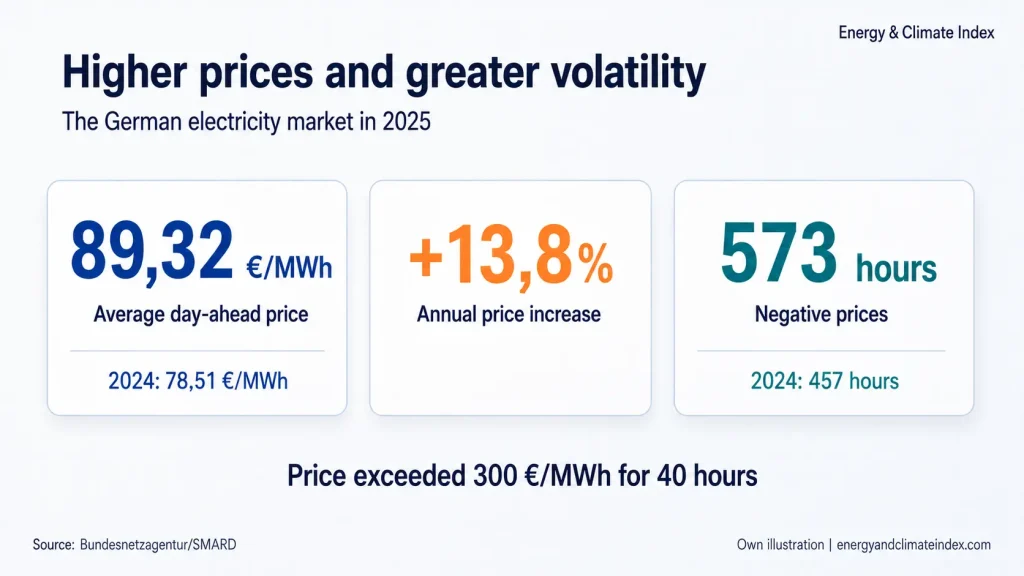
This represents an increase of 13.8% compared with the 2024 average of €78.51/MWh.
Negative electricity prices were recorded during 573 of the year’s 8,760 hours, compared with 457 hours in 2024. At the same time, prices exceeded €300/MWh during 40 hours.
The data point to growing fluctuations linked to wind and solar output, the availability of conventional power plants and electricity demand.
Germany remained a net electricity importer
Germany imported 76.2 TWh and exported 54.3 TWh of electricity in 2025. Net imports amounted to 21.9 TWh, a decrease of 22.6% compared with the previous year.
According to Bundesnetzagentur, electricity is generally imported when generation in neighbouring European countries is less expensive than domestic production. Germany’s market operates as part of the interconnected European electricity system, where generation and trade are determined by availability and price.
The Bundesnetzagentur data confirm a structural shift in Germany’s electricity system: wind and solar now generate more electricity than all conventional sources combined, while renewables provide almost 59% of domestic power generation.
Note: The figures refer to net electricity generation fed into the public grid. They do not include generation within industrial and closed distribution networks, the railway network or solar electricity consumed directly by producers.
Source: Bundesnetzagentur – German electricity market data for 2025
ECI