

The Netherlands will introduce stricter requirements for solar projects applying for state support under the SDE++ scheme after the latest funding round confirmed that electricity grid capacity is becoming one of the biggest constraints to further renewable energy deployment.
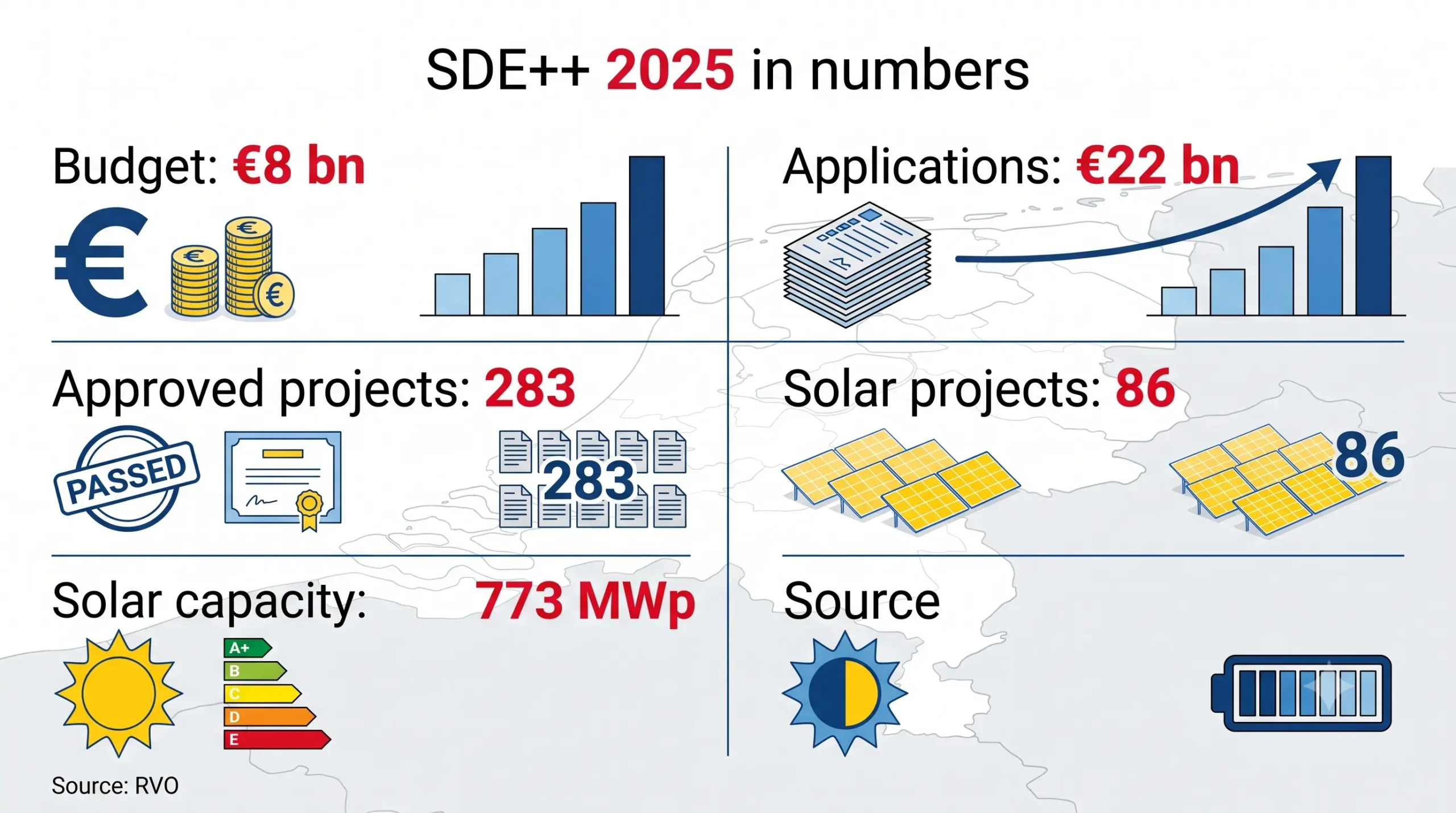
According to the Netherlands Enterprise Agency (RVO), 283 projects have so far been awarded support under the SDE++ 2025 programme, with a total subsidy value of approximately €7.9 billion, while applications worth another €0.8 billion are still under assessment. In total, developers submitted applications requesting around €22 billion, despite the available budget being limited to €8 billion.
For the solar sector, 86 projects with a combined installed capacity of 773 MWp have been approved, including ground-mounted, rooftop and floating photovoltaic installations.


New grid connection requirement
The most significant change will take effect with the SDE++ 2026 call. Developers of solar projects will be required to submit a transport indication from the electricity network operator, confirming that sufficient grid capacity is available to connect the project.
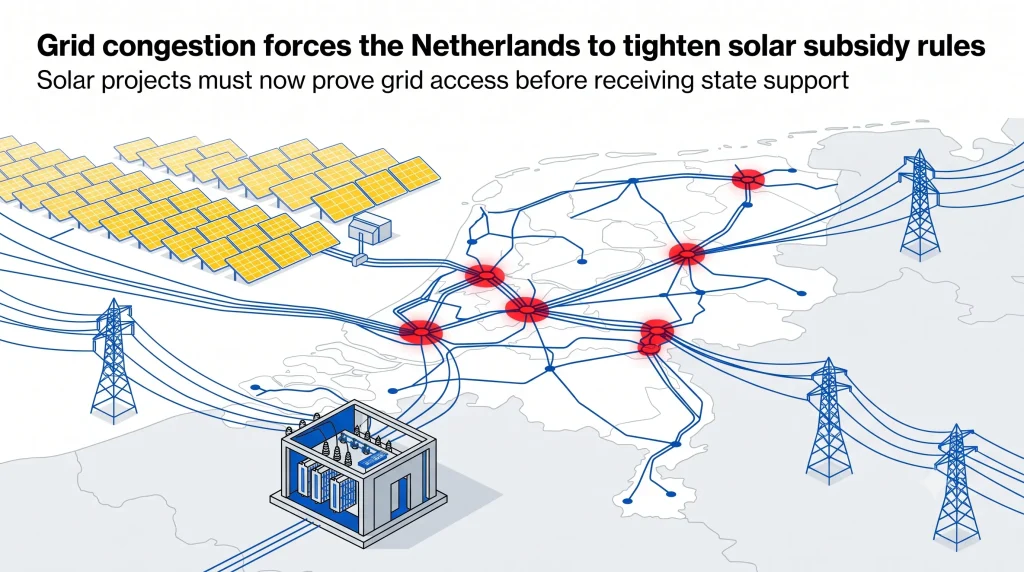
According to RVO, the measure has been introduced because many parts of the Netherlands are experiencing severe grid congestion, making it increasingly difficult for network operators to accommodate new electricity generation projects.
In practice, this means that, in addition to meeting the technical and financial requirements, developers will also have to demonstrate that their projects can be connected to the electricity grid before receiving public support.
Two-thirds of applications were rejected
The official results show that around two-thirds of all applications submitted under the SDE++ 2025 programme were rejected. Some failed to meet the eligibility criteria or lacked the required documentation, while others faced challenges related to grid connection availability.
RVO says the new requirements are intended to ensure that public funding is directed towards projects with a realistic chance of being implemented on schedule and contributing to the country’s climate objectives.
Next application round opens in October
The SDE++ 2026 application window will run from 27 October to 26 November 2026, while the Dutch government has already earmarked €8 billion per year for the programme in the coming years.
The new rules send a clear signal that the next phase of the energy transition will depend not only on investment in renewable generation, but also on the ability of electricity networks to accommodate new capacity.
ECI