

Europe’s electricity system proved more resilient to energy shocks in 2026, but faster investment in storage, grids and flexibility is needed. This is the main message of Eurelectric’s new “Power Barometer 2026” report, published on 30 September.
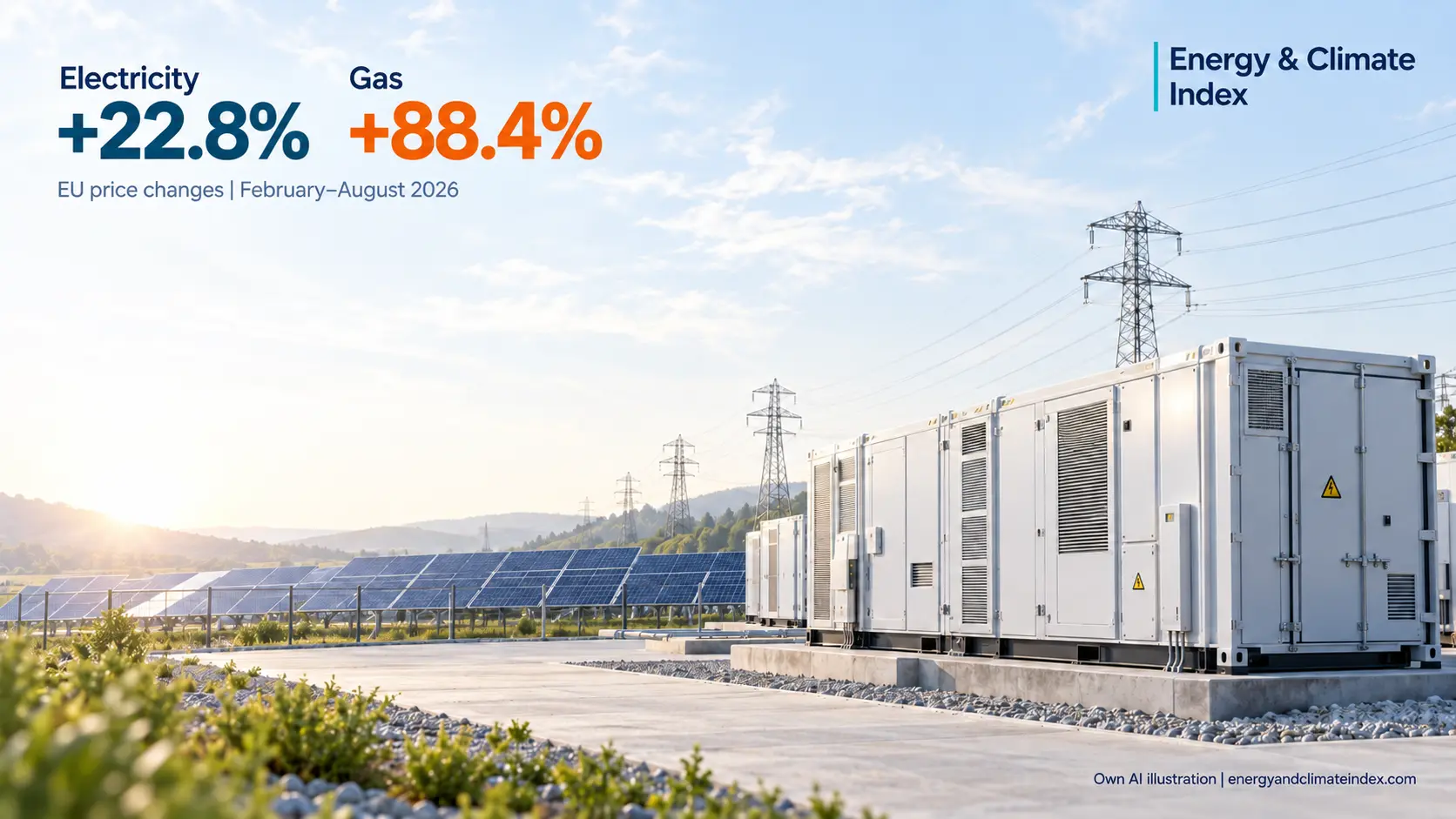
Between February and August, EU electricity prices rose by 22.8%, while gas prices surged by 88.4%. According to the organisation, clean power generation limited the transmission of fossil fuel price increases to electricity markets.
The difference was particularly evident in spring: following the blockade of the Strait of Hormuz, gas prices increased by 41% between February and May, while electricity prices fell by 7%. Summer heatwaves then brought renewed pressure, with higher demand, weaker hydropower generation in Nordic countries and reduced nuclear availability.


Batteries are easing evening price peaks
Bulgaria is highlighted as an example of storage’s impact. According to Eurelectric, following the development of battery systems with a combined power capacity of 5.4 GW, the premium of Bulgarian wholesale electricity prices over the EU average narrowed from around 21% in 2024 to 8.3% in 2026.
Batteries store electricity generated by solar photovoltaic plants during midday hours and release it in the evening, when solar output declines and prices rise.
However, Europe’s storage capacity is still lagging. In 2025, utility-scale storage across the EU had a combined power capacity of 64 GW, dominated by pumped-storage hydropower. The report identifies a need to reach 200 GW by 2030.
Eurelectric calls for faster permitting for grids, storage and clean generation, stronger incentives for flexibility and predictable investment conditions. Alongside batteries, adjusting consumption also plays a significant role — using more electricity when it is available and cheaper, while reducing demand during the most expensive hours.
ECI