

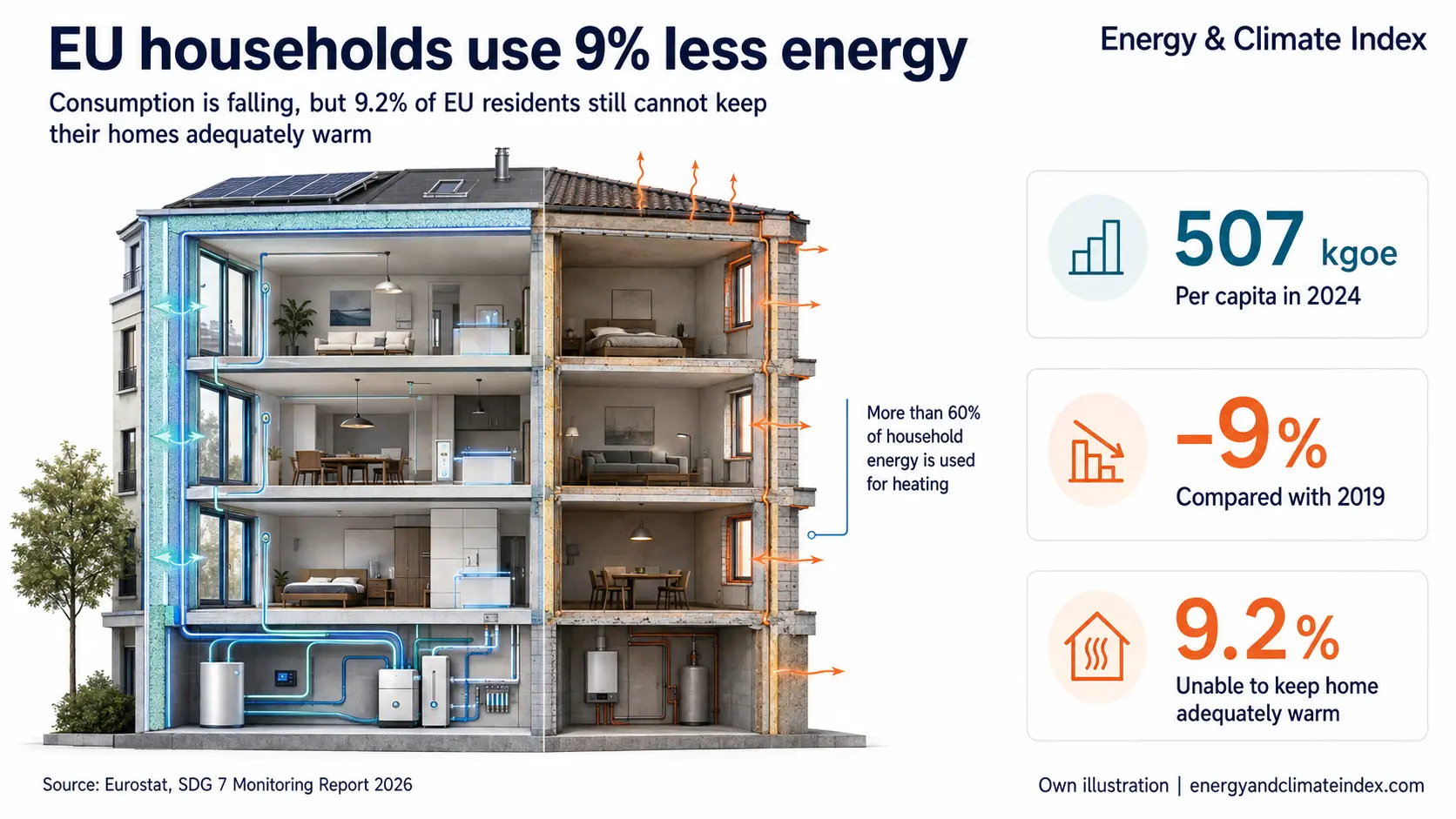
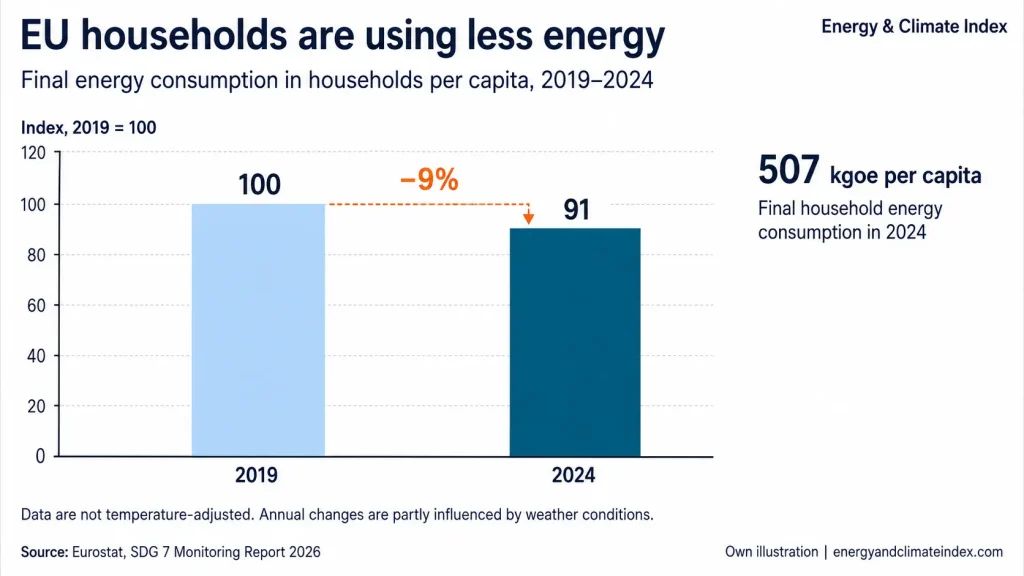
Final energy consumption in European Union households reached 507 kilograms of oil equivalent per capita in 2024, representing a 9% decrease compared with 2019.
According to Eurostat’s latest report on progress towards Sustainable Development Goal 7, affordable and clean energy, households account for approximately one-quarter of the EU’s final energy consumption.
Energy in homes is mainly used for heating and cooling, cooking, hot water, lighting and household appliances.


Energy efficiency is reducing consumption
Between 2009 and 2024, the total energy consumption of EU households decreased by 13.1%. Over the same period, the EU population grew by around nine million people, or 2%.
According to Eurostat, improvements in energy efficiency, particularly in space heating, have outweighed the effects of population growth and increases in the number and size of homes.
However, the data are not adjusted for temperature. This means that part of the annual variation in consumption reflects weather conditions. More than 60% of household energy is used for heating, making warmer or colder winters an important factor.
Significant differences between northern and southern Europe
Household energy consumption per capita varies significantly among EU countries. Households in southern Europe generally consume less energy than those in northern Europe, mainly because of the milder climate and lower demand for winter heating.
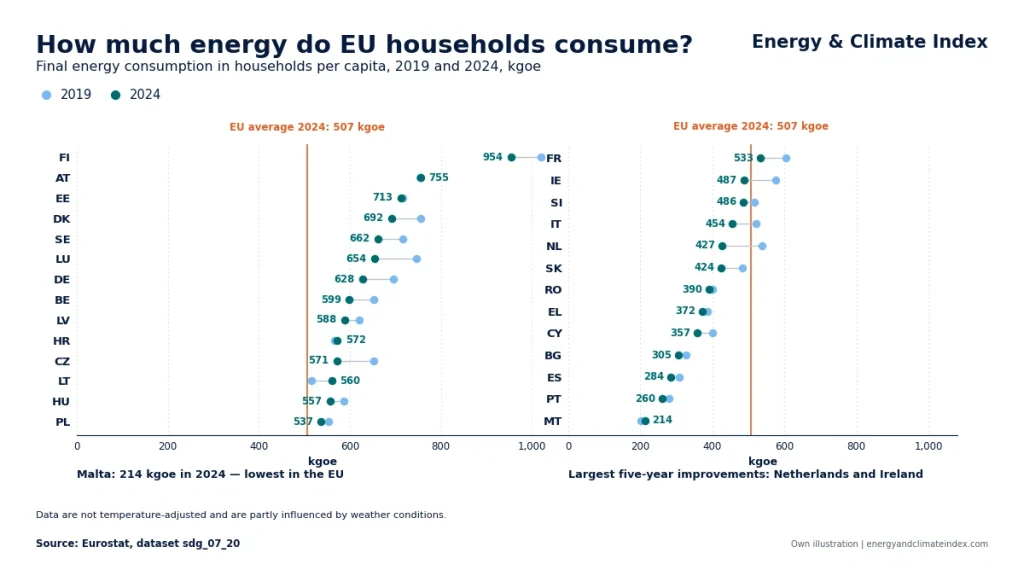
In 2024, the lowest consumption was recorded in Malta, at 214 kilograms of oil equivalent per capita. Over the past five years, the largest improvements in this indicator were observed in the Netherlands and Ireland.
Lower consumption, however, does not necessarily indicate higher energy efficiency. The results are also influenced by climate, building quality, household income, energy prices and people’s ability to maintain an adequate temperature in their homes.
Energy poverty remains above its 2019 level
In 2024, 9.2% of the EU population reported being unable to keep their home adequately warm. This was an improvement from 10.6% in 2023, but the situation remained considerably worse than before the energy crisis.
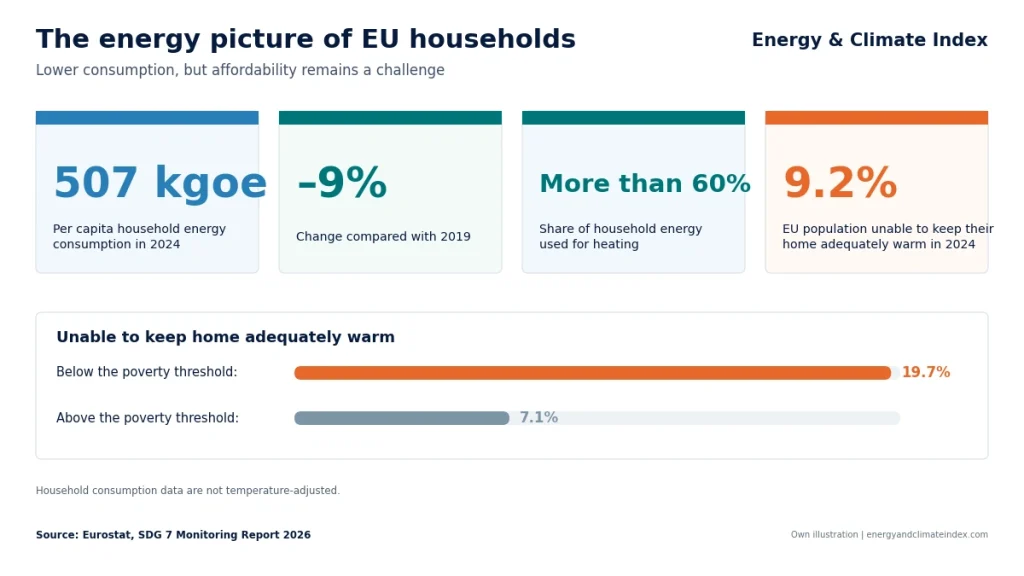
The problem was far more pronounced among people with incomes below the poverty threshold. Almost one in five, or 19.7%, could not afford to keep their home adequately warm, compared with 7.1% of people with incomes above the poverty threshold.
The highest rates in 2024 were recorded in Bulgaria and Greece, both at 19%, followed by Lithuania at 18%, Spain at 17.5% and Portugal at 15.7%.
The EU remains far from its 2030 target
Total final energy consumption in the EU reached 900.4 million tonnes of oil equivalent in 2024, an increase of 0.8% compared with 2023.
The EU aims to reduce final energy consumption to no more than 763 million tonnes of oil equivalent by 2030. Eurostat concludes that progress so far has been insufficient and that further improvements in energy efficiency and consumption patterns will be required.
The decline in household energy consumption represents a positive long-term trend. However, the energy-poverty figures show that the transition must deliver both more efficient buildings and affordable energy for citizens.
ECI