

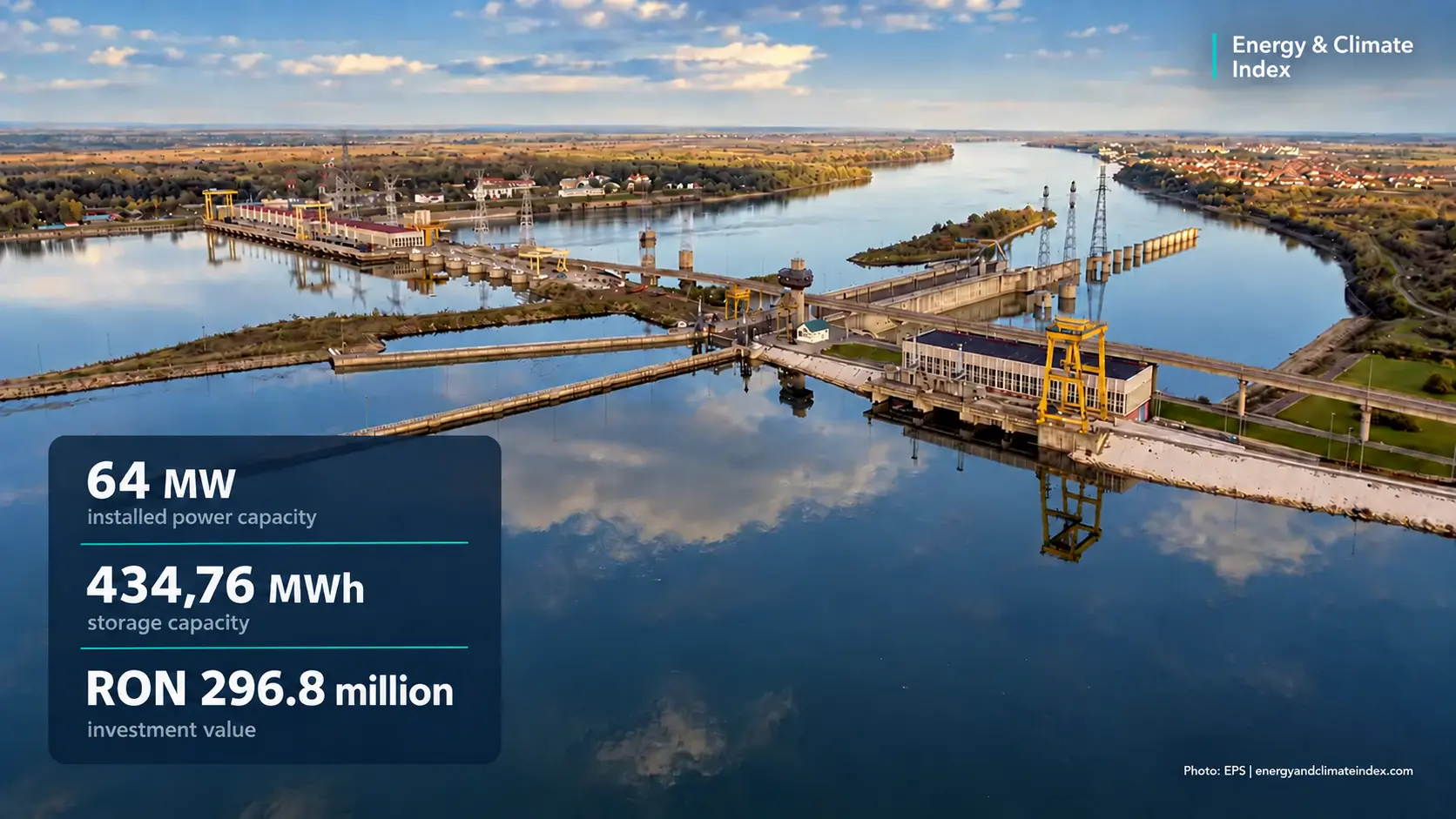
Romanian electricity producer Hidroelectrica has selected the contractor for the construction of a large battery energy storage system at the Gjerdap 2 hydropower plant on the Danube.
The project will have an installed power capacity of 64 MW and an energy storage capacity of 434.76 MWh, making it the largest battery storage facility in Hidroelectrica’s portfolio.
The contract is worth RON 296.8 million, equivalent to approximately EUR 56.5 million. It was awarded to Synergy Construct following the completion of the applicable public procurement procedures.


Batteries will increase the flexibility of the hydropower system
The new system will enable Hidroelectrica to optimise its generation profile throughout the day, store electricity during periods of lower demand and dispatch it when electricity demand and market prices are higher.
According to the company, the batteries will increase the flexibility of its entire generation portfolio and improve its ability to respond to changes in hydrological conditions, electricity consumption and market conditions.
Hidroelectrica CEO Iulius-Dan Plaveti said the energy transition requires infrastructure that enables renewable energy to be used efficiently while providing a flexible response to the needs of the national electricity system.
The battery project at Gjerdap 2 represents a strategic step in that direction and forms part of the company’s investment in technologies that will support the future development of the energy sector.
Support from the Modernisation Fund
The project is receiving RON 43.4 million in financial support from the Modernisation Fund through the Romanian Ministry of Energy’s programme for developing electricity storage capacity.
Synergy Construct will implement the project together with several subcontractors, including Kseo Enerji, Professional Land Survey, Zoork, Tripol Sistem Construct, Inemko and Rogotehnic.
The investment is part of Hidroelectrica’s strategy to develop a more flexible and resilient energy portfolio in which renewable electricity generation is complemented by energy storage and management capacity.
ECI