

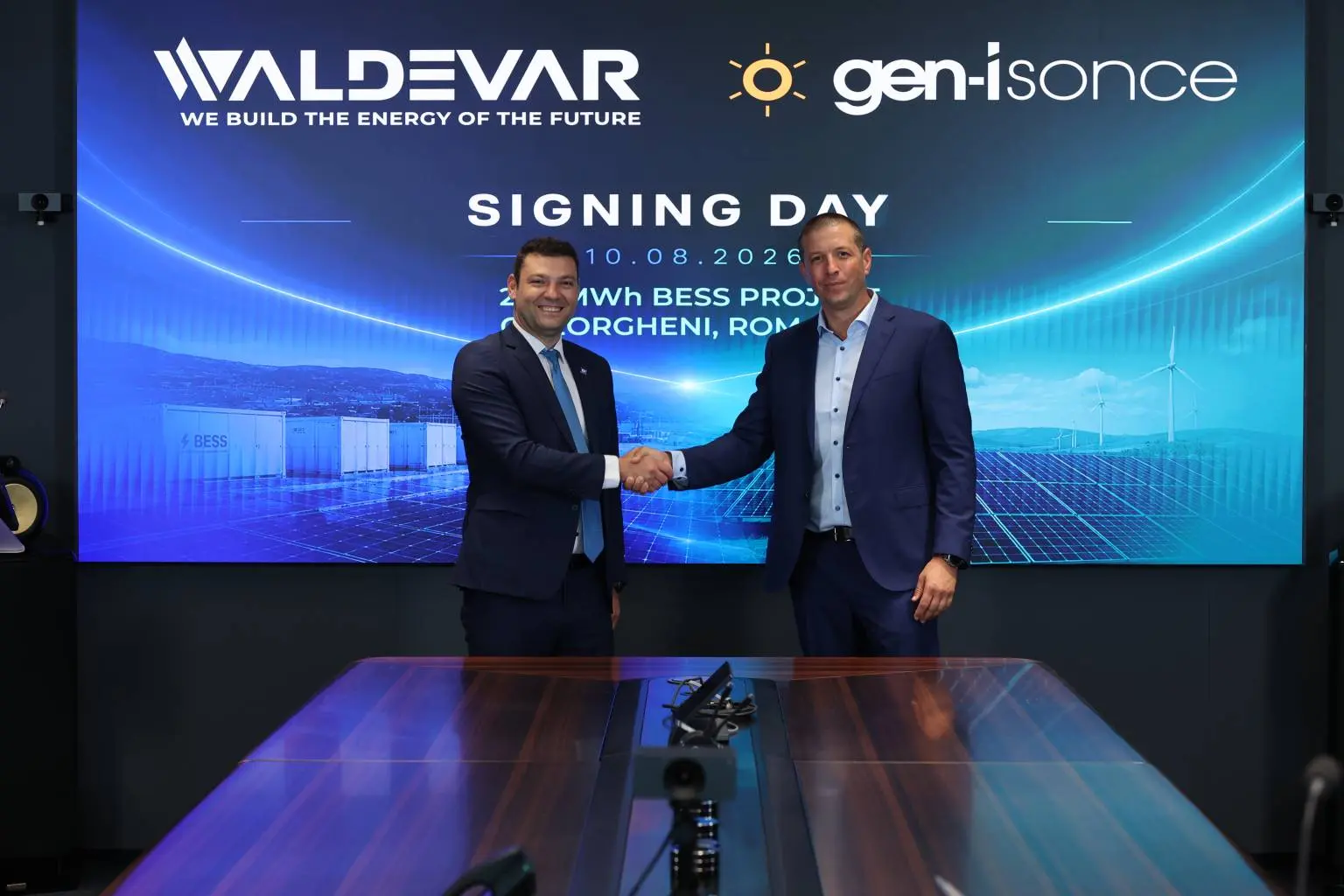
Slovenian company GEN-I Sonce has signed an EPC contract with Romania’s WALDEVAR Energy for the construction of a large standalone battery energy storage system in Gheorgheni, Romania.
The system will have a nominal power capacity of 55 MW and an energy storage capacity of 220 MWh. The power-to-energy ratio indicates a four-hour battery system capable of delivering electricity at maximum output for approximately four hours.
The contract covers engineering, equipment procurement, construction, installation, testing and commissioning. The project is scheduled for completion in the third quarter of 2027.


Permits and grid connection secured
GEN-I Sonce said that the project has secured the necessary land, permits and grid connection rights.
The two companies previously agreed on the construction of the 110 kV, 63 MVA Gheorgheni substation, together with the infrastructure required for connection to Romania’s transmission network. The agreement for this part of the project was signed in June, with WALDEVAR Energy also responsible for its implementation.
Combining the battery system with high-voltage grid infrastructure should enable the rapid intake and delivery of electricity, as well as the provision of flexibility and balancing services to Romania’s power system.
The first project in a broader model
GEN-I Sonce CEO Gregor Hudohmet described Gheorgheni as an important milestone in the company’s regional strategy and evidence of GEN-I’s ability to develop projects from their initial stages through to construction.
According to Hudohmet, the project should provide the foundation for a proven and scalable implementation model that can subsequently be applied to the development of a second and third similar battery project.
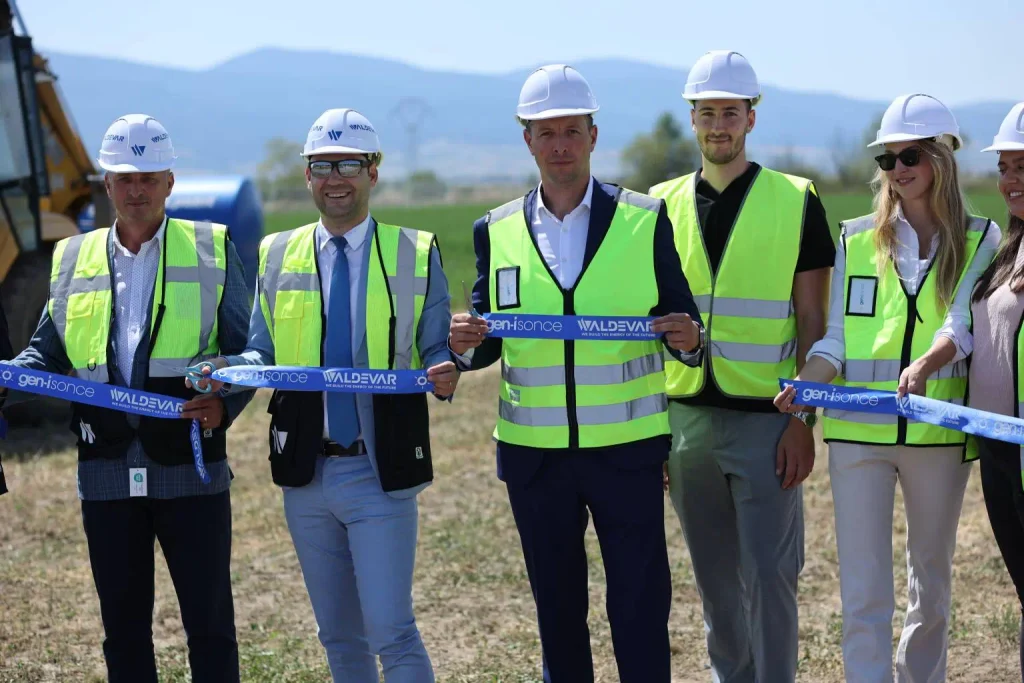
photo: waldevar
GEN-I Sonce is already developing two additional battery storage projects in Romania, while the wider group has further projects and investments in neighbouring Bulgaria. GEN-I operates in 27 countries, combining energy project development with electricity trading, asset management and market optimisation.
For WALDEVAR Energy, the contract marks a further expansion from solar power plant construction into integrated battery systems, high-voltage facilities and grid infrastructure. The Romanian company says it has more than 3.5 GW of renewable energy infrastructure delivered, under construction or contracted across Europe.
Romania accelerates battery storage development
The GEN-I Sonce project comes amid rapidly growing investment in electricity storage in Romania. The country already has around 30 operational battery systems with a combined power capacity of 599 MW and an energy storage capacity of 1.13 GWh, while considerably larger projects are under development.
Among them is a battery complex that is expected to reach 250 MW and 500 MWh following completion of its second phase, becoming Romania’s largest operational battery energy storage system.
The Romanian government has also allocated €150 million to support at least 2.17 GWh of new battery storage capacity. With maximum grant support of €69,000 per MWh, the programme shows that batteries are becoming a central part of Romania’s policy for integrating new solar and wind capacity.
In addition, the EBRD recently approved €120 million for the construction of the Părău 2 hybrid energy project, combining a 342 MW solar power plant with a 150 MW/300 MWh battery system.
The Gheorgheni project is smaller than the largest storage systems currently being developed in Romania. However, its four-hour duration and secured high-voltage grid connection position it as an important infrastructure project for improving power system flexibility.
ECI