

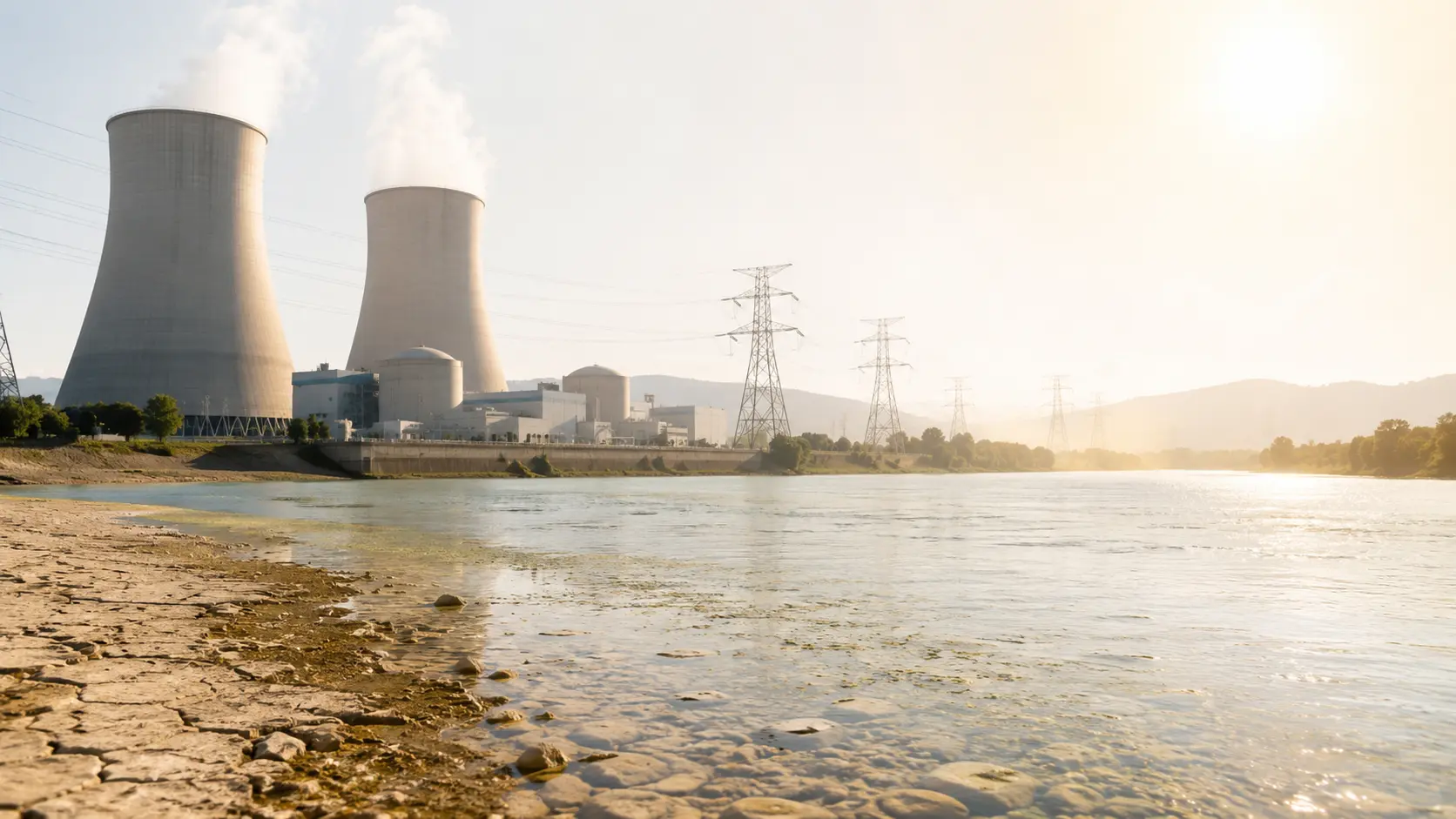
Extreme heat is reducing the availability of baseload electricity generation
France has temporarily shut down three nuclear reactors as an intense heatwave sweeps across the country and much of Western Europe. The shutdowns were not caused by technical failures, but by cooling constraints resulting from exceptionally high river temperatures.
Nuclear power also faces climate-related limitations
Nuclear power plants are widely regarded as reliable baseload generation because they can operate continuously and supply large amounts of electricity. However, the situation in France demonstrates that even nuclear energy has operational limits when weather conditions become extreme.


Nuclear reactors require significant volumes of water for cooling. During prolonged heatwaves, river temperatures rise and cooling efficiency declines. At the same time, strict environmental regulations limit the temperature of water discharged back into rivers in order to protect aquatic ecosystems.
EDF reduced output to comply with environmental regulations
As a result, EDF was forced to reduce or temporarily halt generation at several nuclear units. The restrictions affected the Golfech, Bugey, Nogent and Saint-Alban nuclear power plants at a time when electricity demand is increasing due to widespread air conditioning and cooling needs across households, businesses and industry.
This is not an isolated issue affecting only France. As heatwaves become more frequent and more intense, electricity systems are increasingly exposed to a double challenge: demand rises sharply while part of the available generation capacity may have to reduce output.
Lower nuclear generation affects the wider European electricity market
France operates one of Europe’s largest nuclear fleets and is traditionally one of the continent’s largest electricity exporters. Consequently, any significant reduction in French nuclear output has implications not only for the domestic market but also for cross-border electricity flows and wholesale power prices across Europe.
Reduced nuclear availability can limit exports, alter regional trading patterns and contribute to tighter electricity markets during periods of high demand.
Energy security depends on the real availability of generation assets
The latest heatwave highlights a broader challenge for Europe’s energy transition. No generation technology is completely immune to extreme weather conditions.
Hydropower depends on water availability, solar and wind generation rely on weather conditions, thermal power plants face environmental and cooling constraints, while nuclear power can also be limited by the availability and temperature of cooling water.
Climate resilience is becoming a core element of energy planning
The key lesson is that future energy security will depend not only on installed capacity, but also on how much of that capacity remains available during periods of climate stress.
As climate change increases the frequency and intensity of extreme weather events, electricity systems will need greater resilience through diversified generation portfolios, energy storage, flexible resources, stronger transmission networks and more advanced demand-side management.
The French case serves as another reminder that even technologies traditionally considered the most reliable have operational limits under increasingly challenging climate conditions.
ECI