

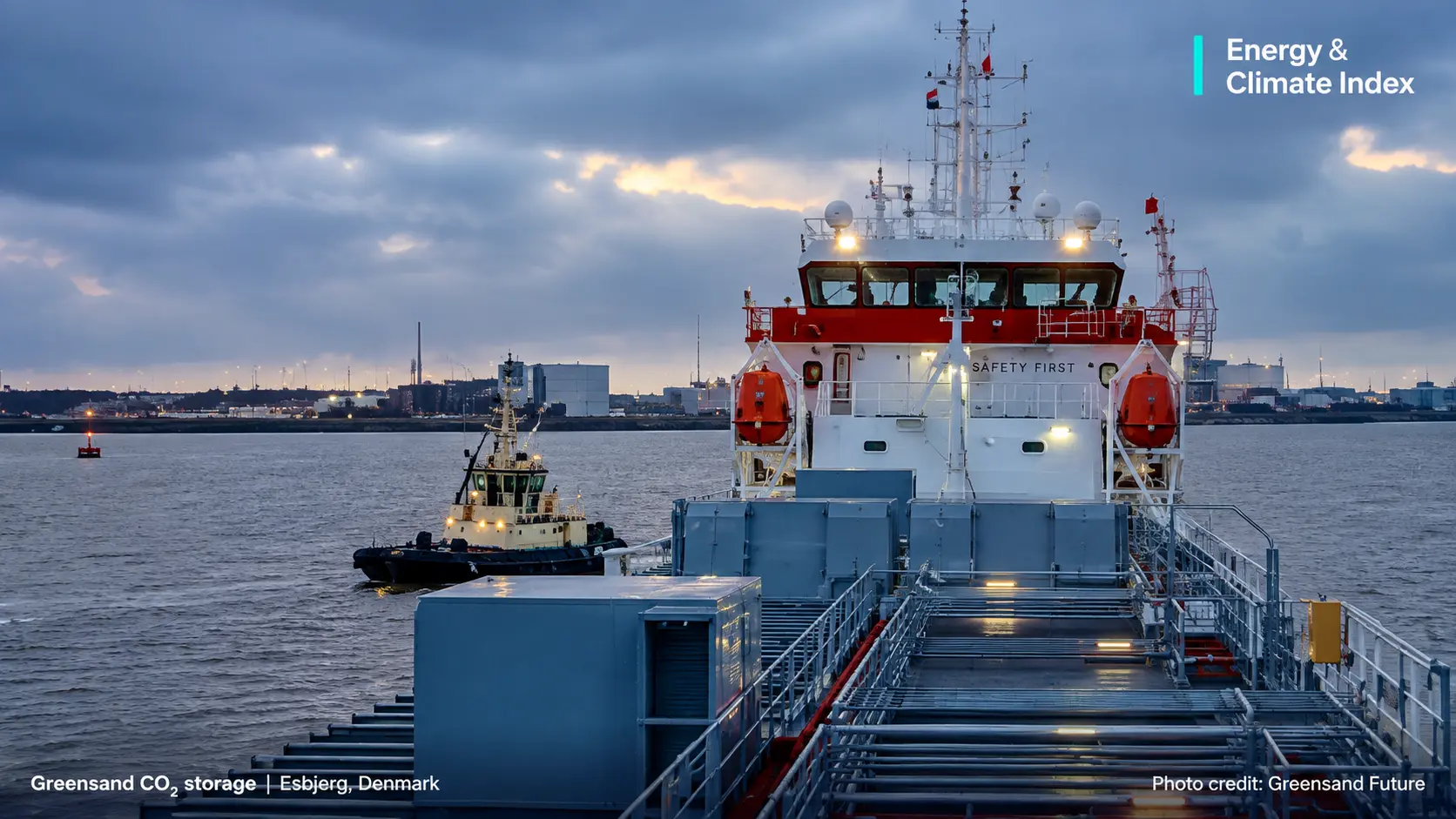
Commercial operations have officially begun at Greensand in Denmark, making it the first fully operational, full-scale permanent CO₂ storage site in the European Union.
The project, led by INEOS Energy in partnership with Harbour Energy and the Danish state-owned Nordsøfonden, can permanently store up to 400,000 tonnes of CO₂ per year during its initial commercial phase.
Greensand was officially opened on 18 September at the Port of Esbjerg by Denmark’s King Frederik X, marking the project’s transition from demonstration to commercial operation.


CO₂ stored 1,800 metres beneath the seabed
During the initial phase, CO₂ will primarily come from Danish biomethane facilities.
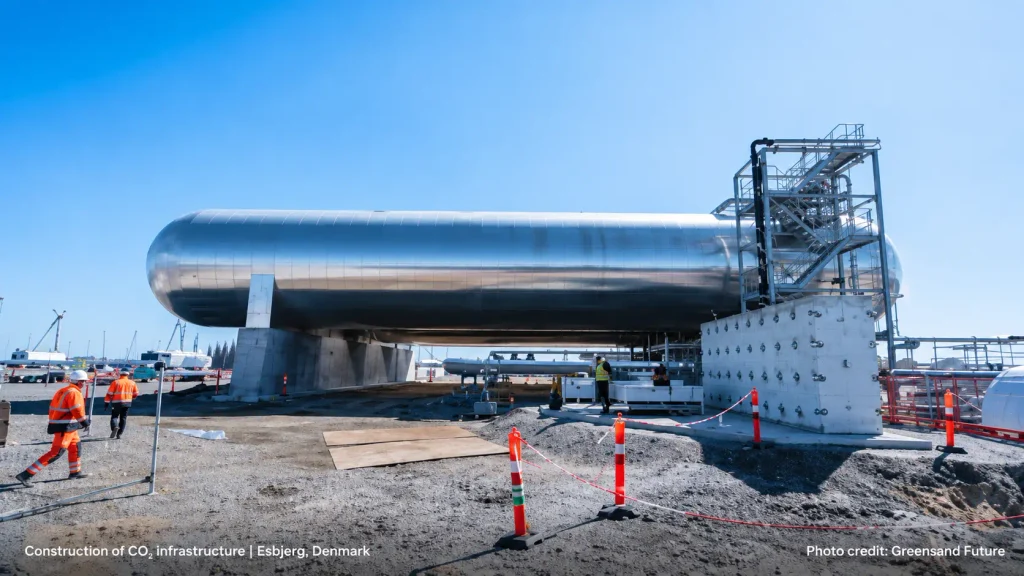
After being captured, the CO₂ is liquefied and transported by truck to a specialised terminal at the Port of Esbjerg.
From there, it is transported aboard Carbon Destroyer 1, the EU’s first purpose-built CO₂ carrier, to the permanent storage site in the North Sea.
The carbon dioxide is then injected into Nini West, a depleted oil field located approximately 250 kilometres off the Danish coast.
The geological reservoir lies around 1,800 metres beneath the seabed.
Greensand therefore establishes an integrated value chain covering CO₂ capture and liquefaction, road and maritime transport, and permanent geological storage.
From 400,000 to potentially 8 million tonnes per year
Greensand’s initial storage capacity is up to 400,000 tonnes of CO₂ annually.
However, the infrastructure has been designed for substantial expansion. Depending on market development, demand, infrastructure and regulatory conditions, future capacity could reach between 4 million and 8 million tonnes of CO₂ per year.
The project demonstrated cross-border CO₂ transport and storage as early as 2023. With commercial operations beginning in September 2026, the system is now moving from demonstration to industrial-scale application.
According to Greensand, it is the first site in the EU to reach full-scale operation, defined as an operational project injecting more than 100,000 tonnes of CO₂ annually.
EU targets 50 million tonnes of injection capacity by 2030
Greensand’s launch comes as the European Union seeks to significantly expand infrastructure for capturing, transporting and permanently storing carbon dioxide.
The EU aims to develop at least 50 million tonnes of annual CO₂ injection capacity by 2030, with capacity expected to expand towards 250–280 million tonnes per year by 2040.
Carbon capture and storage is considered particularly important for industries where full decarbonisation through electrification remains difficult, including cement, chemicals and parts of the metals industry.
Greensand is therefore significant beyond its initial capacity of 400,000 tonnes per year. The project establishes a commercial transport and storage chain through which industrial companies across Europe could increasingly send captured CO₂ for permanent storage beneath the North Sea.
ECI