

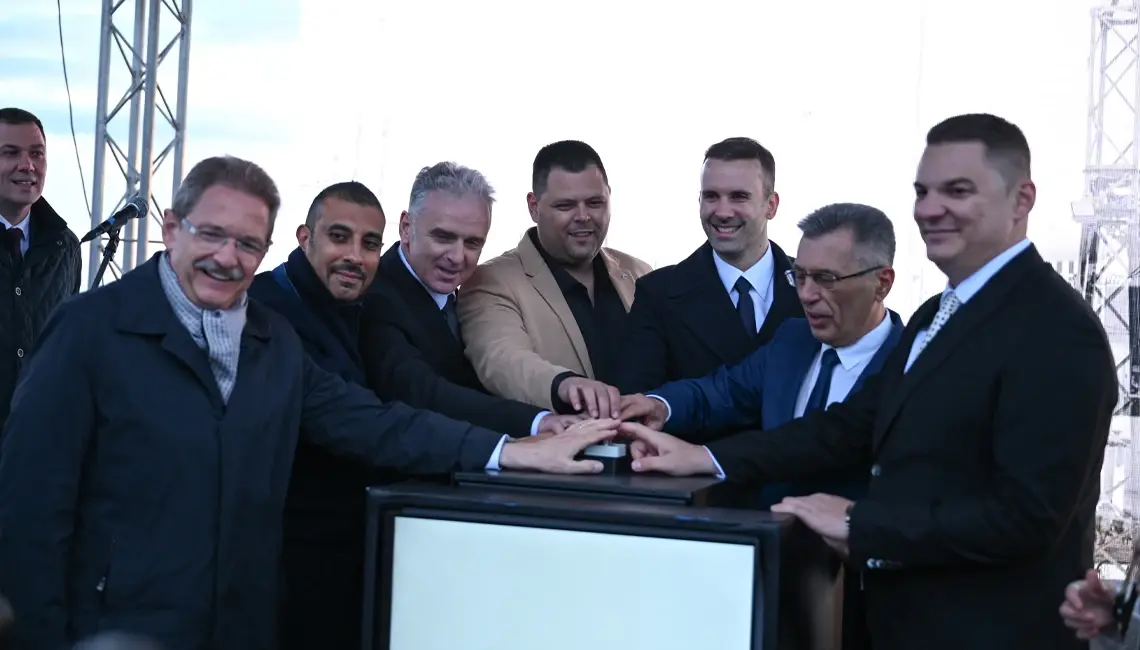
Elektroprivreda Crne Gore (EPCG) has officially launched the trial operation of the “Gvozd” wind farm, one of the most significant energy projects in Montenegro’s modern history and a major new step toward strengthening domestic electricity generation from renewable energy sources. The project forms part of Montenegro’s broader strategy to accelerate the energy transition and reduce dependence on fossil fuels.
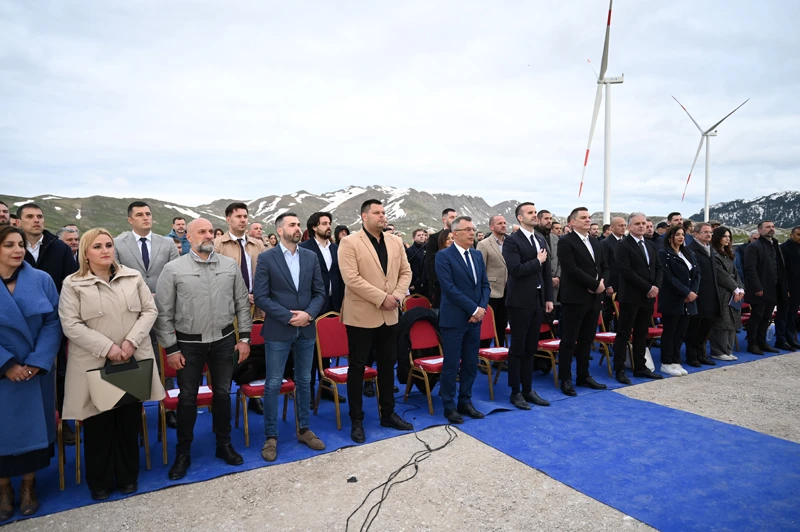
Source: Elektroprivreda Crne Gore
The inauguration ceremony was attended by senior government officials, international financial institutions, diplomatic representatives, and project partners involved in the implementation of the investment. Montenegro’s Prime Minister, Milojko Spajić, stated that the “Gvozd” project demonstrates EPCG’s ability to independently deliver large-scale energy investments without subsidies and under fully market-based principles. He emphasized that stable domestic electricity production is particularly important amid ongoing global economic and geopolitical challenges.


Minister of Energy and Mining, Admir Šahmanović, described the “Gvozd” wind farm as one of the defining symbols of Montenegro’s new energy era.
The wind farm has an installed capacity of 55 MW and represents the largest energy facility built by EPCG since 1982. Together with nearly 100 MW of solar capacity installed over the past three years, the project confirms that Montenegro is already actively implementing its energy transition agenda.
The project was supported by the European Bank for Reconstruction and Development through an €82 million loan arrangement. According to EBRD, the wind farm will supply clean electricity to more than 35,000 households, while the completion of the second phase, “Gvozd II,” is expected to reduce CO₂ emissions by approximately 137,000 tonnes annually.
Germany’s Ambassador to Montenegro, Peter Felten, emphasized that the future of electricity generation lies in renewable energy sources rather than coal, oil, and natural gas, highlighting the importance of the partnership with German company Nordex in the realization of the project.
The project was implemented by the JV XEnergy & Elnos Group, while the project consultants for the connection infrastructure wеre Dornier Suntrace GmbH, Windcraft Engenharia e Serviços, and Colenco LtD.
According to EPCG, the “Gvozd” wind farm will generate approximately 150 GWh of electricity annually, further contributing to the stability of Montenegro’s power system and increasing the share of renewable energy in the country’s electricity mix.
Editorial Office