

The analysis is based on the data published in the 2025 Annual Report of the Energy, Water Services and Municipal Waste Management Services Regulatory Commission of the Republic of North Macedonia. The report provides an official and comprehensive overview of developments in the electricity sector, including electricity generation and consumption, the expansion of renewable energy sources, market trends, and the ongoing energy transition of the country.
Particular focus in this analysis is placed on the changes in the structure of domestic electricity generation, the growth of renewable energy sources, the reduction of import dependency, as well as the trends presented in Annex 12.1, which provides a comparative overview of electricity generation from domestic producers during the 2016–2025 period.
The data indicate that the Macedonian energy sector is entering a phase of accelerated transformation, with renewable energy sources, especially solar energy playing an increasingly important role in the country’s overall energy mix.


Electricity Balance: Domestic Generation Covers More Than 86% of Demand
In 2025, the electricity system of the Republic of North Macedonia demonstrated stability, gradual growth in consumption, and a significant improvement in the country’s energy independence.
Total gross electricity consumption reached 7,098 GWh, representing an increase of 3.03% compared to 2024. Net electricity consumption, referring to electricity delivered to final consumers, amounted to 6,094 GWh, marking a year-on-year increase of 3.34%.
Particularly significant is the fact that domestic electricity generation in 2025 reached 6,123 GWh, covering as much as 86.26% of the country’s total electricity needs. Only 13.74% of the required electricity was secured through imports (975 GWh), substantially below historical levels, when import dependency frequently ranged between 20% and 30%.
These indicators point to a gradual strengthening of domestic generation capacities and an improvement in the country’s overall energy security.
Installed Capacity: Renewable Energy Sources Dominate the Generation Structure
The total installed electricity generation capacity in 2025 reached 3,162.5 MW.
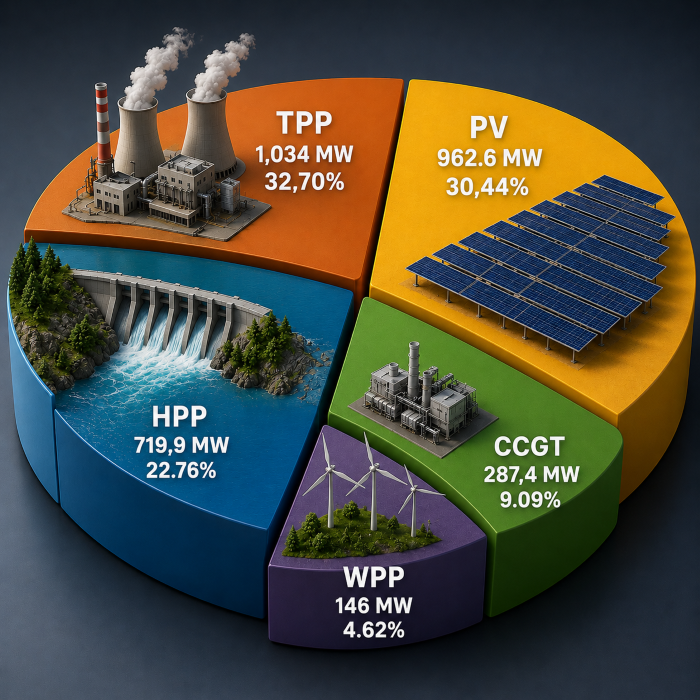
The combined share of renewable energy sources including solar, wind, hydropower, biogas, and biomass reached 58.22% of the country’s total installed generation capacity, representing an additional increase of 2.5% compared to 2024.
This marks the first time that renewable energy sources have so clearly and convincingly dominated the structure of installed generation capacity in the country.
Electricity Generation: Fossil Fuels Still Lead, but Solar Energy Is Rapidly Expanding
Although renewable energy sources dominate the installed generation capacity, fossil-fuel-based power plants still account for the largest share of actual electricity production due to their baseload and continuous operational role within the power system.
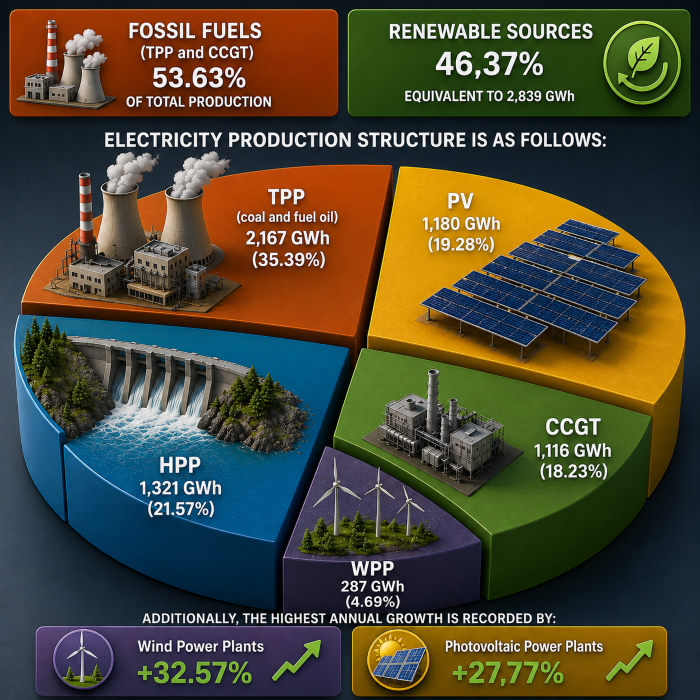
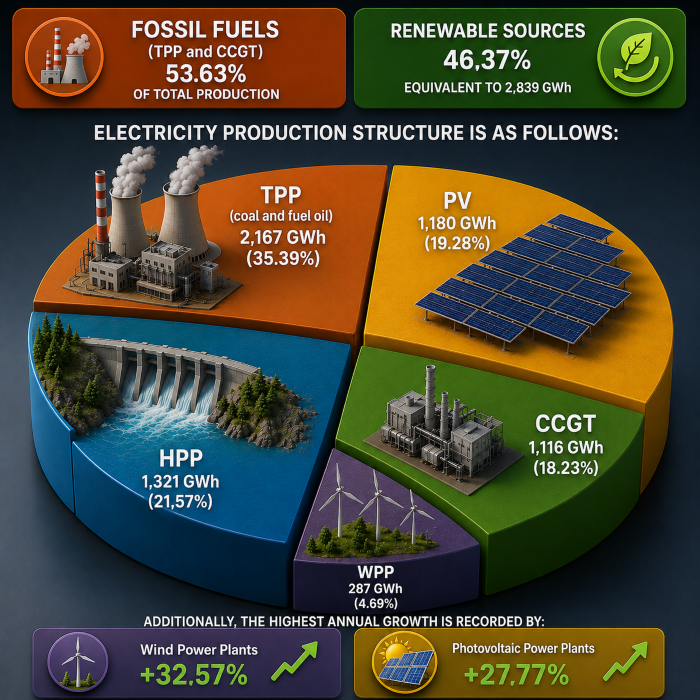
The most significant development in 2025 is that, for the first time, electricity generation from photovoltaic power plants exceeded the generation from combined-cycle gas power plants.
In addition, the highest annual growth rates were recorded by:
- Wind power plants: +32.57%
- Photovoltaic power plants: +27.77%
These trends clearly indicate that new investments in renewable energy are already having a direct and measurable impact on the country’s electricity generation mix.
Period 2016–2025: A Decade of Deep Transformation in the Macedonian Energy Sector
The analysis of Annex 12.1 from the Annual Report of the Energy Regulatory Commission provides an important insight into the transformation of North Macedonia’s electricity sector during the 2016–2025 period.
The total electricity generation increased despite the decline of coal. Domestic electricity generation increased from 5,302 GWh in 2016 to 6,122 GWh in 2025, representing a growth of 15.46%.
What is particularly significant is that this increase was achieved despite the continuous decline in electricity generation from state-owned coal-fired thermal power plants.
Decline in Electricity Generation from JSC ESM
JSC ESM, the country’s largest electricity producer, has recorded a significant decline in generation output over the past decade. In 2025, the company generated 3,243 GWh of electricity, representing a decrease of 24.58% compared to 2016.
The reasons behind this decline are multifaceted and include:
- aging generation equipment,
- frequent technical failures and outages,
- reduced extraction of high-quality coal,
- depletion of existing coal reserves,
- and rising maintenance costs.
In addition, electricity generation from TPP Bitola and TPP Oslomej decreased by 19.72% compared to 2016 levels.
TPP Oslomej demonstrates particularly large fluctuations in electricity generation:
- only 26.8 GWh in 2016,
- reaching a peak of 267.4 GWh in 2022.
This clearly illustrates the operational instability and vulnerability of the country’s aging coal-fired generation capacities which now is dependable from imported coal.
Solar Energy Expands 50-Fold: The Most Significant Energy Transformation of the Last Decade
The most remarkable transformation in North Macedonia’s energy sector is the explosive growth of photovoltaic power plants.
In 2016, electricity generation from solar energy amounted to only 23.7 GWh, while in 2025 it reached 1,180 GWh.
This represents an increase of nearly 50 times.
This figure represents the strongest evidence that North Macedonia is entering a new phase of energy transition, in which solar energy is becoming one of the key pillars of the country’s electricity generation mix.
Hydropower Remains Essential, but Highly Dependent on Hydrological Conditions
Electricity generation from hydropower plants continues to play an important role in the country’s energy system, although it shows significant fluctuations depending on weather and hydrological conditions.
During the analyzed period:
- the highest generation level was recorded in 2016, reaching 1,490 GWh,
- while the lowest level was registered in 2017, with only 816 GWh.
This confirms that hydropower generation remains highly dependent on hydrological conditions and increasingly exposed to the impacts of climate variability and climate change.
Wind Energy Is Gradually Becoming an Important Factor
Since 2022, electricity generation from wind power plants has shown continuous growth, primarily driven by new private sector investments.
In 2025, electricity generation from private wind power plants (excluding WPP Bogdanci) reached 187.9 GWh, while total wind generation amounted to 287 GWh.
This demonstrates that wind energy is gradually gaining a more significant role within the country’s domestic energy mix.
Concluding Observations: North Macedonia Is Already Reshaping Its Energy Structure
The data for the 2016–2025 period clearly indicate that North Macedonia is entering a phase of structural energy transformation.
In the past, it was common to state that around 80% of the country’s domestic electricity generation originated from coal-fired thermal power plants. Today, this is no longer the case. The figures show that coal-fired thermal power plants accounted for around 35% of total domestic electricity generation in 2025, while renewable energy sources already contributed more than 46%.
Despite the decline in generation from traditional thermal power plants, the rapid expansion of solar and wind power plants is gradually compensating for this reduction, resulting in:
- greater energy independence,
- reduced import dependency,
- increased diversification of electricity generation,
- and an accelerated energy transition.
The data published by the Energy Regulatory Commission demonstrate that North Macedonia’s energy system is no longer based exclusively on coal, but is gradually transitioning toward a new model built on renewable energy sources, system flexibility, and modernization of the generation mix.
MSc Viktor Andonov
Former Energy Advisor to the Prime Minister of the Republic of North Macedonia