

Europe no longer sees electrification solely as a tool for cutting emissions. It is increasingly placing it at the centre of its economic, industrial and energy security strategy.
At the end of last week, the European Commission presented its new Electrification Action Plan, designed to give electricity a far greater role in the European economy. Electricity currently accounts for around 23% of final energy consumption in the EU. The objective is to raise that share to 32% by 2030 and 46% by 2040. In practical terms, within less than fifteen years, almost half of the energy used by European households, industry, transport and the services sector is expected to come from electricity.
This represents a far more profound transformation than simply building additional solar and wind capacity. It would change the energy foundation on which the European economy operates.


Cleaner electricity generation is only the first part of the challenge. The second and more difficult task is to use that electricity to replace a substantial share of the oil, natural gas and coal still consumed in transport, heating and industrial processes.
The world is already entering the electric age
The latest forecasts from the International Energy Agency show that electrification is no longer merely a long-term policy objective. It is already visible in the accelerating growth of global electricity consumption.
In its projections published on 23 July 2026, the IEA expects global electricity demand to rise from around 28,600 TWh in 2025 to 30,700 TWh in 2027. This means the world will require an additional 2,100 TWh of electricity in just two years, growth that illustrates how rapidly electrification is reshaping the global energy economy.
Demand is expected to increase by 3.6% in 2026 and a further 3.8% in 2027. This growth is no longer driven solely by conventional industrialisation and rising living standards. It is increasingly being propelled by fast-growing sources of consumption, including data centres, electric vehicles, air conditioning, heat pumps and the electrification of industrial processes.
At the same time, renewables are on course to overtake coal in 2026 and become the world’s largest source of electricity generation. Renewable output is expected to increase by more than 8% this year, while its share of global electricity generation is projected to rise from 33% in 2025 to 37% in 2027, according to the IEA.
The world is therefore producing more clean electricity while simultaneously creating substantially greater demand for it. The success of the energy transition will be determined by how effectively these two developments are brought together.
Europe’s electrification paradox
Eurostat’s latest figures provide the clearest illustration of the challenge facing Europe.
Renewable sources supplied 49.9% of the EU’s electricity in 2025. This marks significant progress from 15.9% in 2004 and demonstrates how profoundly Europe’s power sector has already changed.
The picture is considerably different when the entire energy system is taken into account. Renewables represented only 26.2% of total final energy consumption, compared with the EU’s target of at least 42.5% by 2030.
This gap reveals the central challenge. Europe is transforming the way it generates electricity relatively quickly, but it is changing the way it consumes energy much more slowly.
Transport remains overwhelmingly dependent on petroleum products. Natural gas continues to play a major role in heating buildings and supplying parts of industry, while many manufacturing processes still rely directly on fossil fuels.
Europe’s challenge, therefore, is no longer simply to increase the renewable share of electricity generation. The more important question is how much of the wider economy can be powered by electricity.
If electricity continues to account for only around one-quarter of final energy consumption, even a fully decarbonised power sector will not be sufficient to deliver Europe’s broader climate, economic and energy security objectives.
This is why the goal of increasing electrification from 23% today to 46% by 2040 is so significant. It is intended to extend the transformation beyond electricity generation and into transport, heating, industry and the digital economy.
The grid is becoming the infrastructure of the entire economy
Europe’s plan is ambitious, but its implementation will not depend solely on the number of electric vehicles, heat pumps, solar installations or electrified factories. All of them depend on the same electricity system.
Every electric vehicle and every new heat pump adds to electricity demand. Every new data centre or electrified industrial process requires substantial and reliable connection capacity. At the same time, every new solar or wind power plant requires a grid capable of absorbing and transmitting its output, together with sufficient flexibility to maintain balance across the system.
ENTSO-E, the association of European transmission system operators, therefore argues that electrification and grid development must advance together.
Europe’s system operators identify three conditions for success: sufficient investment in grid infrastructure supported by faster permitting; greater flexibility in electricity generation and consumption; and smarter management of increasingly congested connection queues.
These are not secondary technical considerations. They lie at the heart of the emerging electric economy.
If new renewable projects cannot secure timely grid connections, their capacity exists in development plans but not in the functioning power system. If new industrial consumers cannot obtain the capacity they need, electrification remains a political ambition without an adequate productive foundation.
Without sufficient grid infrastructure, the growth of renewable generation and the expansion of electricity demand cannot be integrated into a coherent and functional system.
Affordable bills and investment are not opposing objectives
Electrification must deliver affordable energy for households and competitive conditions for industry. However, Europe cannot expand and modernise its grids without substantial investment.
This creates one of the most important policy dilemmas of the transition: how to finance the necessary infrastructure without placing excessive additional pressure on electricity bills.
ENTSO-E warns that simply restricting immediate network costs could prove counterproductive. Underinvestment today could generate far higher costs tomorrow through delayed connections, renewable curtailment, more expensive balancing and weaker security of supply.
The cheapest grid today could become the most expensive constraint tomorrow.
Grid investment should therefore not be assessed solely according to the lowest short-term cost. Its value must also be measured through security of supply, system resilience, European market integration, grid stability and cybersecurity.
The central question is no longer whether Europe can afford to invest in its grids. It is whether Europe can afford electrification without those investments.
The next phase will be more difficult
Europe has already demonstrated that it can rapidly expand renewable electricity generation. The next phase will be more complex because it requires the simultaneous transformation of production, infrastructure and consumption.
Cleaner electricity alone will not be enough. It must reach factories, vehicles, heating systems and the expanding digital economy. That will require stronger transmission and distribution networks, greater flexibility, smart meters, faster connections and a regulatory framework capable of supporting long-term investment.
Increasing electricity’s share of final energy consumption from 23% today to 46% by 2040 is not simply another European target. It represents a fundamental change in the way the European economy is expected to function.
The real test of electrification will therefore not be how much clean electricity Europe can generate. It will be whether Europe can build an economy capable of operating on that electricity securely, affordably and competitively.
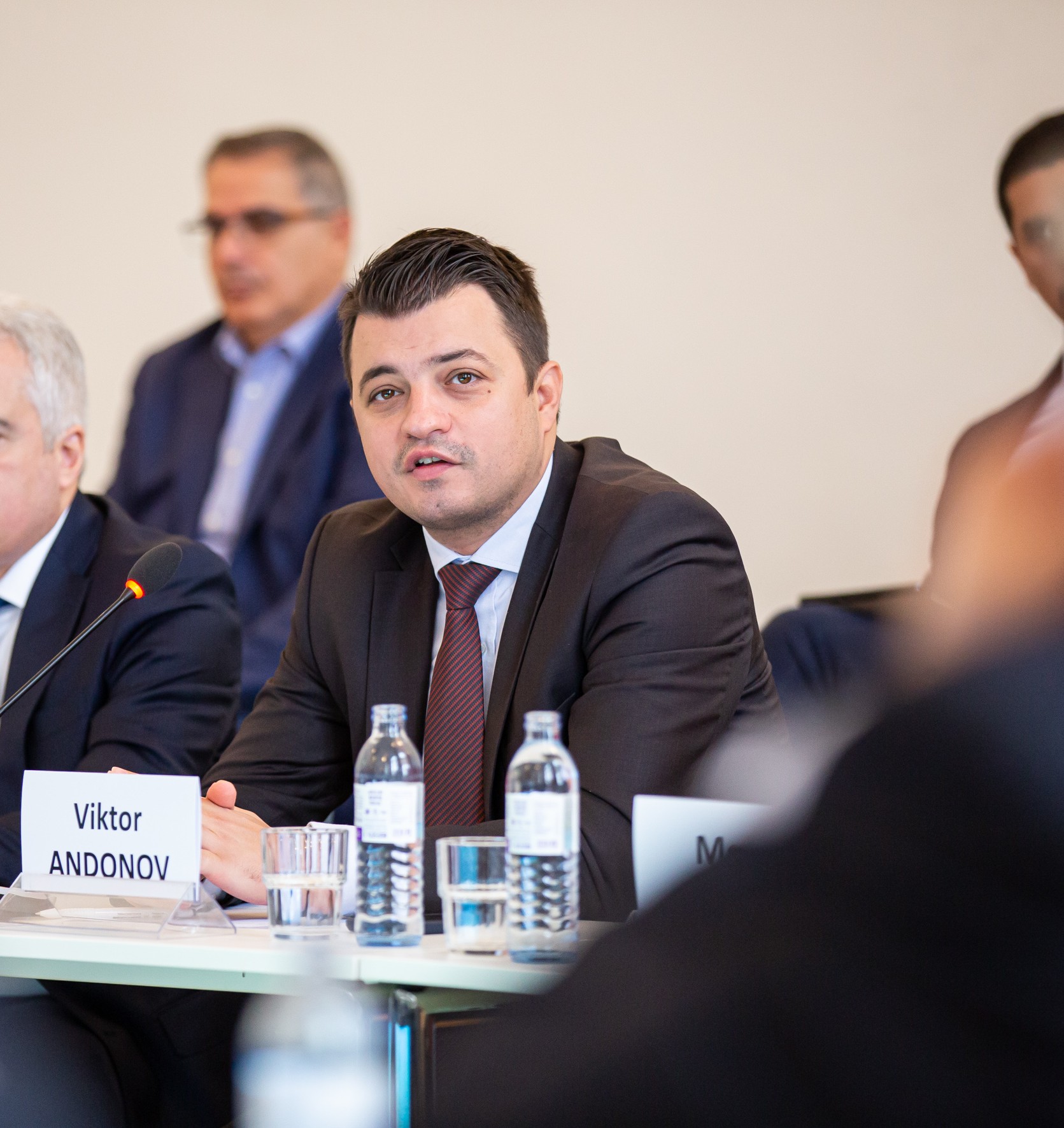
Viktor Andonov, M.Sc