

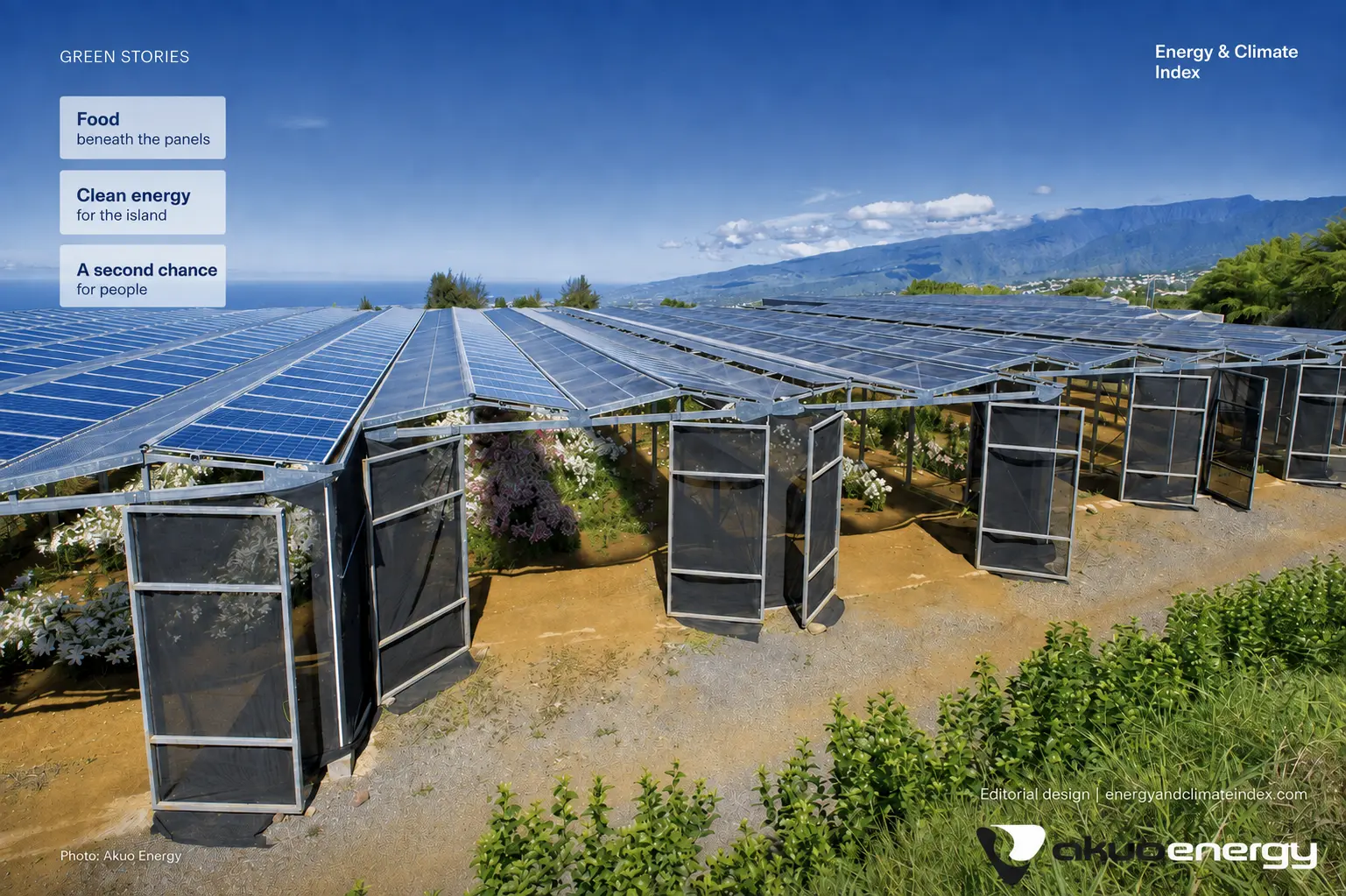
We continue our Green Stories series with projects demonstrating that the energy transition can create value far beyond electricity generation. This time, we travel to the French island of Réunion (La Réunion), where Akuo Energy commissioned a €27 million project in 2014 that brings together solar power, battery storage, cyclone-resistant agriculture and vocational training for inmates preparing for a new beginning after their release.
The French Bardzour project combines a solar power plant, battery storage, cyclone-resistant greenhouses and a vocational training programme for inmates at a single site.
Approximately 10,000 kilometres from mainland France, in the middle of the Indian Ocean, the French island of Réunion (La Réunion) is demonstrating that an energy project can address much more than electricity generation alone.
Located within the grounds of the Le Port detention centre, Bardzour combines a solar power plant with battery storage, agricultural greenhouses and a vocational training programme for inmates.


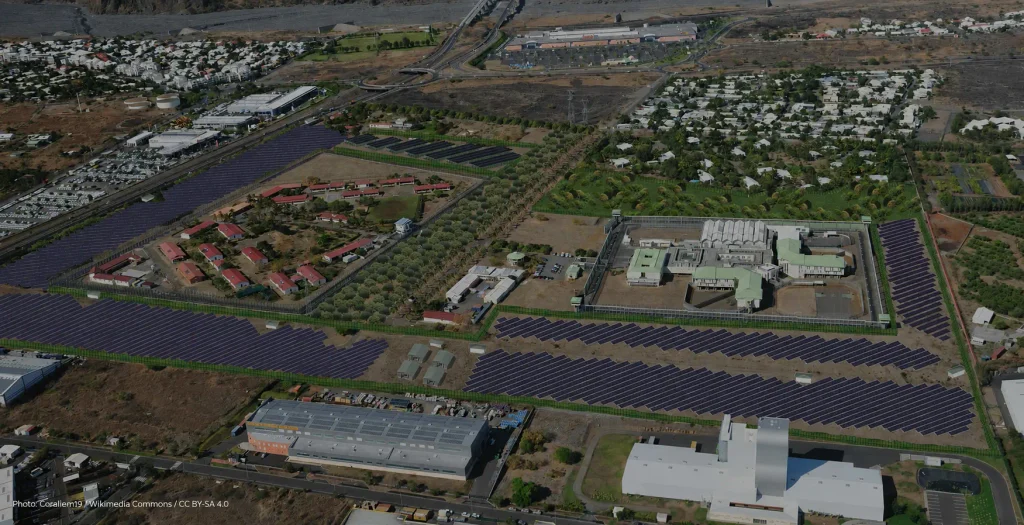
In the local Creole language, Bardzour means “dawn” or “a new day”. In this case, the name also captures the essence of the project: producing clean energy, better protecting local agriculture and offering a new professional beginning to people preparing to leave prison.
A power plant built around a detention centre
Bardzour was commissioned in 2014 with an installed capacity of 9 MWp and a 9 MWh lithium-ion battery storage system. At the time of its construction, it was one of the first solutions of this scale to combine a solar power plant with energy storage in an isolated island electricity system.
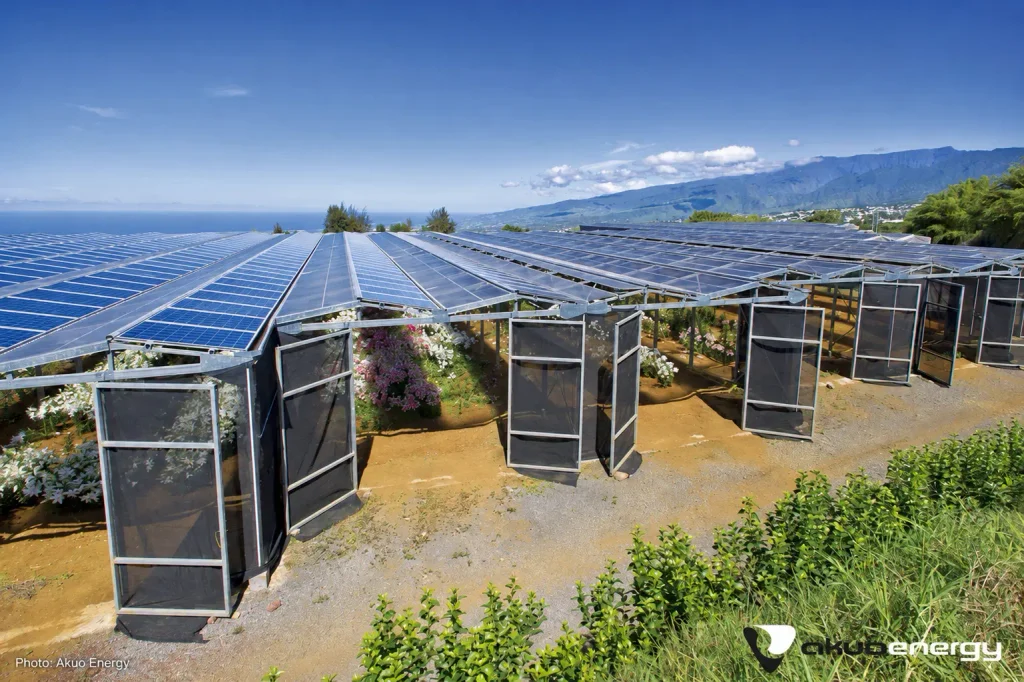
Of the total capacity, 8.4 MWp is installed on land within the security zone surrounding the detention centre, while 0.6 MWp is integrated above 6,000 square metres of agricultural greenhouses.
The plant has approximately 27,000 solar panels and generates around 10 GWh of electricity annually. All the electricity produced is delivered to the local grid, while the battery smooths the delivery profile when solar generation declines.
This is particularly important for Réunion. The island has no electricity interconnection with a neighbouring system and therefore cannot rely on cross-border imports when domestic generation is insufficient.
Every new solar power plant must be integrated into a small and isolated electricity system, where storage and predictable output are significantly more valuable.
Agriculture beneath the solar panels
Bardzour is more than a power plant in an unusual location. Agricultural production continues beneath part of the solar installation.
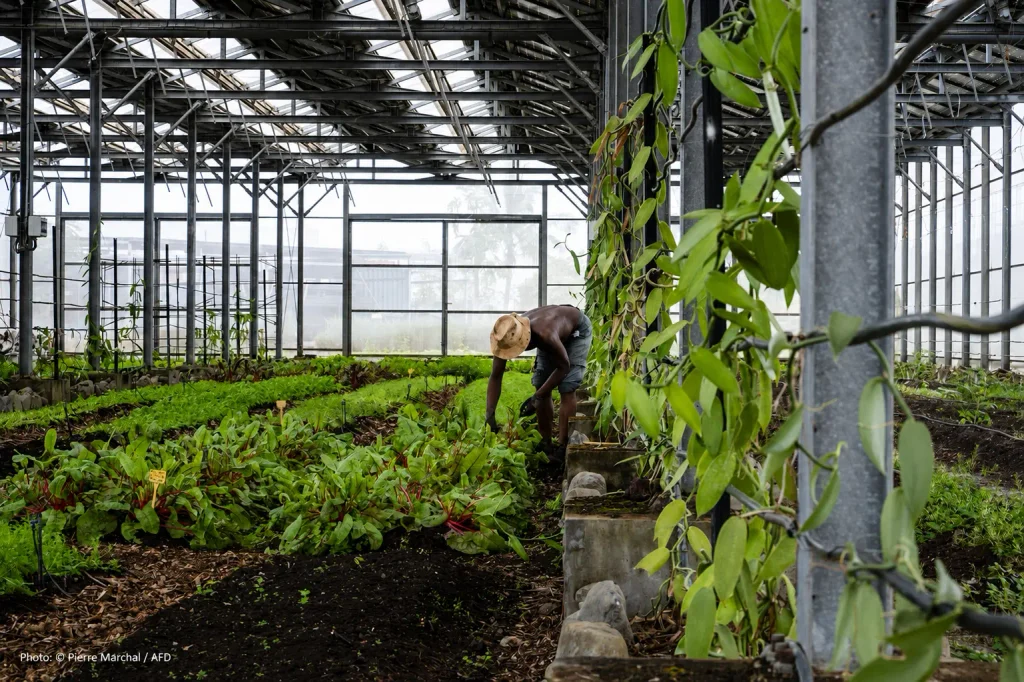
The project includes 6,000 square metres of solar greenhouses and an additional 2,700 square metres of open agricultural land. Vegetables, fruit, flowers, medicinal plants and aromatic herbs are grown there.
The greenhouses are designed to protect crops from the island’s tropical weather conditions. They have cyclone-resistant structures and netting that allows air to circulate while protecting the plants from insects. The solar panels also provide shade for crops that require protection from the intense tropical sun.
This is the essence of agrivoltaics: agricultural land is not removed from food production and converted exclusively into an energy site. Electricity and agricultural products are produced at the same location, while the energy infrastructure is intended to support farming.
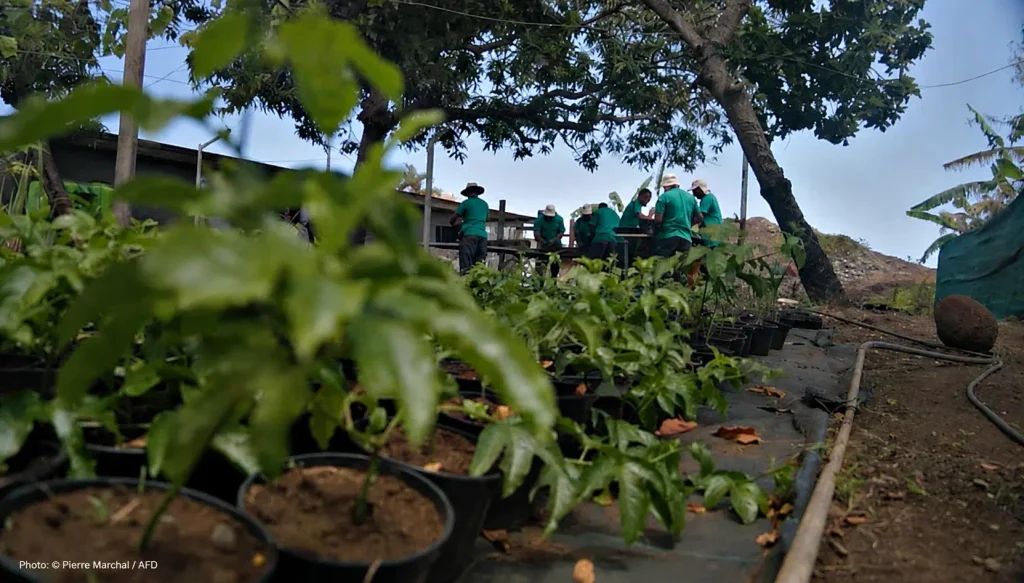
Some of the food produced is used in the detention centre’s kitchen, while the remaining products are sold through a local organic cooperative, to restaurants and directly to individual customers. Agricultural production follows permaculture and agroecological principles and is certified organic.
Electricity revenues also support agriculture
The project’s economic model is another interesting feature. Revenue generated from electricity sales helps finance the equipment required for agricultural production.
The solar power plant is therefore not a parallel activity that merely occupies the same site. It creates a financial foundation for maintaining agricultural operations, purchasing equipment and developing production that might otherwise struggle to remain economically viable on the island.
This approach is particularly significant for island territories, where land is limited and a large proportion of food and energy resources must be imported. Rather than choosing between agriculture and electricity generation, Bardzour seeks to develop both activities on the same land.
Practical training for life after prison
The project’s most unusual feature is its social role.
Inmates approaching the end of their sentences can undertake 25 hours of practical agricultural training each week. They learn how to prepare soil, plant crops, install irrigation systems, care for plants, harvest produce and prepare it for sale.
The programme does not end with training inside the detention centre. According to Akuo Energy, some participants have been offered employment after their release by the agricultural company Agriterra and at other agrivoltaic sites on the island.
Vocational training began during the construction of the power plant. More than 15,000 working hours were devoted to training inmates in activities related to the construction of solar facilities.
Bardzour therefore creates a connection between the energy transition and social reintegration. The green project produces not only electricity but also knowledge and practical skills that can help people return to the labour market.
One site, four solutions
Bardzour demonstrates why agrivoltaics can be particularly valuable for island communities.
A single location delivers four outcomes: local electricity generation, storage for more stable delivery to the grid, agricultural production for the island and vocational training for people who need a second chance.
The project is not a model that can simply be replicated everywhere. Its results depend on the selection of crops, the amount of light reaching the plants beneath the panels, the design of the greenhouses and the actual viability of agricultural production.
Its most important message, however, is clear: the energy transition does not have to end when a power plant is connected to the grid. When designed well, it can generate electricity, protect food production from climate risks and open a new path for people.
ECI