

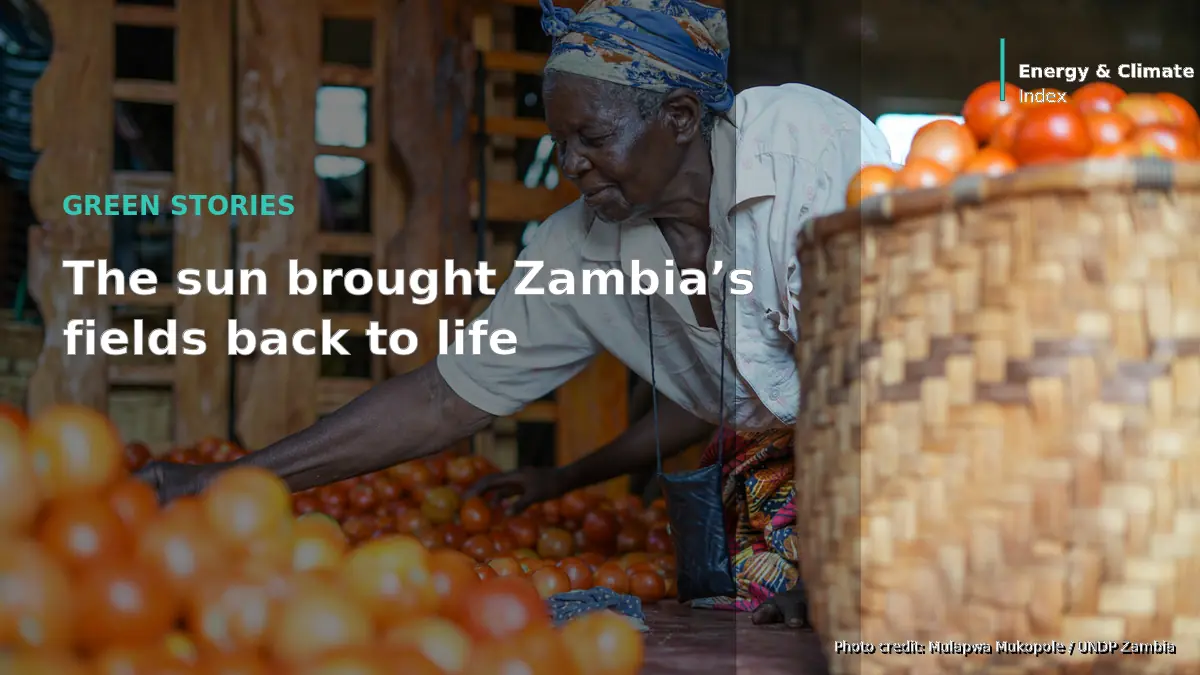
Every morning, Elizabeth Phiri from the Kalichero community in eastern Zambia walked to the stream. She filled her buckets, made the heavy journey back and repeated the process until the crops received at least some of the water they needed.
That changed in June 2025, when her community gained access to a solar-powered drip irrigation system.
“Things are much easier now. We simply switch on the drip lines,” Elizabeth says.


What began as a solution to water scarcity quickly developed into a new local economic model: increased agricultural production, new sources of income, solar-powered freezers, fishponds and a system that reinvests part of the earnings to support the next group of farmers.
From carrying water to solar irrigation
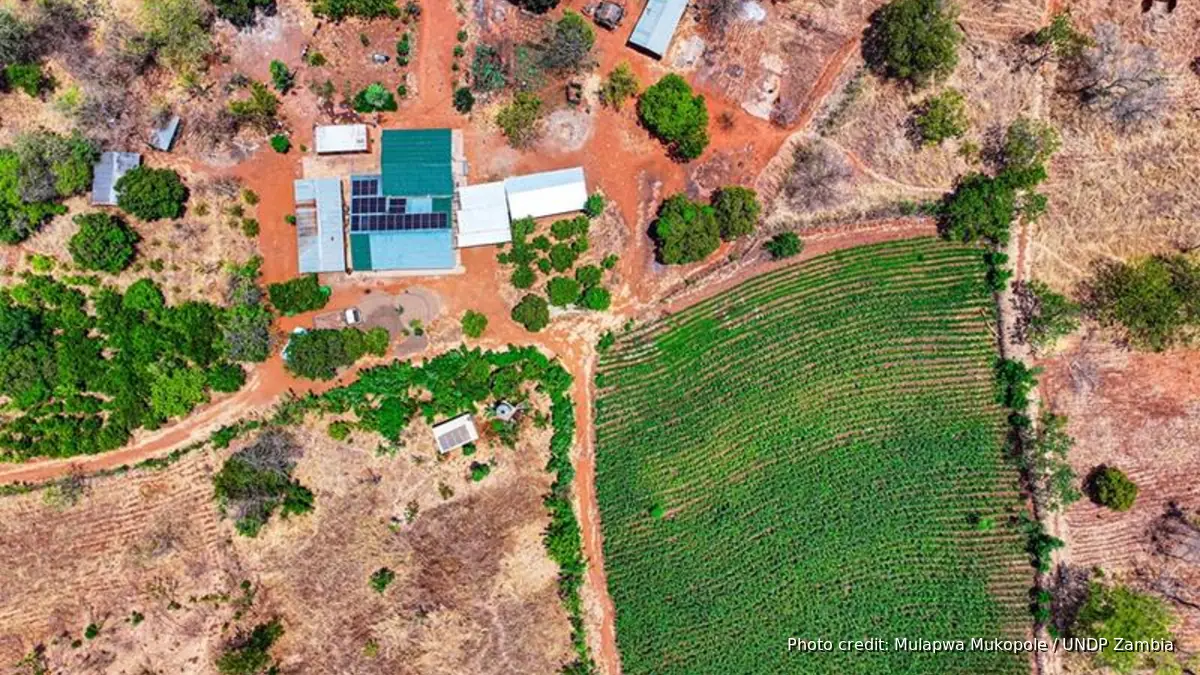
Kalichero is part of the PAZESA Horticultural Community Action Group, a cooperative of 41 members from three communities in Chipangali District. Twenty-eight of its members are women, who have traditionally carried much of the responsibility for cultivating the land and securing water.
In June 2025, the community received a USD 25,000 grant through the Productive Uses of Electricity Project, implemented by UNDP Zambia under the Climate Promise initiative.
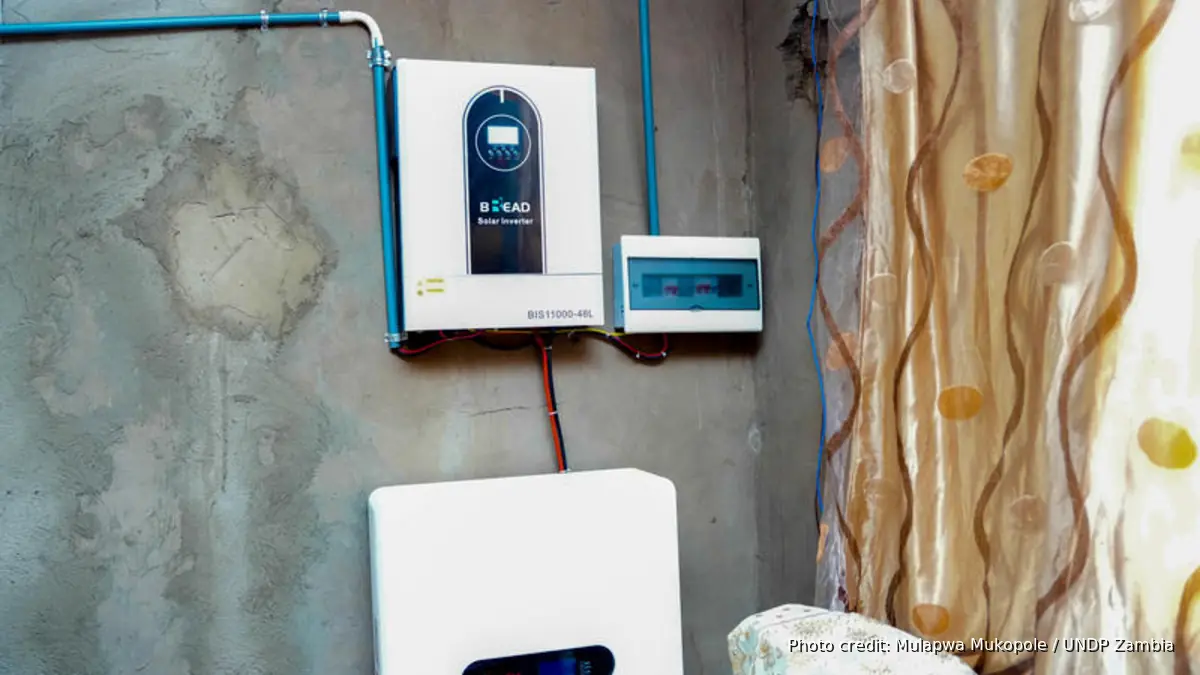
The funding supported the installation of an off-grid solar power system, six boreholes, drip irrigation infrastructure and two solar-powered freezers.
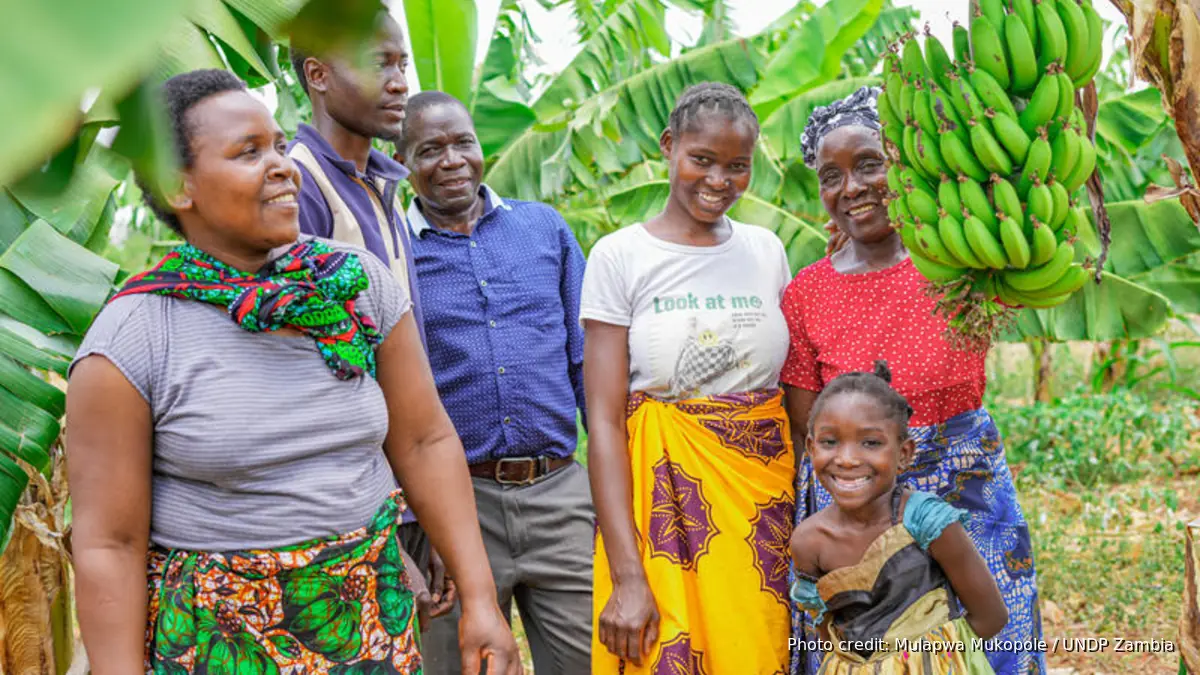
The community now farms around 320 hectares, producing cucumbers, tomatoes, maize, potatoes and bananas. The land is the same, and so is the sun, but the way both are being used has changed completely.
A USD 25,000 grant created a new local economy
The results arrived quickly. Since June 2025, the community has earned around USD 20,000 from cucumber and tomato sales. The maize harvest in December generated approximately another USD 13,000.
The banana plantations, which were still developing, were expected to create an additional source of income every quarter.
However, the project’s real value cannot be measured only by the volume of food produced. Reliable access to water has allowed farmers to plan ahead, diversify their crops and sell produce during periods when agricultural production was previously impossible.
Solar energy has not merely replaced physically demanding work. It has reduced exposure to drought and transformed farming into a more stable source of income.
Freezers, fishponds and new sources of income
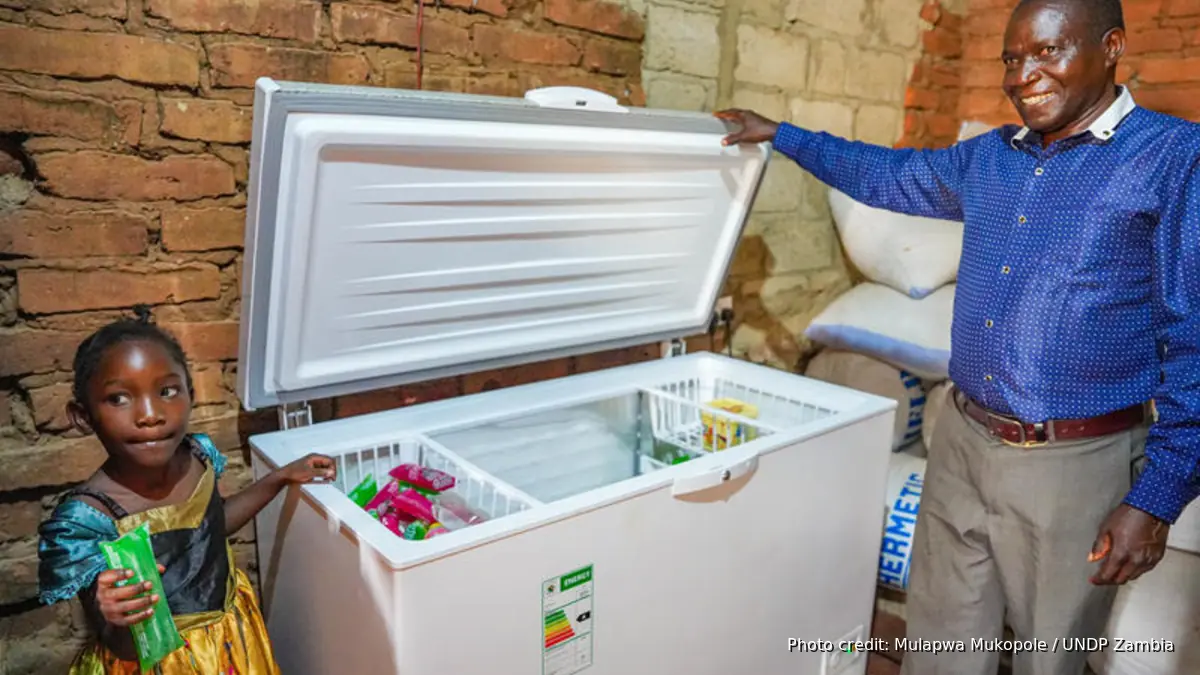
The two solar-powered freezers were originally purchased to preserve fish and agricultural produce. The women in the community soon found another use for them: producing and selling ice and frozen treats to their neighbors.
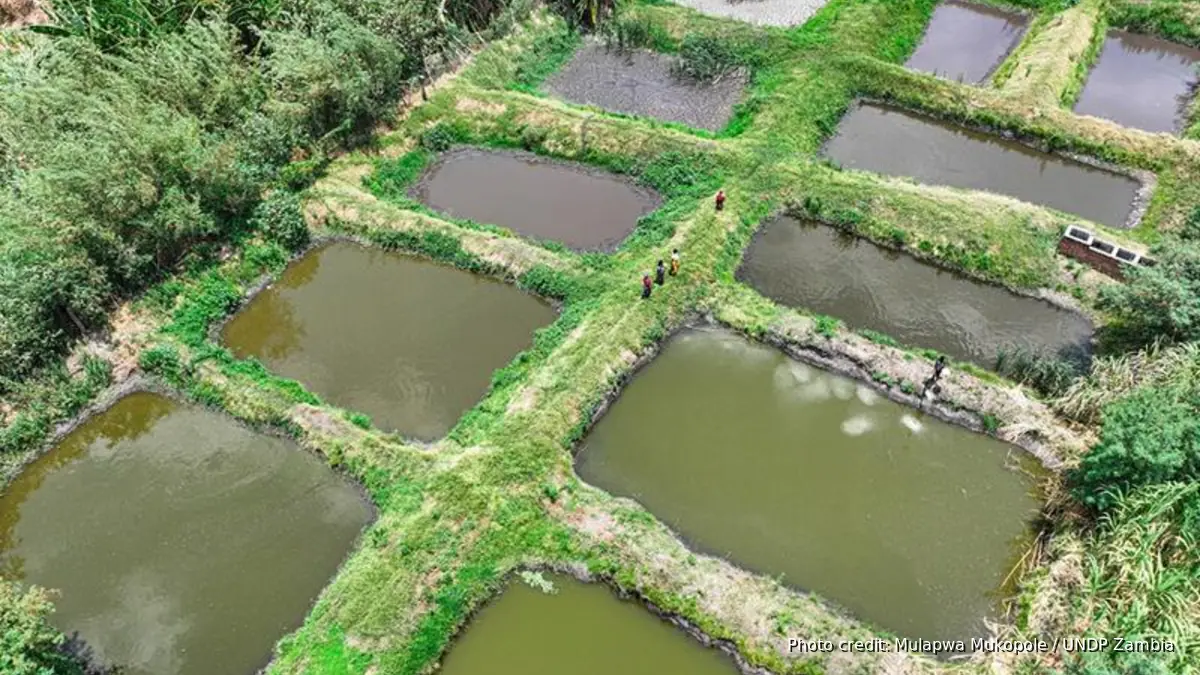
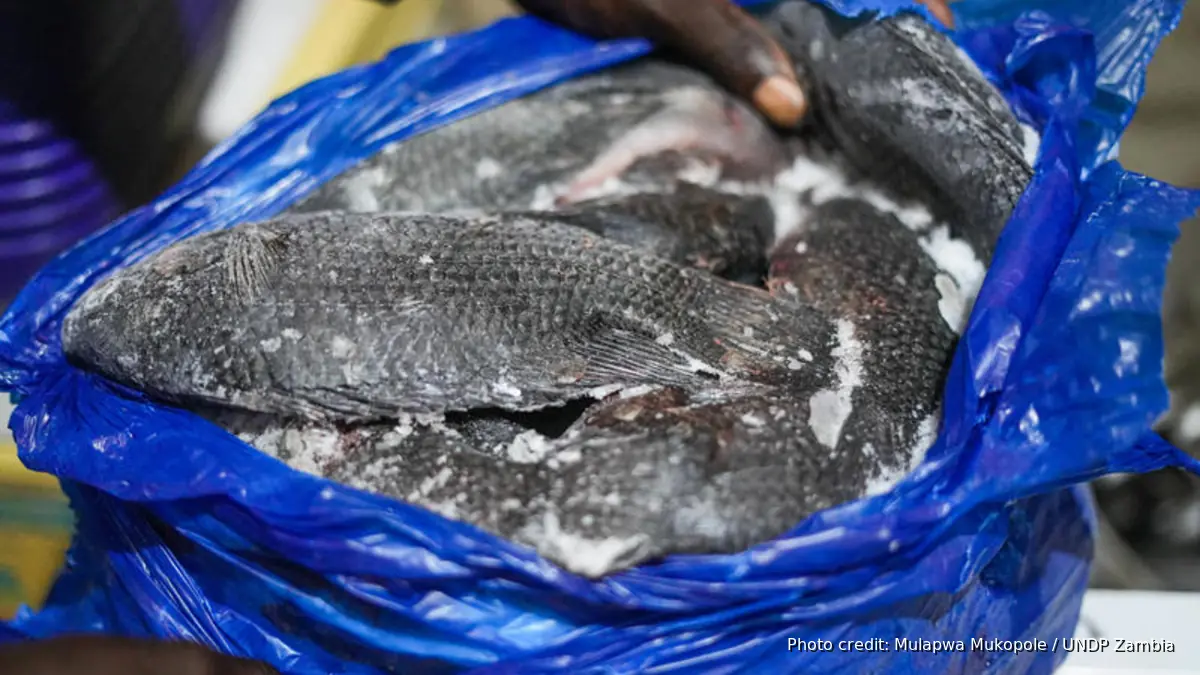
The project also supports 15 fishponds containing more than 15,000 tilapia. The same solar system now provides water for agriculture, supports fish production, preserves food and creates new small business opportunities.
In the neighbouring Chingaipe community, eight farmers grow cucumbers, beans, lemons and oranges using irrigation powered by two solar panels.
One of them, Mary Banda, used her share of the earnings to build a house, purchase household goods and provide food for her grandchildren.
For Mary, solar energy is not an abstract climate technology. It means a home, food and greater security for her family.
A model designed to keep expanding
A third farming group, Thazwela, was established in February 2025 with 12 members and one hectare of land.
Its model is designed to continue after the initial financial support ends. Part of the income from every harvest is placed into a shared fund that will help the next group of farmers get started.
In this way, the benefits do not remain with the first recipients but gradually spread through the wider community.
PAZESA founder Paul Phiri aims to connect 10,000 households across Zambia’s Eastern Province by 2030. The idea is for each community to become a small centre for food production, income generation and knowledge-sharing.
In Kalichero, the sun is no longer only a climate challenge for dry agricultural land. Through solar-powered irrigation, it has become a resource that provides water, food, income and new hope.
Source: UNDP Zambia – Sun, Soil, and Something New
ECI