

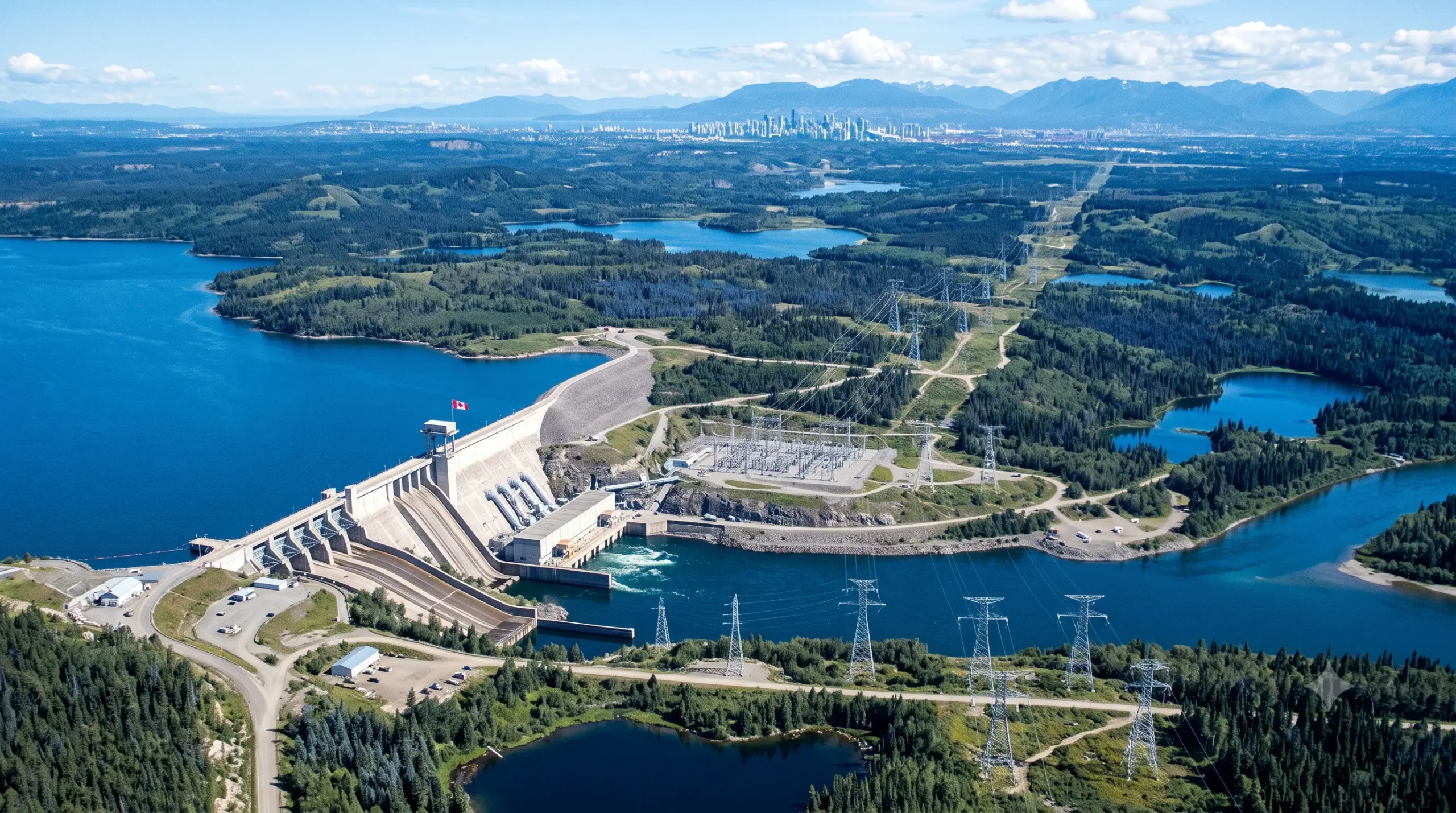
Rather than building its new energy policy around individual technologies, the Government of Canada is placing electrification at the heart of the country’s future economic growth, energy security and competitiveness.
In announcing the forthcoming National Electricity Strategy, Prime Minister Mark Carney outlined one of the most ambitious targets among advanced economies: doubling Canada’s electricity generation and electricity infrastructure by 2050.
According to the government, electricity demand is expected to double over the next 25 years as transport, heating, industry, artificial intelligence and data centres become increasingly electrified. As a result, electricity infrastructure is being treated as a strategic national priority rather than solely a climate policy issue.


Related: Read our analysis on how electrification is accelerating across the European Union on Energy & Climate Index.
Four pillars of the new strategy
The National Electricity Strategy will be built around four key priorities:
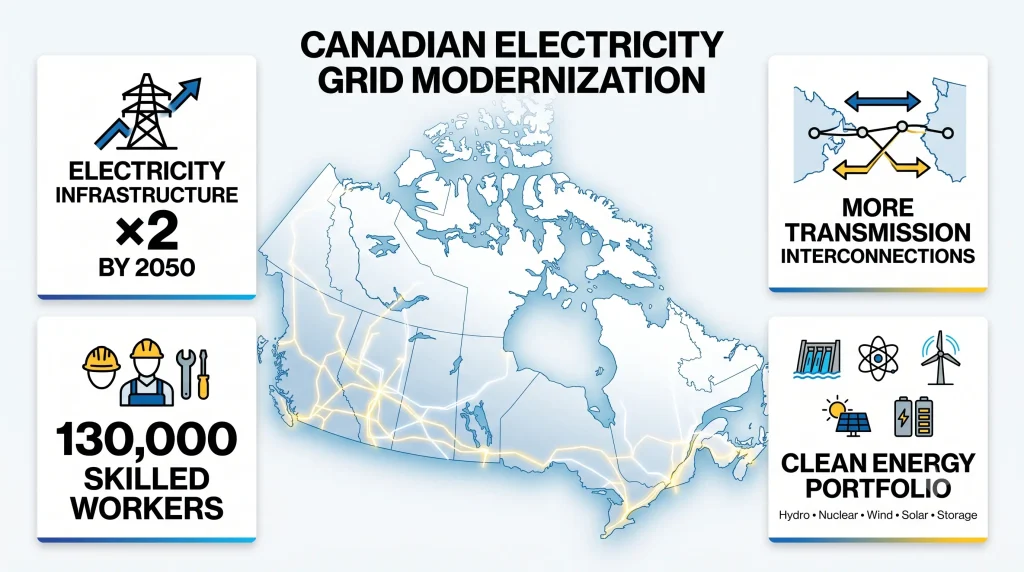
- doubling electricity generation, transmission, distribution and energy storage capacity;
- strengthening interprovincial electricity interconnections across Canada;
- training and supporting more than 130,000 skilled workers needed to build and operate the future electricity system;
- developing a stronger domestic supply chain for electricity technologies and critical components.
Electrification as economic policy
Speaking at the launch of the strategy, Prime Minister Mark Carney stressed that Canada’s future competitiveness will depend on access to abundant, reliable and affordable electricity.
“The path to affordable energy is electrification. The path to competitiveness is electrification. The path to net-zero is electrification,” Carney said while presenting the strategy.
The government estimates that accelerated electrification and investments in energy efficiency could reduce overall energy costs for seven out of ten Canadian households by 2050, generating approximately CAD 15 billion in total savings.
Related: Electrification is also becoming a central priority of the global climate agenda, including preparations for COP31.
Major investments in grids and clean generation
The strategy foresees significant investments in new hydropower, nuclear, wind and solar projects, electricity storage and the modernization of Canada’s transmission network. The federal government also plans to accelerate permitting procedures for strategic infrastructure projects while extending tax incentives that support investments in clean electricity.
With around 80% of its electricity already generated from low-carbon sources, Canada already operates one of the cleanest electricity systems among G7 countries. Through the National Electricity Strategy, the government aims to transform this advantage into a driver of long-term economic growth, industrial development and energy security.
ECI