

Rather than beginning with the report itself, it is more important to start with what the data actually reveal.
The latest quarterly reports on European electricity markets published by the European Commission show that the European Union entered a new phase of the energy transition in 2025.
While the previous decade was characterised by the rapid expansion of renewable energy, 2025 demonstrates that electrification is becoming the primary mechanism through which Europe is reducing its dependence on fossil fuels while advancing both its climate and energy policy objectives.


Solar power sets another record
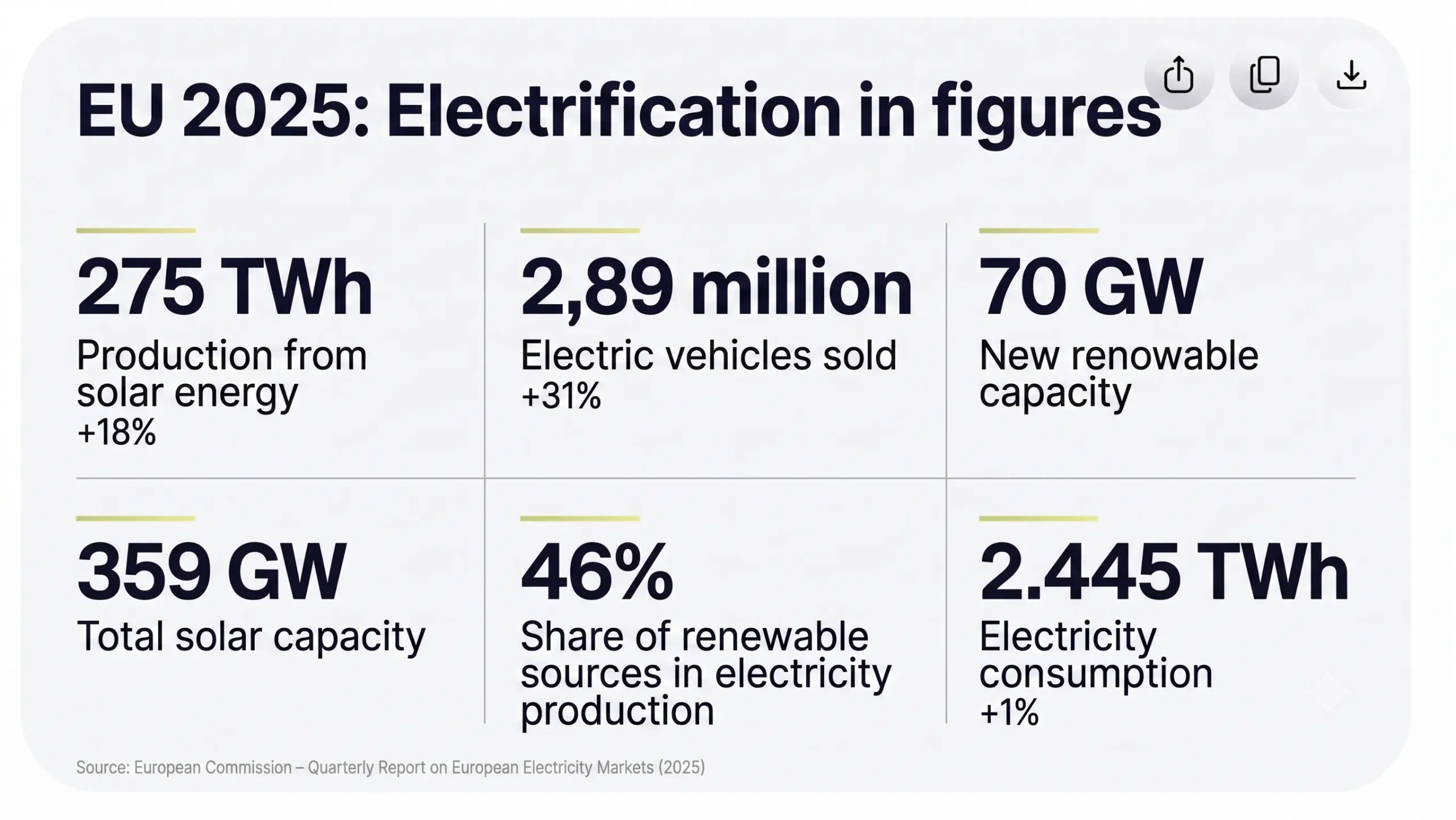
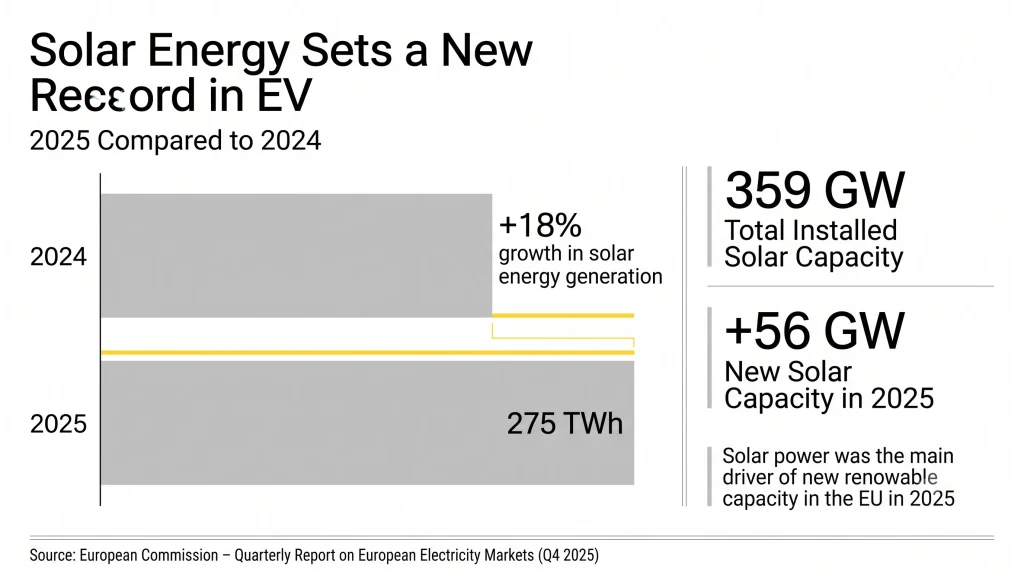
In 2025, solar power plants generated 275 TWh of electricity, representing an 18% increase compared with the previous year. At the same time, the European Union installed 56 GW of new solar capacity, bringing the total installed solar fleet to 359 GW.
Electric vehicles gain strong momentum
The electrification of transport continues to accelerate. During 2025, 2.89 million electric vehicles were sold across the European Union, 31% more than in 2024. In the fourth quarter alone, almost 871,000 new electric vehicles were registered the highest quarterly figure on record, raising the EV market share to 22% of all new passenger car sales.
Renewables remain the main driver of the transition
Despite a weaker hydrological year, renewable energy sources still accounted for 46% of the EU’s electricity generation. Lower hydropower output was largely offset by record solar generation and continued growth in offshore wind, while investment activity remained at record levels with nearly 70 GW of newly installed renewable capacity during the year.
The market is gradually stabilizing
The average wholesale electricity price across the European Union stood at €85/MWh in 2025. This was 9% higher than in 2024, mainly due to higher natural gas prices during the first half of the year, but still 14% below the 2023 average, when Europe was still experiencing the consequences of the energy crisis.
Electrification is no longer just a climate policy
The most important message emerging from the European Commission’s reports is not the individual records themselves, but the broader trend they confirm.
Record solar generation, accelerating electric vehicle adoption, continued renewable energy growth and the gradual recovery in electricity demand all point to the same conclusion: electrification is becoming the central pillar of Europe’s energy policy.
This transformation is about far more than reducing greenhouse gas emissions. It is strengthening Europe’s energy security, reducing dependence on imported fossil fuels and improving the long-term competitiveness of the European economy.
ECI