

Serbia and Romania are accelerating activities related to the construction of a new gas interconnection between the two countries, a project expected to provide an additional supply route for natural gas and strengthen regional energy security.
On the Serbian side, most of the project and technical documentation for the pipeline section leading to the Romanian border has been completed. The section is approximately 13 kilometres long, while completion of construction works is expected during 2027.
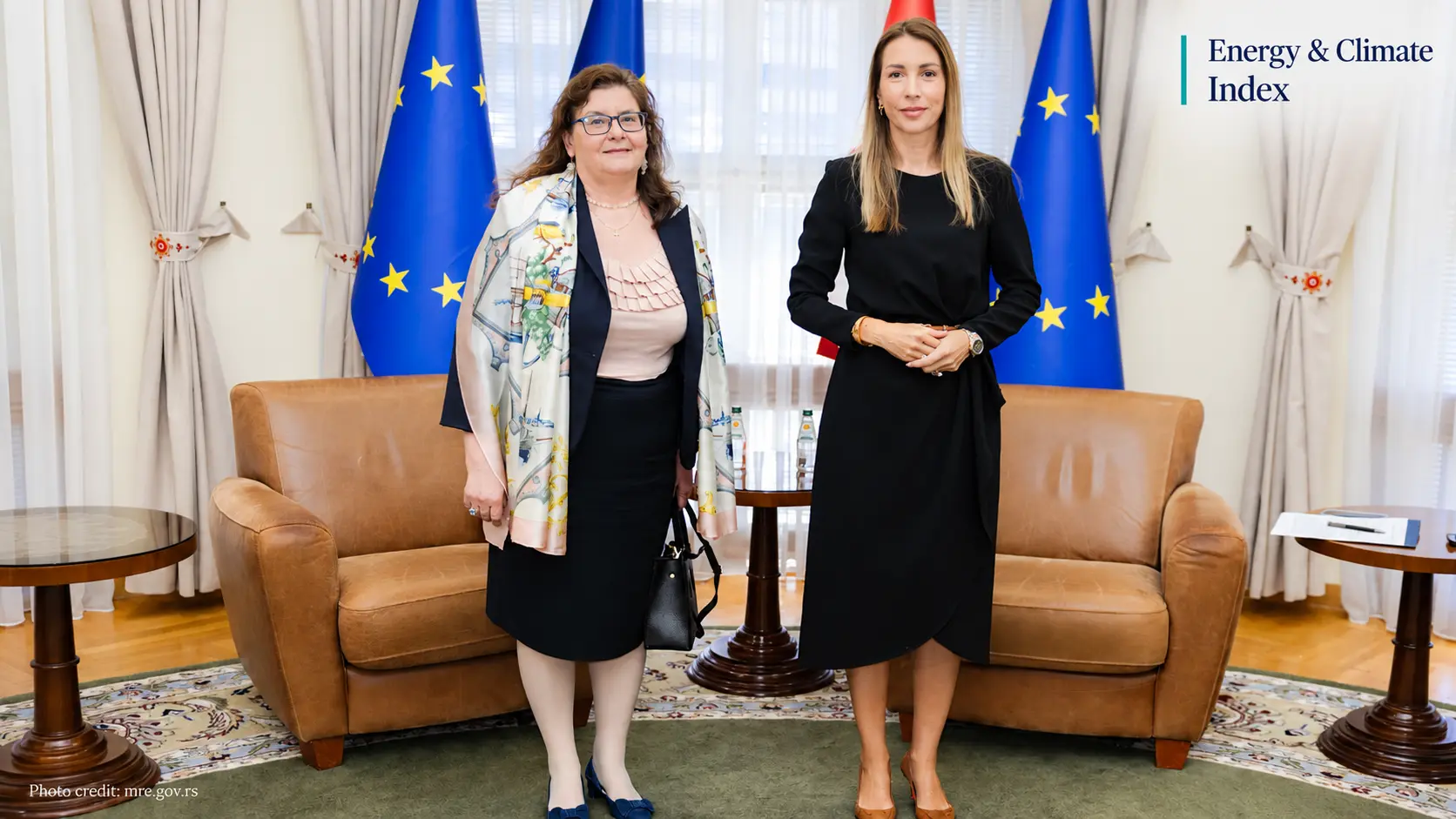
The project was discussed by Serbia’s acting Minister of Mining and Energy Dubravka Đedović Handanović and Romanian Ambassador to Serbia Silvia Davidoiu.


According to Serbia’s Ministry of Mining and Energy, Romania is expected to launch tender procedures for its significantly longer section in the coming period, while construction is planned to begin in early 2027.
The new interconnection is intended to support the diversification of natural gas sources and supply routes, giving Serbia an additional connection point to the regional and European gas system.

The project is also linked to a broader programme for the modernisation of Serbia’s gas infrastructure. The World Bank recently approved a Gas Sector Development Programme focused on improving the security, reliability and resilience of gas supply through investments in strategic infrastructure.
The programme envisages the construction of around 150 kilometres of new gas pipelines. These are expected to connect the Romania interconnection with the Banatski Dvor underground gas storage facility, Belgrade and Pančevo, as well as with the northern route towards Horgoš.
This additional infrastructure should allow the new interconnection to operate at full capacity and become more effectively integrated into Serbia’s existing gas transmission system.
From the Romanian side, the project is also seen as important for expanding gas access to inland regions of the country and strengthening Romania’s broader role as a regional energy supplier.
Following the formation of Serbia’s new government, further discussions are also expected on other joint energy projects, including the possibility of developing a petroleum products pipeline to enable more efficient trade in oil derivatives between Serbia and Romania.
The regional link also runs through North Macedonia
The Serbia–Romania project is being developed in parallel with the broader expansion of regional gas infrastructure towards the Western Balkans. In September 2026, NOMAGAS of North Macedonia and Transportgas Serbia formally joined the Vertical Corridor initiative by signing a memorandum in Thessaloniki. The corridor connects the gas systems of Greece, Bulgaria, Romania, Hungary, Slovakia, Ukraine and Moldova, while the inclusion of North Macedonia and Serbia extends the initiative further into the Western Balkans.
For North Macedonia, the interconnector with Greece is particularly important. It is expected to become operational in 2027, with an initial capacity of 1.5 billion cubic metres per year and the possibility of expansion to 3 billion cubic metres. At the same time, the North Macedonia–Serbia interconnector is also being developed, creating the potential for a southern supply route from Greek LNG terminals through North Macedonia to Serbia and further towards Central Europe.
This is especially significant as Greece is positioning Alexandroupolis as one of the key LNG entry points for the region, while Serbia has already reserved 300 million cubic metres per year of capacity there for a ten-year period. Greece has also linked the further development of the Vertical Corridor with the future Greece–North Macedonia and North Macedonia–Serbia gas interconnections.
Together, these projects point to a broader regional infrastructure axis: Greece → North Macedonia → Serbia → Romania / Central Europe.
ECI