

The implementation of energy and climate policies across the Energy Community Contracting Parties continues to reflect a mixed but gradually improving performance, as highlighted in the Energy Community Implementation Report 2025.
Key Performance Indicators
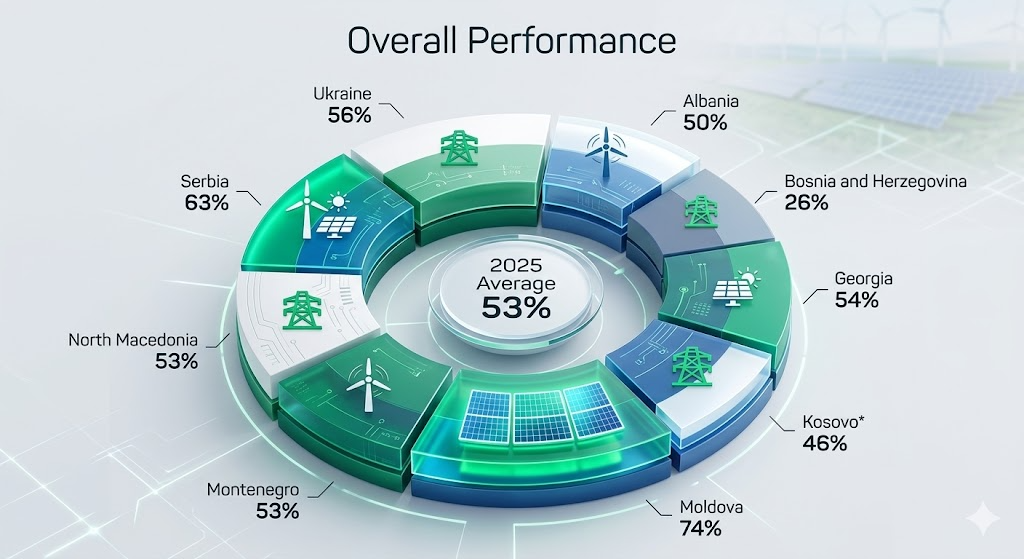
Overall, the level of alignment with the European Union energy acquis remains moderate, indicating that while legislative frameworks are largely in place, practical implementation continues to lag behind across several key sectors.
Electricity Market Development
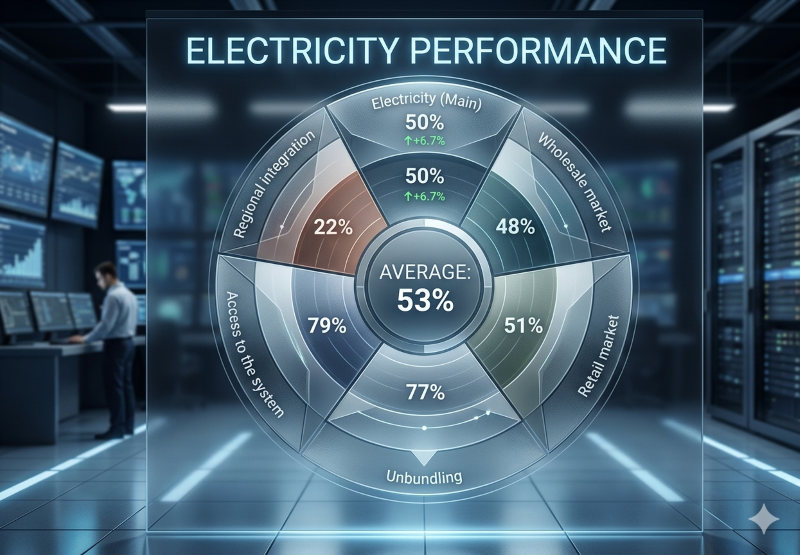
Progress in the electricity sector has been relatively more advanced compared to other segments. Improvements have been observed in wholesale market functioning, retail liberalization, and the unbundling of system operators.


However, regional market integration remains limited. Cross-border market coupling and full participation in the integrated European electricity market are still at an early stage, constraining efficient price formation and regional trade.
Gas Market Challenges
The gas sector continues to demonstrate weaker performance across the region. Key challenges include:
- Limited retail market liberalization
- Incomplete system unbundling
- Dependence on single supply routes in several countries
Although ongoing infrastructure projects and interconnections are expected to improve diversification, regulatory and market reforms remain essential for a functional gas market.

Decarbonisation and Energy Transition
Decarbonisation policies present a heterogeneous picture:
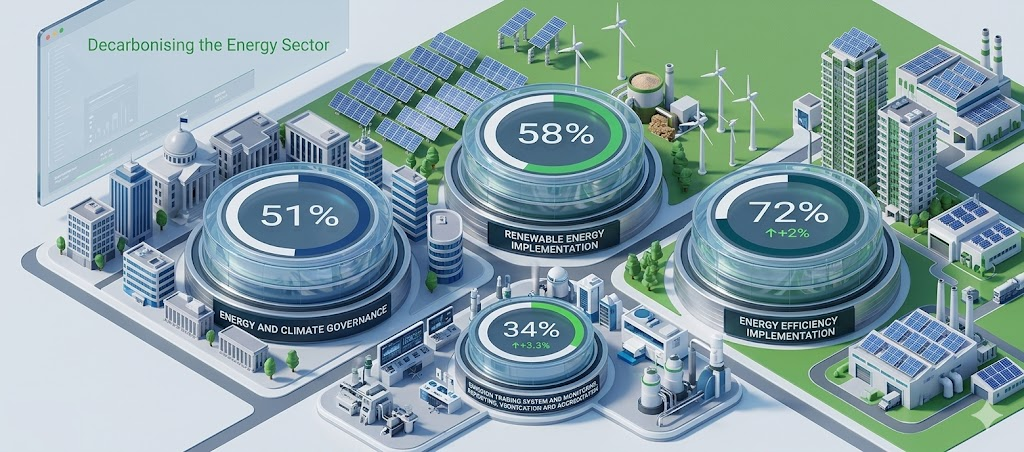
- Renewable energy deployment is progressing, but remains uneven
- Energy efficiency policies show comparatively stronger implementation
- Emissions-related frameworks, including MRV systems and carbon pricing mechanisms, are still underdeveloped
This indicates that while the transition has started, it lacks consistency and institutional depth across the region.
Country-Level Performance
Significant differences persist among Contracting Parties:
- Some countries demonstrate steady progress in market reforms and policy alignment
- Others continue to face structural barriers, including institutional capacity constraints and regulatory inconsistencies
These divergences highlight the need for a more coordinated and harmonised approach to policy implementation.
Key Structural Challenge
The central issue is no longer the adoption of legislation, but its effective implementation.
Key constraints include:
- Limited regulatory independence
- Political influence in decision-making
- Weak institutional enforcement mechanisms
Conclusion
The findings of the Energy Community Implementation Report 2025 confirm that accelerating the energy transition in the Western Balkans will require:
- Stronger regulatory enforcement
- Deeper regional market integration
- Consistent alignment with EU energy and climate policies
Without addressing these structural gaps, the region risks falling behind in both market integration and decarbonisation objectives.