

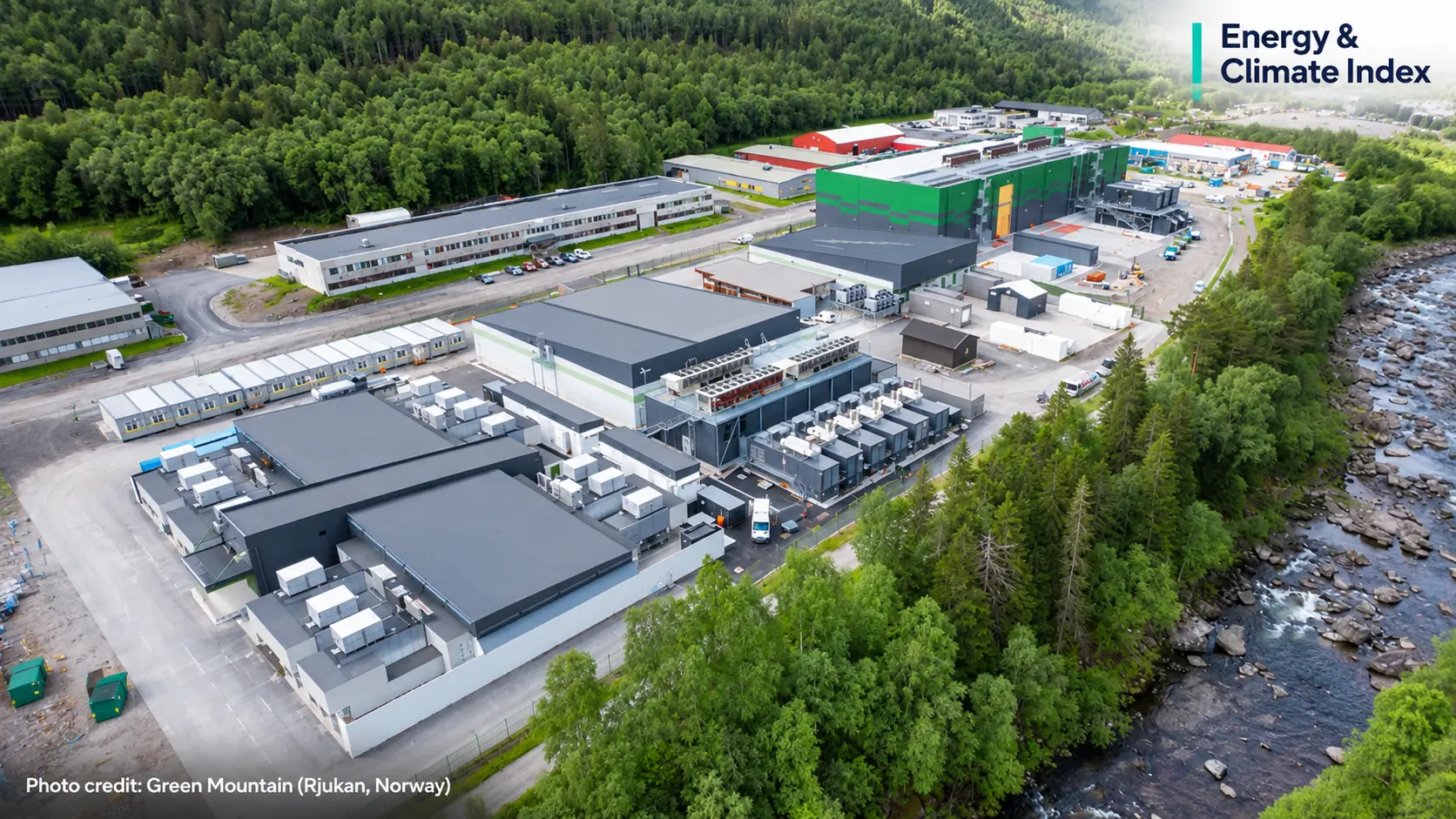
Norway’s transmission system operator is introducing temporary restrictions due to risks to electricity system stability. Data centres with a combined capacity of 800 MW are already connected to the grid, while an additional 4,200 MW of connection capacity has been reserved and demand for new connections continues to grow.
Norwegian transmission system operator Statnett announced on 9 November 2026 that it is temporarily suspending new grid capacity reservations for data centres. The decision aims to ensure the secure and stable operation of the electricity system amid rapidly growing interest in developing new digital infrastructure.
The measures include suspending new grid connection reservations and temporarily halting the assessment of new applications for technical approval of data centre facilities. In addition, Statnett is suspending the review of certain previously submitted applications for facilities seeking direct connection to the 420 kV transmission network.


According to Statnett, the restrictions are expected to be lifted no later than 1 August 2027, following the introduction of additional technical requirements for the safe connection of large data centres.
More than 31 GW of reserved and requested grid connection capacity
According to official Statnett data, data centres with a combined connection capacity of approximately 800 MW are currently connected to Norway’s electricity grid.
An additional 4,200 MW of connection capacity has already been reserved, while applications representing another 9,100 MW are on the waiting list. At the same time, the operator has received further connection requests totalling 18,000 MW.
Combined, reserved capacity and pending connection requests amount to 31,300 MW, or 31.3 GW. Including the 800 MW already connected, the total recorded capacity reaches 32.1 GW.
These figures represent grid connection capacity at different stages of development, rather than actual or expected simultaneous electricity demand. Some projects may never be implemented, while others have yet to meet the technical and administrative requirements for grid connection.
Nevertheless, the scale of these requests highlights growing pressure on electricity infrastructure, particularly regarding available grid capacity and the ability to safely integrate new large-scale electricity consumers.
Electricity system stability becomes a major challenge
Statnett emphasizes that the restrictions are not solely related to the volume of requested connection capacity, but primarily to the specific technical characteristics of data centres.
Unlike traditional large industrial consumers, data centres can experience rapid and significant changes in electricity demand, controlled by software-based systems. Certain facilities may also be more sensitive to disturbances in the electricity network.
These characteristics create risks to system stability, particularly if multiple data centres simultaneously reduce their electricity consumption or disconnect from the grid in response to a disturbance.
Statnett is therefore developing new technical requirements to regulate how data centres respond to grid disturbances.
The new rules will address the conditions under which facilities may disconnect from the network, permissible rates of change in electricity demand, and additional technical measures to reduce the risk of oscillations within the electricity system.
The proposed requirements will be subject to public consultation and will require approval from the Norwegian energy regulator, RME.
The temporary restrictions will not apply to existing connections or facilities that have already obtained the necessary technical approvals. The operator also envisages the possibility of reviewing certain applications for smaller facilities or projects scheduled to become operational in the near future.
Norway is also preparing new rules for data centre development
Alongside Statnett’s decision, the Norwegian government announced broader measures on 9 November aimed at ensuring the controlled development of data centres.
One of the most significant proposals involves introducing a dedicated permitting framework for their construction and operation, with greater consideration given to societal benefits, digital security and the needs of critical infrastructure.
The government also announced a review of the rules governing the connection of large electricity consumers, including the possibility of requiring new data centres to bear a greater share of the costs they impose on electricity network development and system operation.
Furthermore, authorities will consider whether investors in large data centres should contribute to the development of additional electricity generation capacity. Options mentioned by the government include gas-fired power plants equipped with carbon capture and storage technology, as well as offshore wind farms.
Statnett’s decision demonstrates that the development of artificial intelligence and digital infrastructure increasingly depends not only on the availability of electricity, but also on the technical capabilities of electricity systems.
Even in countries with substantial renewable electricity generation, such as Norway, connecting large new consumers requires adequate grid capacity, clearly defined technical standards and mechanisms to maintain system stability.
In this context, data centres could also play an active role in demand-side management and the provision of system flexibility, provided their electricity consumption can be adjusted in a controlled manner to meet the operational needs of the electricity network.
ECI