

The government is establishing a special committee to examine the potential role of small modular reactors in the future electricity system
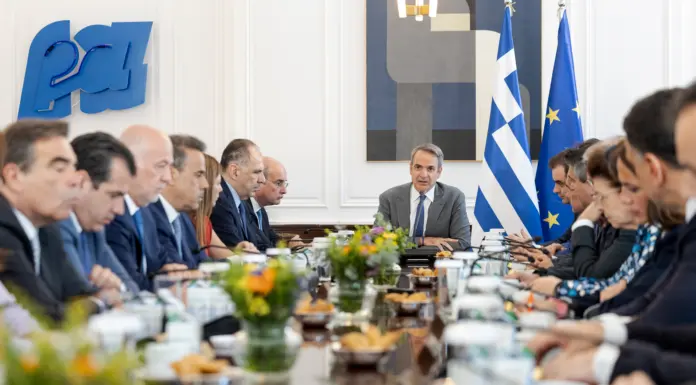
Greece has taken its first institutional step towards considering nuclear energy as a potential part of its future electricity system. The Council of Ministers approved the initiative to establish a Government Committee on Nuclear Energy, which will prepare proposals on the possible deployment of this technology.
According to the official announcement by the Greek government, the proposal for the establishment, composition and operation of the committee was submitted by Minister of Environment and Energy Stavros Papastavrou and Deputy Minister Nikos Tsafos.
The committee will prepare recommendations on the potential use of nuclear energy in Greece, with a particular focus on small modular reactors, or SMRs.


Greece seeks stable generation alongside renewables
The establishment of the committee follows an announcement made by Prime Minister Kyriakos Mitsotakis at the Nuclear Energy Summit held in Paris in March 2026. At the time, he said that Greece should examine whether nuclear energy, particularly small modular reactors, could play a role in the national electricity system.
In his official address, Mitsotakis said that electricity demand would continue to increase and that, regardless of the expansion of wind and solar capacity, stable and predictable generation would be needed in the long term.
According to him, Europe must reconsider nuclear energy as part of the solution for providing low-emission electricity. However, he also acknowledged that the sector faces complex regulation, shortages of qualified personnel, lengthy implementation periods and costs that often exceed initial estimates.
From a government committee to a potential nuclear programme
The establishment of the committee does not constitute a decision to build a nuclear power plant. Greece has not selected a technology, location, capacity, investor or strategic partner.
The committee should provide the basis for assessing whether the country can launch a national nuclear programme. Such an assessment would need to cover safety and regulatory requirements, the maturity of available technologies, the need for qualified personnel, potential financing models and radioactive waste management.
For now, the most important change is political and institutional: a technology that had remained outside Greece’s energy planning for years is now formally entering the assessment process.
Small modular reactors take centre stage
The Greek government’s interest is focused primarily on SMRs, which are being developed as smaller nuclear units that could potentially be deployed in phases, unlike conventional large reactors. They could provide stable generation to complement the growing contribution of solar and wind power.
However, the wider commercial deployment of SMRs in Europe remains limited. The Greek committee will therefore need to assess not only safety, but also technological maturity, investment costs, construction timelines and the expected cost of the electricity produced.
The initiative should open a discussion on whether nuclear energy could provide additional stable generation in a system characterized by a high share of wind and solar power and growing electricity demand.
Public support remains a key challenge
In addition to technology and financing, Greece will also need to address public acceptance. Speaking in Paris, Mitsotakis acknowledged that Greek public opinion remains divided over nuclear energy and called for an open and non-ideological debate.
Even if the committee issues a positive recommendation, launching a nuclear programme would require a multi-year process involving the establishment of a regulatory framework, the development of institutional and human capacities, the selection of technology and the securing of financing.
The Greek government’s decision therefore does not mean that reactor construction is beginning. Its significance lies in Greece establishing, for the first time, a formal mechanism to determine whether nuclear energy could have a place in the long-term development of its electricity system.
ECI