

France, Spain and Italy set new all-time records for daily solar power generation, while Germany recorded the second-highest daily output in its history. Despite the record solar production, electricity prices increased across most European power markets.
Europe’s solar sector continues to reach new milestones. During the second week of July, several of the continent’s largest electricity markets recorded their highest daily solar generation to date, confirming once again that the rapid expansion of photovoltaic capacity is reshaping Europe’s power system.
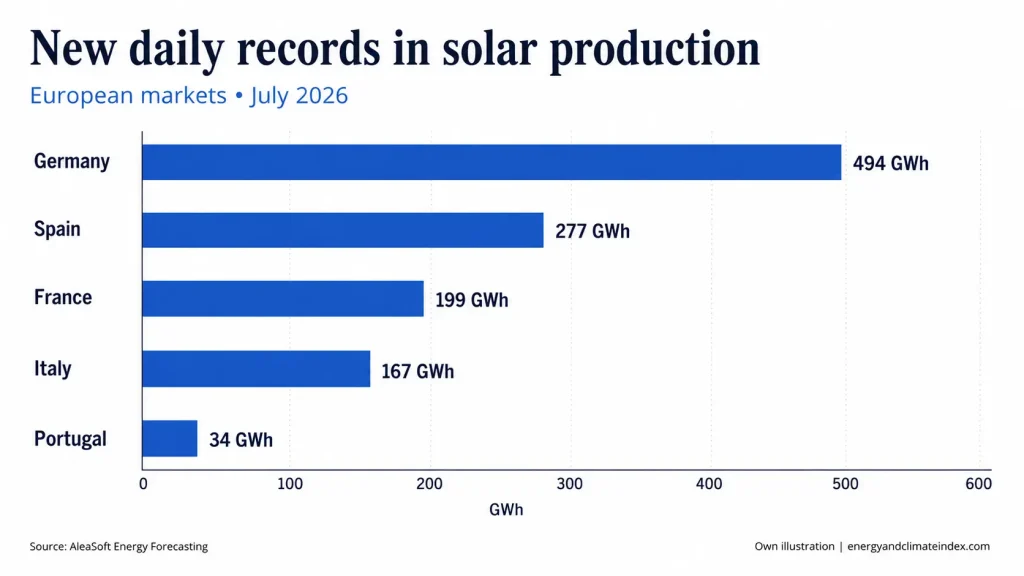
On 6 July, France generated a record 199 GWh of electricity from solar power. Two days later, Spain reached a new all-time high of 277 GWh, while Italy set a historic record of 167 GWh on 10 July. On the same day, Germany generated 494 GWh, marking its highest-ever July output and the second-highest daily solar generation in the country’s history. Portugal also achieved its highest July production on record with 34 GWh.


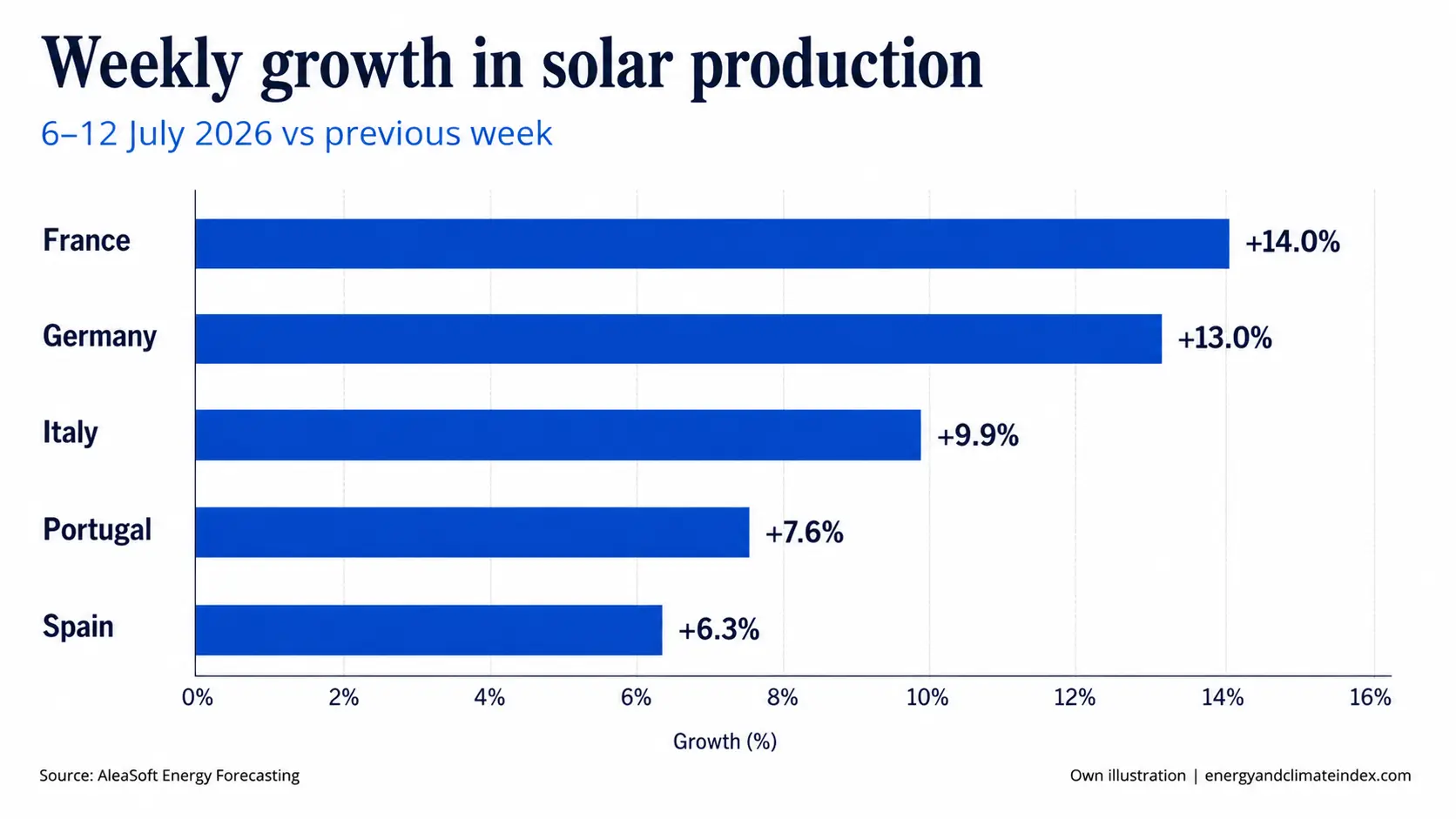
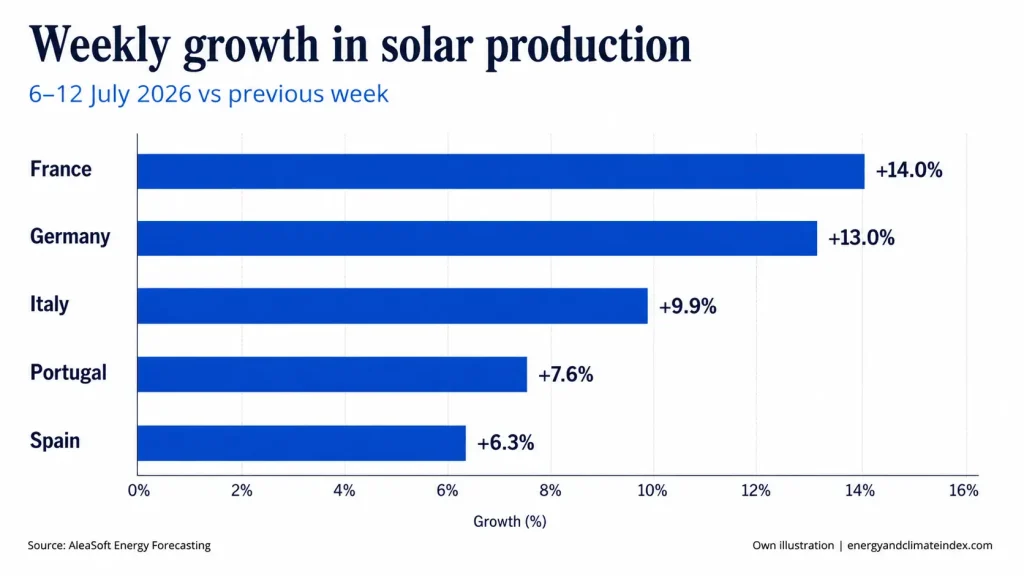
Beyond these record-breaking daily figures, weekly solar generation increased across all analysed markets, highlighting that the growth is not a one-day event but part of the continued expansion of Europe’s solar industry.
The continued increase in solar generation is significantly reshaping electricity supply during daylight hours. At peak sunshine, solar power plants are now providing a substantial share of electricity generation in several European countries, further reducing the need for more expensive generating technologies.
Why did electricity prices still increase?
Despite record solar generation, average electricity prices rose across most major European power markets during the week.
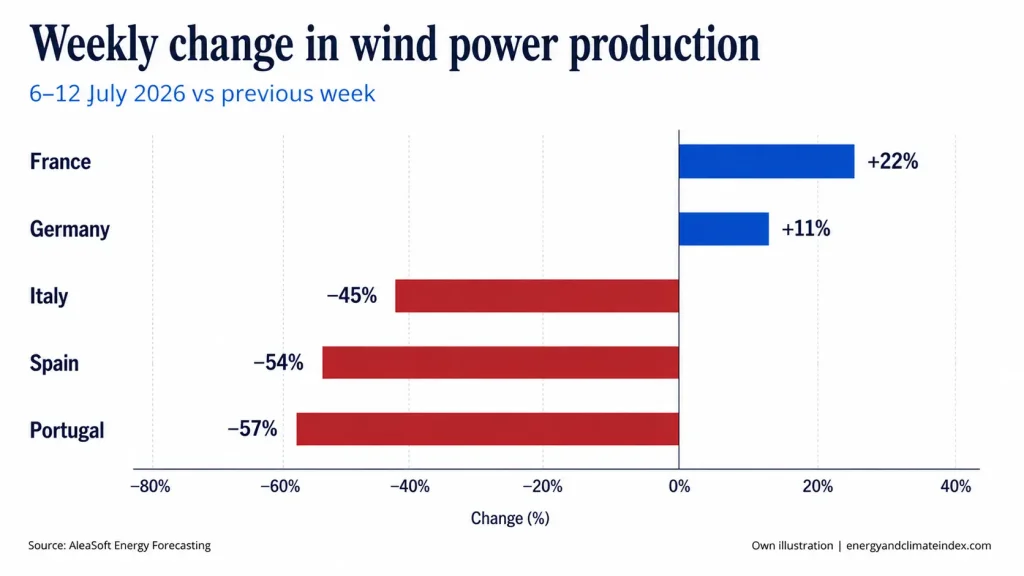
The main reason was the sharp decline in wind power generation, which offset much of the positive impact of record solar output. At the same time, higher temperatures increased electricity demand, while natural gas prices moved higher once again.
The combination of these factors once again placed gas-fired power plants in the role of marginal generators, directly influencing wholesale electricity prices across Europe.
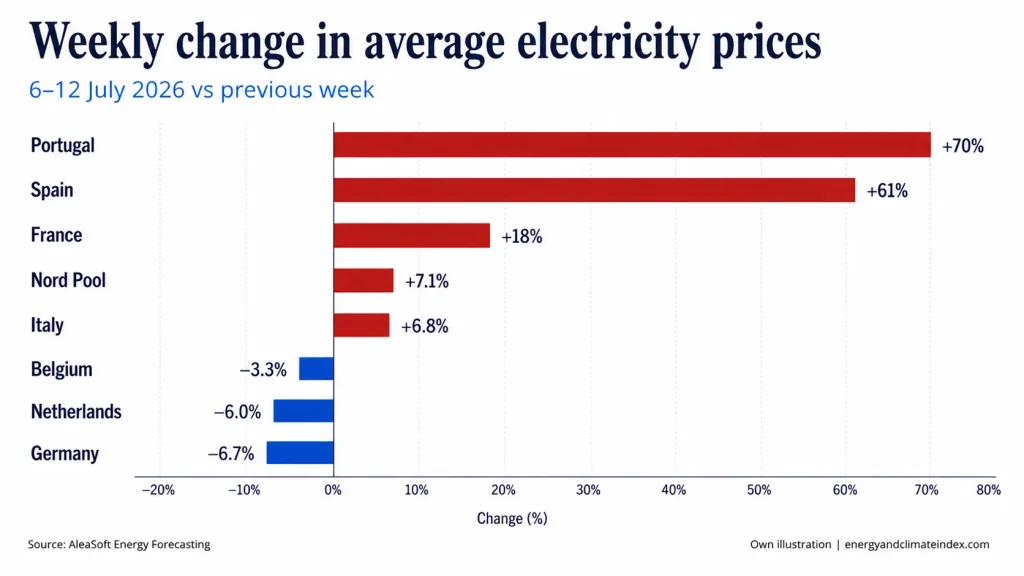
The data show that Europe’s electricity system is already capable of producing record volumes of solar power. However, price stability still depends heavily on wind generation, electricity demand, natural gas prices and the availability of flexible generation and storage capacity.
For that reason, the next phase of the energy transition will not be driven solely by the construction of new solar power plants. It will also require accelerated investment in battery energy storage systems, cross-border interconnections and other flexibility solutions capable of storing and delivering renewable electricity when it is needed most.
ECI