

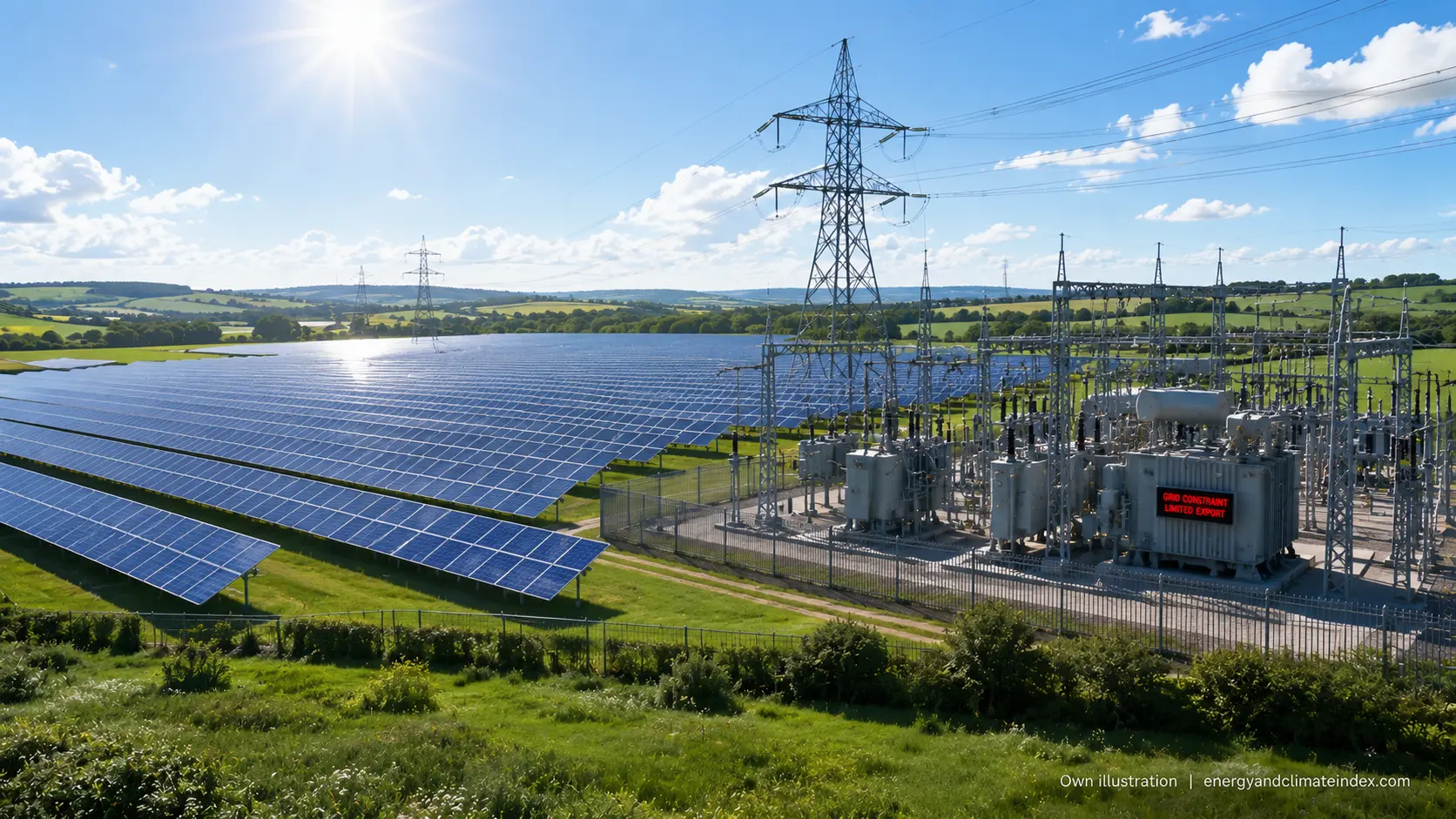
Derril Water Solar Farm in Devon, the UK’s largest solar project owned by an energy cooperative, has been forced to suspend electricity generation throughout its first full summer of operation. The shutdown is expected to last until September 2026, leaving nearly 10,000 cooperative members facing an estimated £2 million in lost revenue and delays to the returns they had expected from the project.
The shutdown was not caused by a technical fault at the solar farm, but by constraints in the local electricity network in North Devon. The UK’s National Energy System Operator (NESO) requested that a key high-voltage transformer be taken out of service during the summer because of concerns that high levels of electricity generation from rooftop solar installations in the region could push network voltage beyond safe operating limits and create a risk of thermal overload.
As a result, National Grid has curtailed electricity generation in the area, including output from Derril Water.


No generation until September
The shutdown order was issued without prior notice, only weeks before record-breaking temperatures across Europe triggered renewed concerns over electricity system reliability.
According to the cooperative’s board of directors, the solar farm will not be able to resume generation before September, when the installation of new voltage control equipment on the local network is expected to be completed.
The board says the grid constraints in North Devon have been known since 2023. The required equipment was originally scheduled to be installed by the end of 2025, but the project was delayed and is now expected to be completed in September 2026.
This means the solar farm will lose generation during the most productive period of the year, when solar irradiation and potential revenues are at their highest.
Related
UK Government аpproves 1.2 GW of new solar projects in one week
Nearly 10,000 members face around £2 million in losses
The energy cooperative has more than 9,500 members, including households and small businesses that invested in the solar project.
According to the cooperative’s estimates, the summer shutdown will result in approximately £2 million in lost revenue. The financial impact is also expected to affect the cooperative’s ability, at least in the short term, to distribute returns to its members.
The project is not expected to receive compensation from the grid operators or insurance payments for the lost income during the shutdown.
Members originally invested in the project with the expectation that participation in the community-owned solar farm would reduce their annual electricity bills by at least £200 on average.
A £42 million project
Derril Water was financed through £20 million raised from members of the energy cooperative and a £22 million long-term bank loan.
The project was originally scheduled to begin generating electricity in 2024 and was intended to become a model for consumer-owned solar developments in the UK and beyond.
However, construction was delayed, costs increased, and Ripple Energy, the company through which members originally joined the project, entered administration in early 2025 before the solar farm became operational.
The solar farm finally started generating electricity in September 2025 under the management of the cooperative’s volunteer board of directors. Less than a year later, it has been forced to remain offline during the most valuable months of the solar season.
The problem is not the solar farm, but the grid
The cooperative’s board stresses that the issue is unrelated to the technical condition of Derril Water or the way the project has been managed. Instead, the shutdown is the result of limitations in the local electricity network and delays in installing the necessary voltage control equipment.
National Grid confirmed that electricity generation in the region has been curtailed to maintain system security after NESO requested the temporary withdrawal of the transformer from service. The company said it is working with the system operator to manage the temporary constraints.
The Derril Water case illustrates what can happen when renewable energy capacity expands faster than grid infrastructure. A fully operational solar farm, financed with tens of millions of pounds from citizens and lenders, will remain offline throughout the summer because the electricity network is unable to safely accommodate its output.
ECI