

ECNO’s 2026 Flagship Report shows that Europe is making progress, but too slowly. None of the 13 key building blocks of the transition is currently on track to achieve climate neutrality.
The European Union is accelerating its transition toward climate neutrality, but progress remains uneven and insufficient to reduce its dependence on imported energy, raw materials and clean technologies.
According to the ECNO Flagship Report 2026, more than half of the monitored indicators have improved compared to last year, and nearly one-quarter are now classified as “on track”. However, for the first time since ECNO began its assessments in 2023, none of the 13 building blocks of the transition is progressing at the pace required.


Dependence on imports remains Europe’s greatest vulnerability
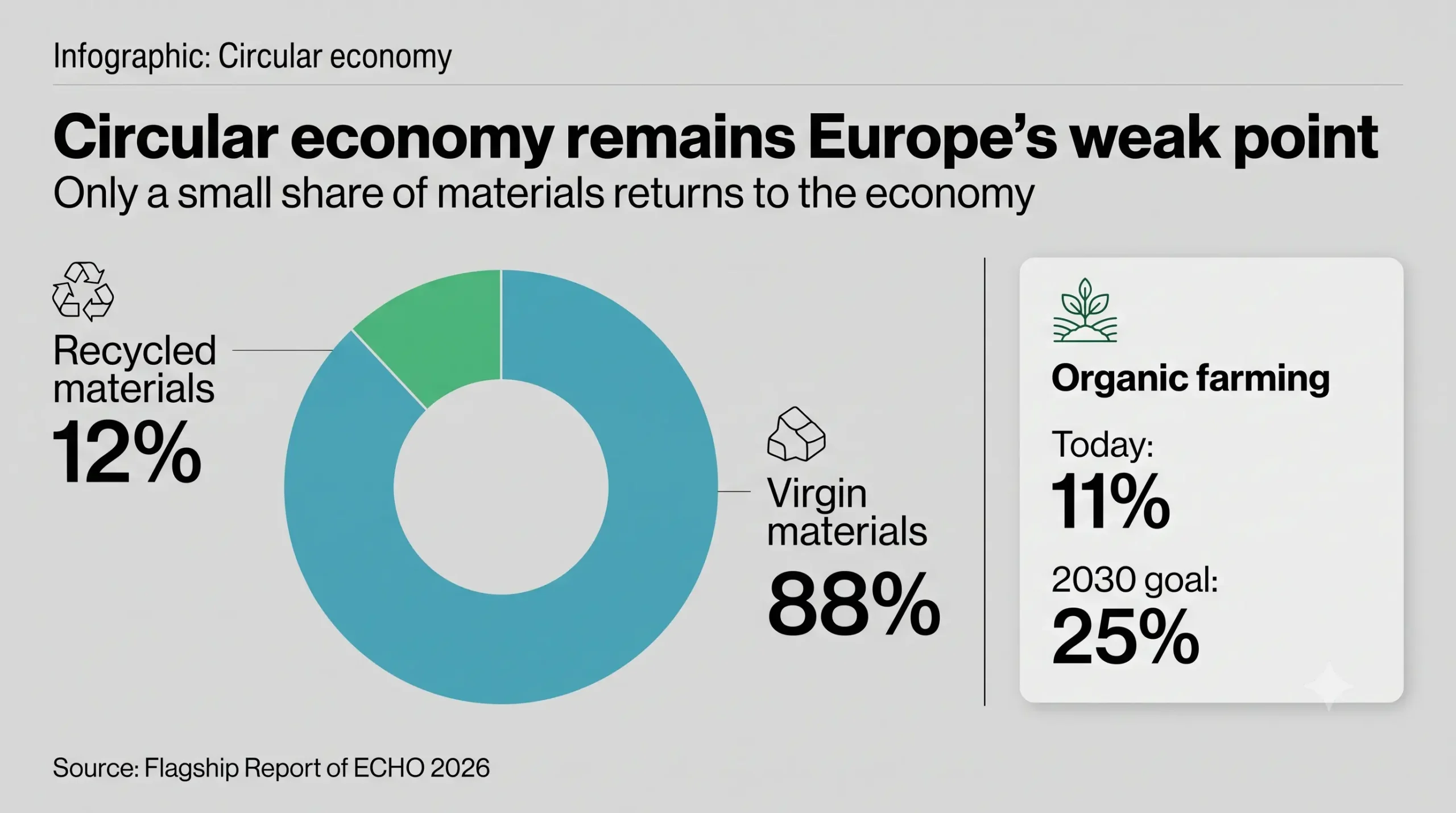
In 2025, the European Union spent nearly €400 billion on fossil fuel imports, underlining the report’s central message: climate policy is no longer only about reducing emissions, it has become a matter of economic resilience, competitiveness and energy security.
Europe remains exposed to volatile oil and gas markets, imported fertilizers, critical raw materials and clean technology supply chains. China currently controls around 70% of global critical mineral refining and a dominant share of battery, solar and other clean technology manufacturing, creating new strategic dependencies for Europe.
Renewable energy is expanding, but grids and electrification are falling behind
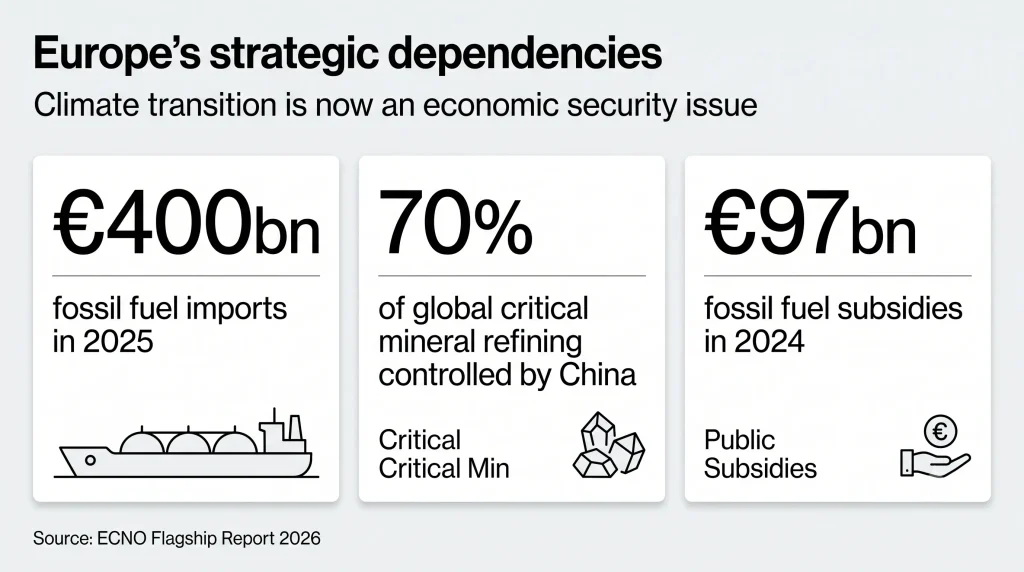
Solar and wind power generated approximately 30% of the EU’s electricity in 2025, but this share must almost double to 58% by 2030 to meet the bloc’s climate objectives.
While solar deployment continues to accelerate, wind energy is lagging because of lengthy permitting procedures, insufficient grid infrastructure and slower project development.
Electrification remains another major challenge. The share of electricity in the EU’s final energy consumption has stagnated at just over 20% for more than a decade, compared with approximately 28% in China, highlighting Europe’s slower transition away from fossil fuels.
Investment, industry and critical materials will determine Europe’s competitiveness
The report warns that financial flows remain misaligned with climate objectives. Although fossil fuel subsidies have declined from their crisis peak, they still amounted to around €97 billion in 2024.
ECNO recommends redirecting these funds toward vulnerable households, building renovations, heat pumps, energy efficiency and public transport instead of broad energy price support.
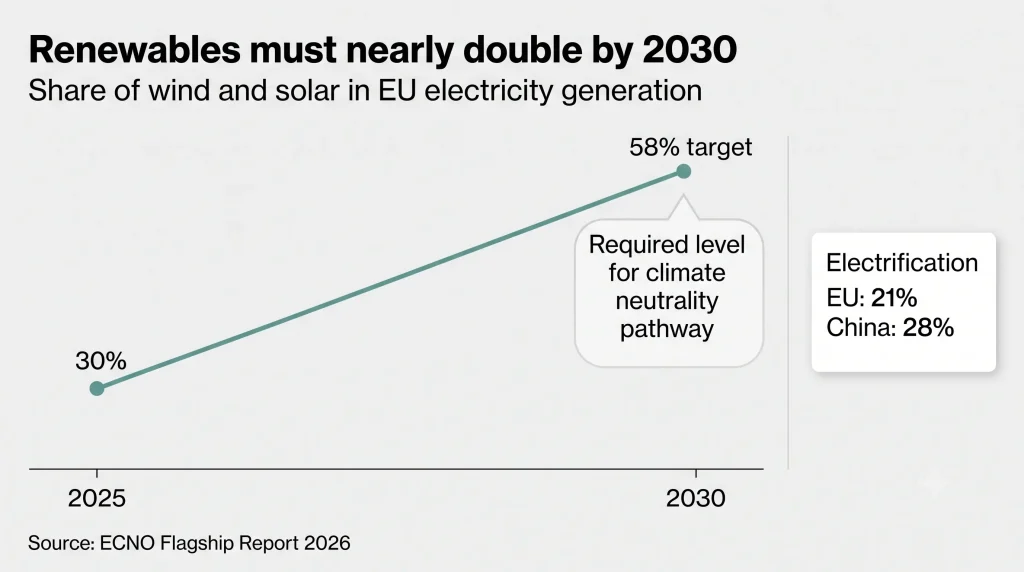
Europe is also losing momentum in clean technology investment. Large-scale clean tech investments fell from €10 billion in 2021 to just €5 billion in 2025, while public spending on energy and environmental research and development dropped to its lowest level since 2015.
Circular economy and agriculture are becoming strategic priorities
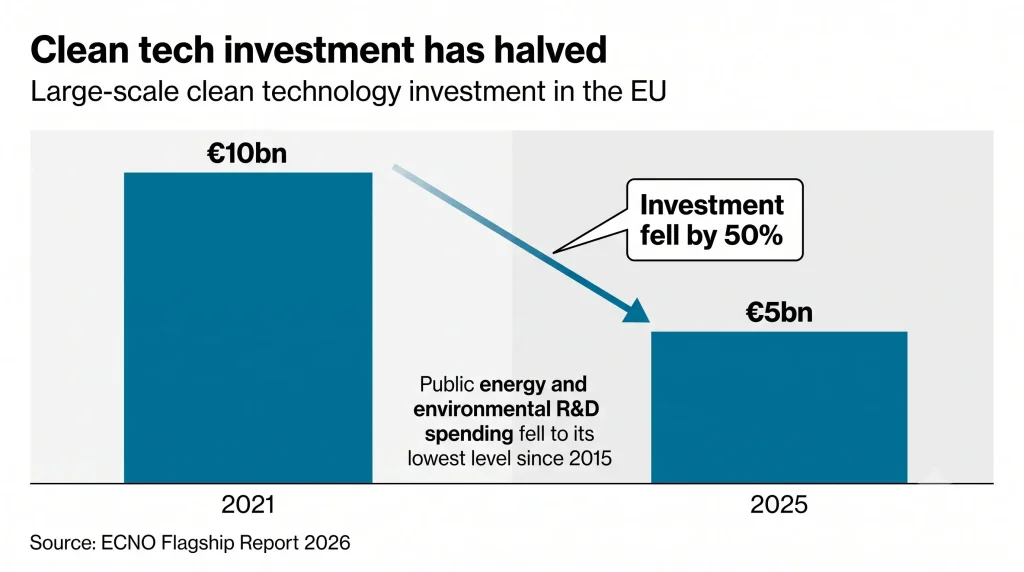
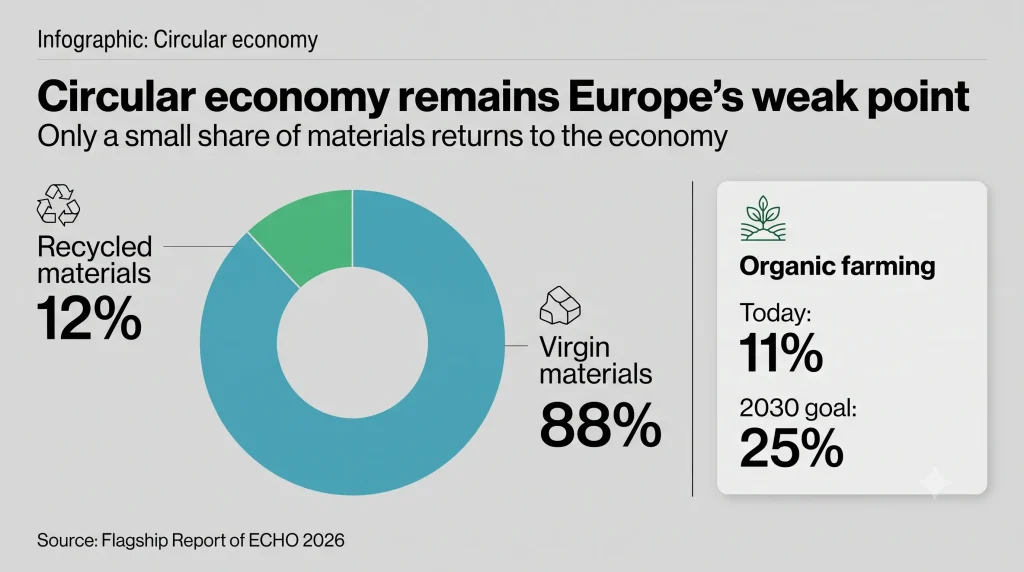
Europe’s resilience will depend not only on energy production, but also on how efficiently it uses resources. Today, only 12% of materials are recycled back into the economy, leaving European industry heavily dependent on imported raw materials at a time when demand for batteries, electric vehicles and renewable energy technologies continues to grow.
Agriculture also remains vulnerable because fertiliser production relies heavily on natural gas. ECNO therefore recommends expanding sustainable farming practices and increasing the share of organic farmland from around 11% today to 25% by 2030.
Conclusion
The report’s main message is that Europe already has much of the necessary legislative framework in place, but implementation is not keeping pace with its ambitions.
Climate neutrality is increasingly becoming an economic strategy rather than solely an environmental objective. The countries that invest faster in renewable electricity, power grids, electrification, clean technologies, circular economy and sustainable agriculture will be better positioned to strengthen their competitiveness, reduce strategic dependencies and improve long-term economic resilience.
ECI