

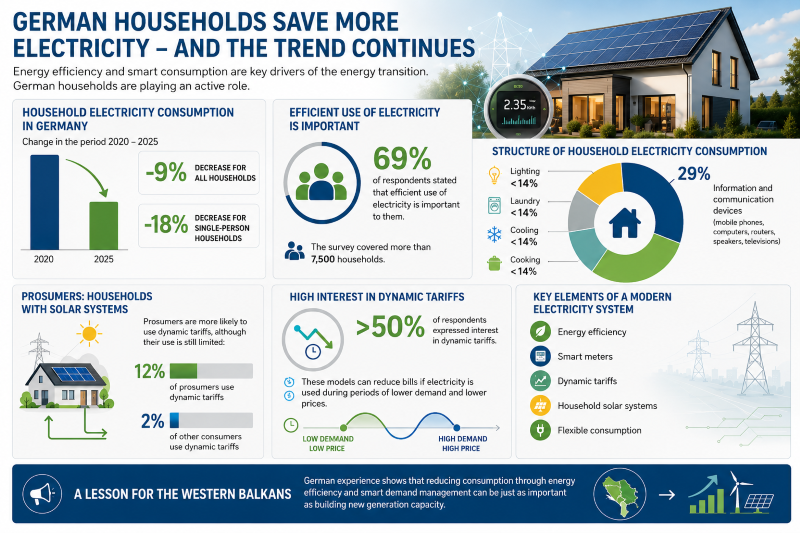
German households are increasingly reducing electricity consumption through more efficient appliance use and changing consumption habits. According to a study by the German Association of Energy and Water Industries (BDEW), average household electricity consumption in Germany declined by 9% between 2020 and 2025. Among single-person households, the reduction was even higher, reaching 18%.
The survey covered more than 7,500 households, with 69% of respondents stating that efficient electricity use is important to them. The largest share of electricity consumption around 29% now comes from information and communication devices such as mobile phones, computers, routers, speakers, and televisions. Lighting, washing, cooling, and cooking each account for less than 14% individually.
The analysis also highlights the growing role of so-called “prosumers” households equipped with rooftop solar photovoltaic systems that both consume and supply electricity to the grid. These households are more likely to use dynamic electricity tariffs, although adoption remains relatively limited: 12% of prosumers currently use dynamic tariffs, compared to only 2% of other consumers.


More than half of surveyed citizens expressed interest in dynamic pricing models, which allow households to lower electricity bills by shifting consumption to periods of lower demand and lower market prices.
The findings demonstrate that the energy transition is not only about building new renewable energy capacity, but also about empowering consumers to actively participate in the electricity system. Energy efficiency, smart meters, dynamic pricing, rooftop solar systems, and flexible electricity demand are becoming increasingly important elements of modern power systems.
For the Western Balkans, Germany’s experience sends an important message: reducing electricity consumption through efficiency improvements and smarter demand management can be just as important as investing in new generation capacity.
You can read the full story on the following link.
Editorial Office