

Almost every fourth meter in the country is now read remotely, while total investment in smart metering has reached approximately €200 million
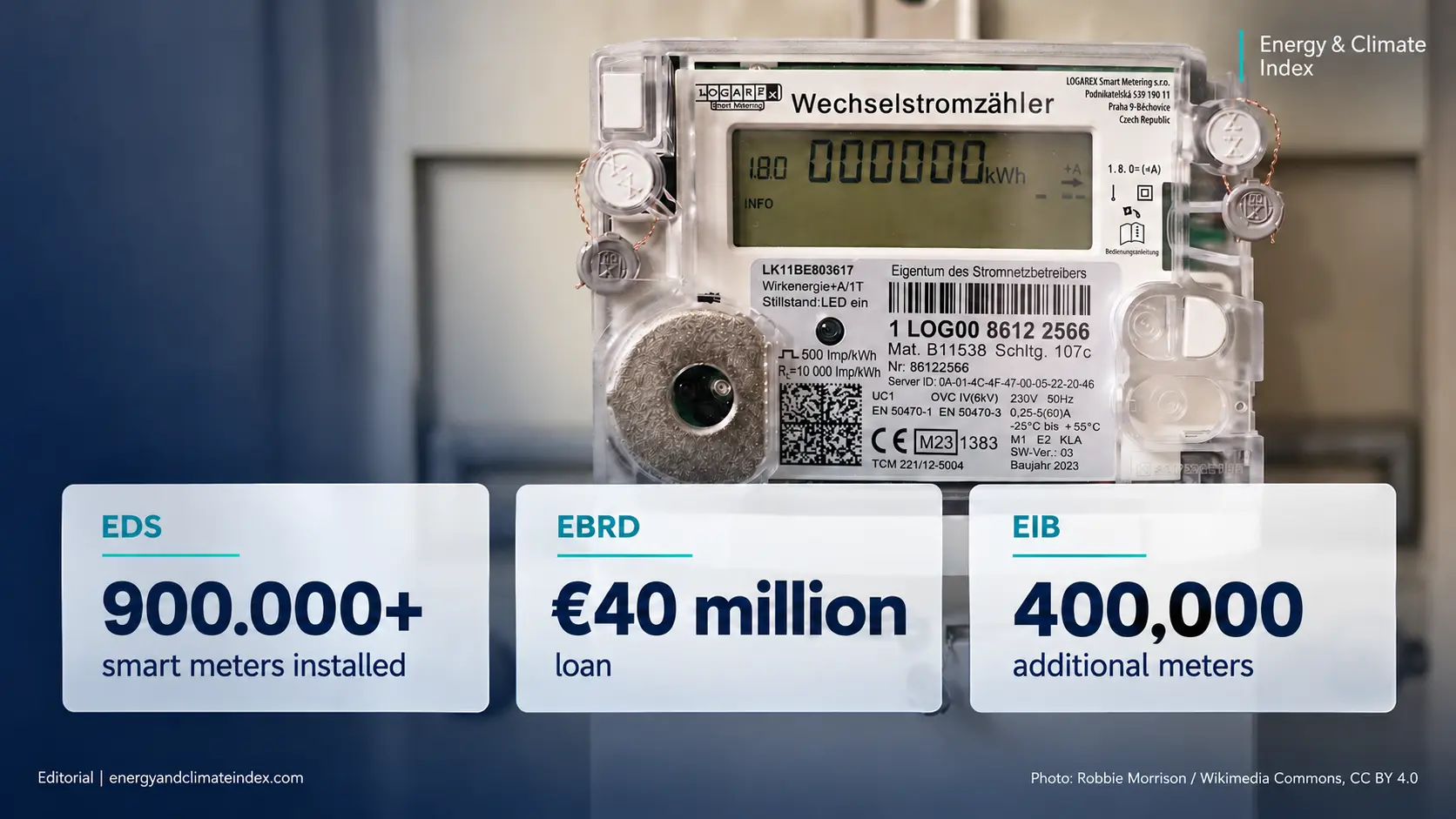
More than 900,000 customers connected to Serbia’s electricity distribution network now have smart electricity meters, following a nationwide modernization programme implemented by electricity distribution company Elektrodistribucija Srbije (EDS), with financial support from the European Union, the European Bank for Reconstruction and Development (EBRD) and the Western Balkans Investment Framework (WBIF).
Following the installations completed so far, almost every fourth electricity meter in Serbia is now read remotely. According to EDS, approximately €200 million has already been invested in smart metering, while the company’s strategic decision is that every new connection should be equipped with a smart meter.
The large-scale replacement of conventional meters was initially supported by €110 million in EU grants. The programme continued with more than €8 million in grants provided through the WBIF and a €40 million loan from the EBRD.


The next phase envisages the replacement of an additional 400,000 meters, with financial support from the European Investment Bank (EIB) currently under preparation, according to the official EBRD announcement.
More accurate bills and better grid management
Smart meters enable automatic and remote consumption readings, reducing the need for physical meter inspections and improving billing accuracy.
For consumers, this means more accurate bills, easier access to consumption data and greater control over household electricity costs. For the distribution system operator, the data provide better visibility of network conditions, faster identification of problems and more efficient grid management.
EDS has also announced that a new online portal will be launched this autumn, giving smart-meter users continuous access to information about their electricity consumption.
Preparing the grid for more renewable energy
Smart metering is also important for the integration of new technologies into the power system. Rooftop solar installations, heat pumps, electric vehicles and local energy communities are gradually changing the way electricity is generated, measured and consumed.
According to the EBRD, digitalising the distribution network will improve its reliability and efficiency, while enabling the integration of a larger share of renewable energy and more active participation by consumers.
The programme is also part of Serbia’s alignment with EU energy rules and its preparations for gradual integration into the European electricity market, the EU Delegation to Serbia said.
ECI