

Elektroprivreda Srbije (EPS) continued its positive financial and operational performance trend in 2026, after the company’s Assembly adopted the Report on the Implementation of the Three-Year Business Plan for the first quarter of the year. According to the official data, EPS recorded a profit of approximately €129 million in the first three months of 2026, exceeding both the planned result and the performance achieved in the same period last year.
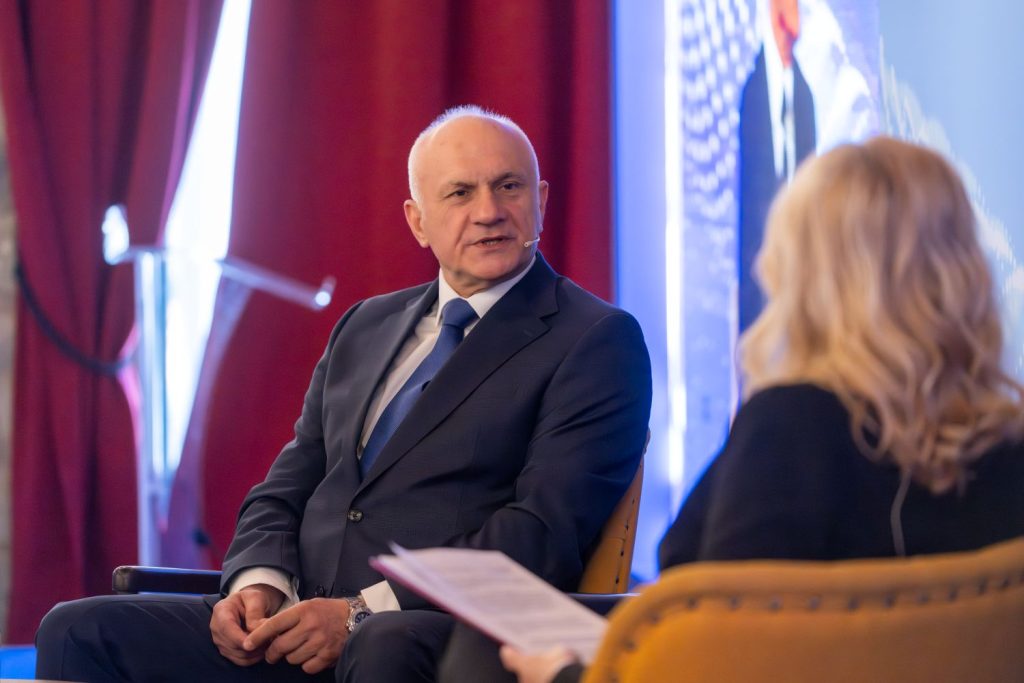
Dušan Živković – EPS General Manager
Dubravka Đedović Handanović, Serbia’s Minister of Mining and Energy and representative of the founder in the EPS Assembly, stated that the first quarter was marked by stable electricity generation, lower operational costs, and the completion of major infrastructure and environmental projects.


According to her, one of the most important developments during the first quarter was the completion of the revitalization of the reversible hydropower plant Bajina Bašta Hydroelectric Power Plant, which has now been fully modernized for the first time in more than 40 years. She emphasized that the facility represents one of the key assets for the security and flexibility of Serbia’s power system.
At the same time, the flue gas desulfurization system at TENT B thermal power plant was completed during the first quarter. The project is considered the largest environmental investment in the energy sector in this part of Europe and plays an important role in reducing sulfur dioxide emissions and aligning the thermal power sector with modern environmental standards.
The Minister pointed out that unfavorable weather conditions caused coal production to remain below planned levels, but electricity supply security was never endangered. Improved hydrological conditions, on the other hand, enabled higher electricity generation from hydropower plants, resulting in reduced utilization of thermal generation units.
According to the official data, Elektroprivreda Srbije successfully maintained the positive trend established in 2025 despite exceptionally unfavorable hydrological conditions. Last year marked the second consecutive year with historically low inflows on the Danube River, yet the company still managed to ensure stable electricity production.
During 2025, EPS increased coal production by approximately seven percent, or an additional two million tonnes, while electricity generation from thermal power capacities also increased. During the same period, the company did not require liquidity loans, while its financial debt was reduced by approximately €370 million.
Significant growth was also recorded in investments. In 2025, total investments reached approximately €450 million, of which nearly €384 million were financed from the company’s own resources. The implementation rate of the investment plan reached 97 percent.
In the first quarter of 2026, investment activities were primarily focused on the mining sector and ensuring the long-term stability of coal production. Investments in new mining equipment reached approximately €37 million, representing 37 percent above the planned level.
These results further confirm the position of Elektroprivreda Srbije as one of the most important energy companies in the region, simultaneously implementing modernization, environmental transformation, and financial consolidation processes.
Corporate governance reforms as the basis for EPS’s financial stabilization
The results achieved by Elektroprivreda Srbije over the past two years can be linked to the corporate governance reform process implemented by Serbia within the broader transformation of state-owned energy companies. In recent years, EPS has undergone a process of corporate transformation, professionalization of management structures, and the introduction of stronger mechanisms for financial discipline, investment planning, and accountability. Part of these reforms has been implemented in cooperation with international financial institutions, with a focus on improving operational efficiency, strengthening investment governance, and reducing political influence over business operations.
As part of the reform process, particular attention has been devoted to strengthening the independence and professionalism of the company’s Supervisory Board, which currently includes three experts from Norway. This model has been recognized as an important step toward introducing international corporate governance standards, enhancing institutional independence, and reinforcing an expert-based approach in strategic decision-making.
The company’s financial stabilization, debt reduction, high level of investments, and continuity in the implementation of major energy and environmental projects indicate that corporate governance reforms are gradually delivering tangible results and are becoming one of the key drivers behind the stabilization and modernization of Serbia’s power sector.
Editorial Office