


At a time when Europe is once again facing energy uncertainty, rising energy prices, and geopolitical risks linked to the Middle East and the Strait of Hormuz, Professor Jan Rosenow raises one of the most important questions for the future of the European energy transition: is real energy security built through new fossil fuel investments or through large-scale electrification?
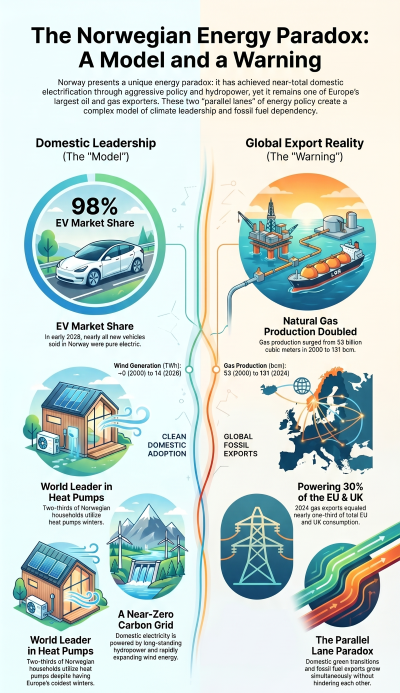
In his analysis, “Norway: The World’s Most Instructive Energy Paradox,” Rosenow presents Norway as perhaps the most controversial, yet also the most instructive, energy model in Europe today.
On one hand, Norway is a global leader in the electrification of transport and heating. On the other hand, the country remains one of Europe’s largest exporters of natural gas. This dual reality creates what many describe as the Norwegian energy paradox.


Electrification as a National Strategy
Norway did not reach its current position through short-term subsidies or political campaigns. According to Rosenow, this has been a decades-long and systematic policy approach that began as early as the 1990s.
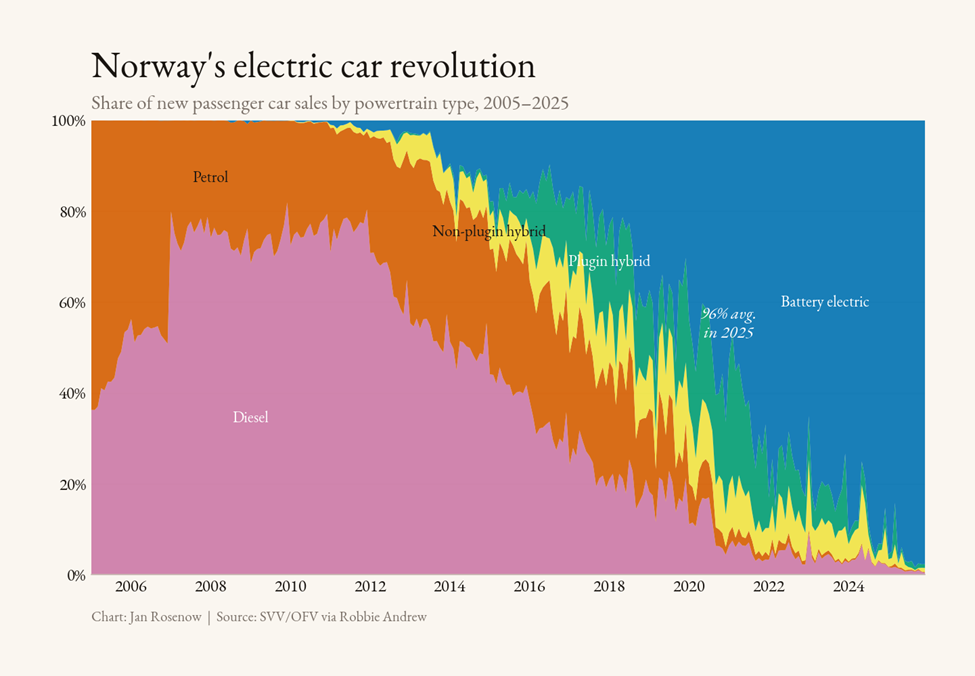
oday, the results are remarkable.
In the first quarter of 2026, around 98% of all newly sold passenger vehicles in Norway were fully electric. Not hybrid but fully electric vehicles. At the same time, approximately one-third of the country’s total vehicle fleet is already electrified.
In parallel, Norway has also become a global leader in the deployment of heat pumps. Today, around two-thirds of Norwegian households use heat pumps, despite the country having some of the coldest climatic conditions in Europe.
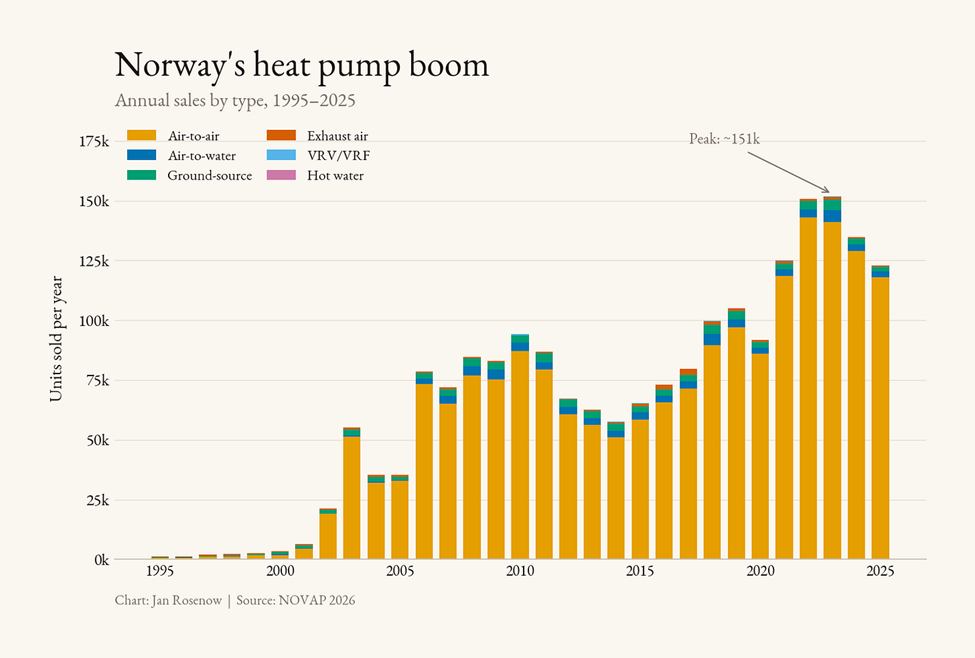
According to Rosenow, the key factor was not only financial capacity, but the consistency of policies, including:
- carbon taxes;
- tax exemptions for EVs;
- free toll roads and parking;
- access to public transport lanes;
- investments in EV charging infrastructure;
- subsidies for heat pumps;
- regulations gradually phasing out fossil oil heating systems.
Norway effectively turned electrification into the easier and cheaper choice for citizens.
Hydropower as the Foundation of the System
An additional advantage for Norway lies in the structure of its electricity system.
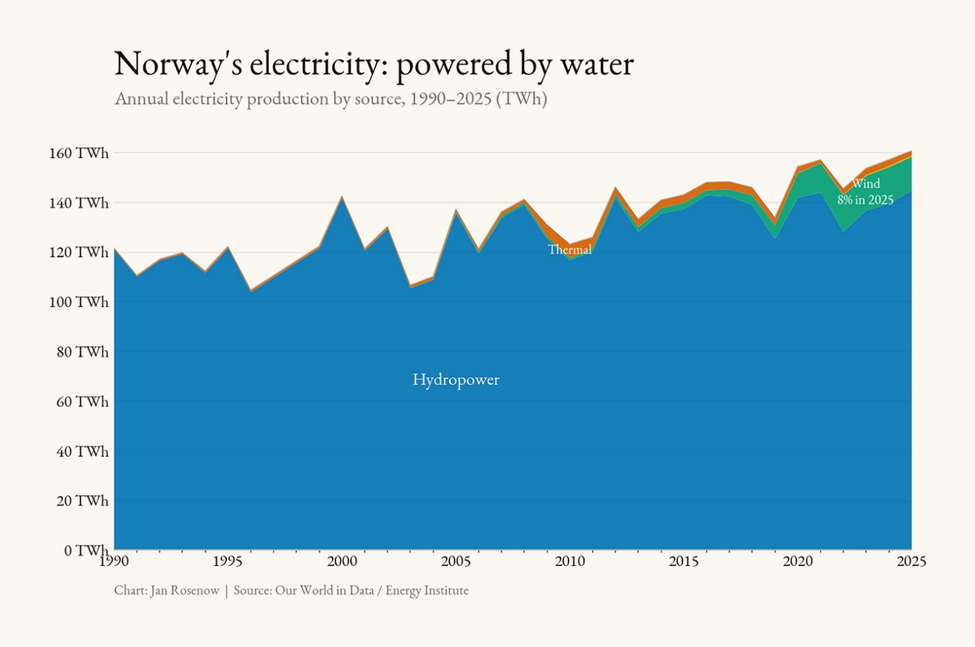
Most of the country’s electricity generation comes from hydropower, while wind energy has experienced strong growth over the last two decades. This means that when Norwegian households charge electric vehicles or use heat pumps, the electricity itself comes largely from low-carbon sources.
In essence, Norway did not only electrify consumption it simultaneously built a relatively decarbonized power system.
But Gas Exports Expanded in Parallel
This is where the most interesting part of the analysis begins.
While domestic transport and heating were being electrified, Norway was simultaneously strengthening its position as one of Europe’s largest suppliers of natural gas.
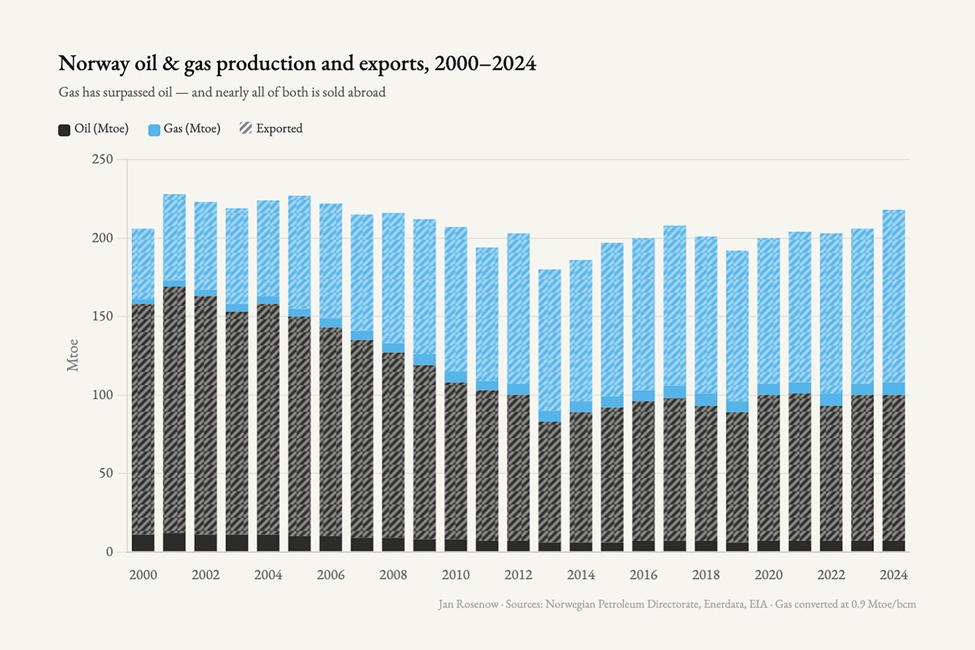
According to Rosenow:
- oil production has gradually declined since the early 2000s;
- however, natural gas production has more than doubled;
- increasing from around 53 bcm in 2000 to approximately 131 bcm in 2024.
Following Europe’s energy crisis and the reduction of Russian gas supplies, Norway became one of the key pillars of European energy security.
In 2024 alone, Norwegian gas exports were equivalent to more than 30% of total EU and UK gas consumption
In other words:
Norway is simultaneously building one of the world’s most electrified economies, while remaining one of Europe’s largest fossil fuel exporters.
The Main Message: Energy Security Comes Through Electrification
One of the strongest arguments in Rosenow’s analysis is that long-term energy security is not achieved through continuously expanding dependence on fossil fuels, but through reducing exposure to their price volatility and geopolitical risks.
According to Rosenow:
- every electric vehicle;
- every heat pump;
- every additional megawatt of renewable electricity;
represents direct protection against future energy and geopolitical shocks.
He argues that electrification is ultimately the most powerful mechanism for reducing dependence on imported fossil fuels and unstable international energy markets.
What Does This Mean for the Western Balkans?
For the Western Balkans, the Norwegian example carries a particularly important message.
The region remains heavily dependent on:
- imported fossil fuels;
- energy price volatility;
- aging thermal power infrastructure;
- high exposure to geopolitical risks.
Under such conditions, the electrification of transport, heating, and industry combined with investments in renewable energy, battery storage systems, and grid modernization is gradually becoming not only climate policy, but also a strategy for national energy security.
This is precisely why the Norwegian model matters today not only as a “green success story,” but as a real-world example of how long-term and consistent energy policy can fundamentally reduce the vulnerability of an economy to future global crises.
The full analysis from Professor Rosenow is on the following link.
Viktor Andonov, M.Sc in electrical engineering.