

North Macedonia is entering another winter season amid renewed uncertainty in European energy markets. Natural gas and electricity prices remain sensitive to geopolitical developments, electricity generation across Europe and weather conditions. For a country with limited domestic production and significant dependence on imports, winter preparedness is once again a key concern.
At the same time, the country faces the need to accelerate investment in new power generation capacity, energy storage and electricity infrastructure. Major projects such as Čebren have once again raised questions about how North Macedonia should implement its strategic energy investments and what role the state, ESM, international financial institutions and private capital should play in this process.
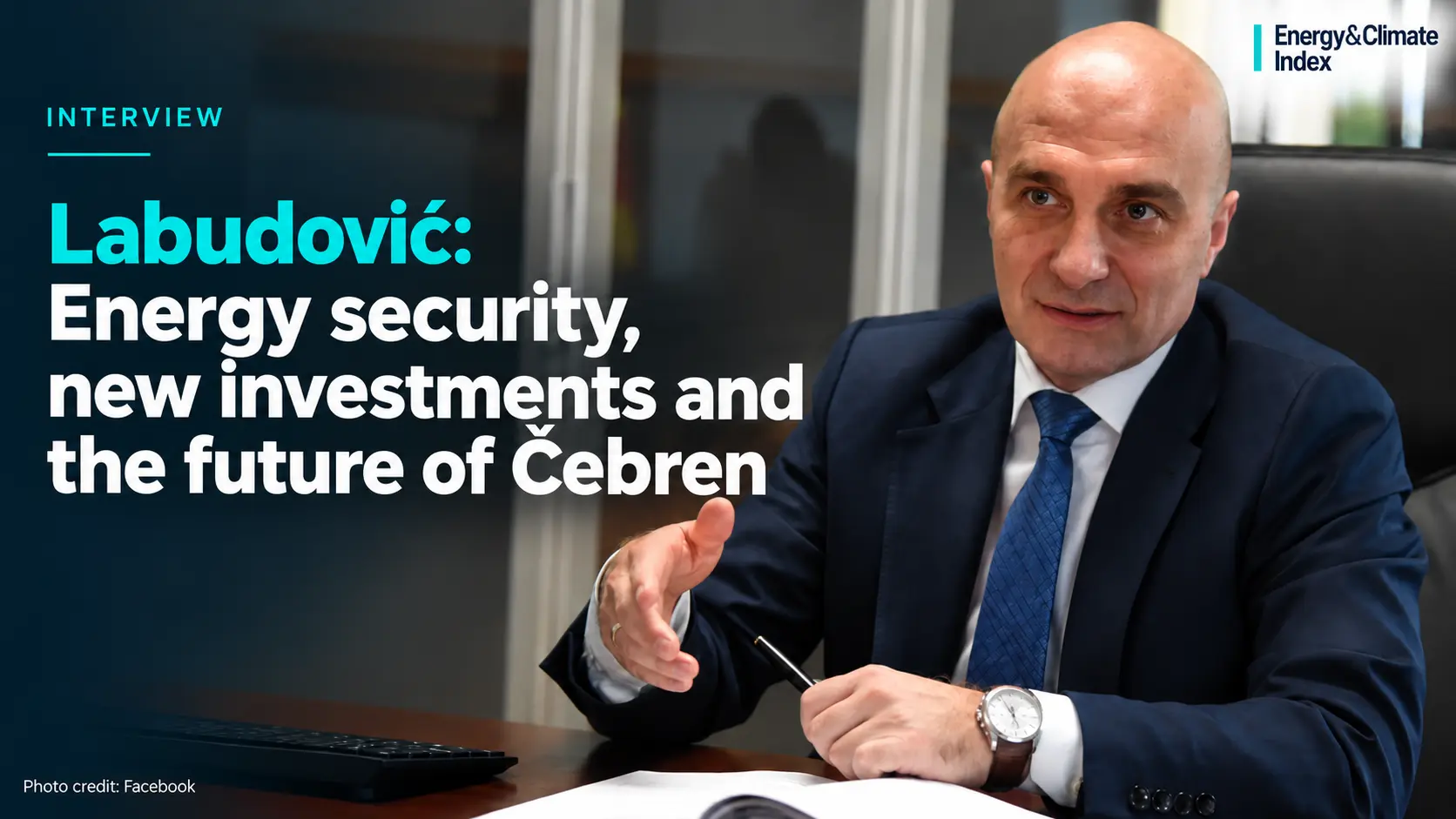
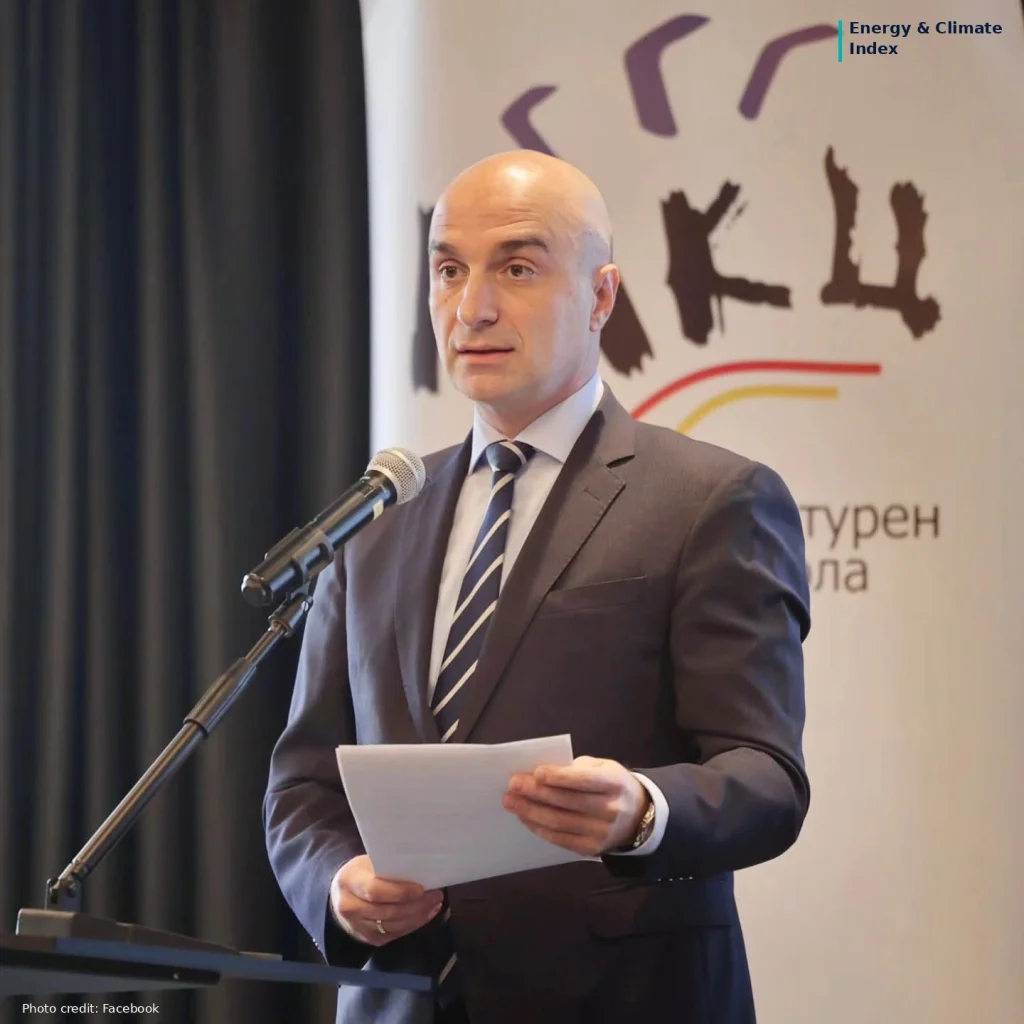
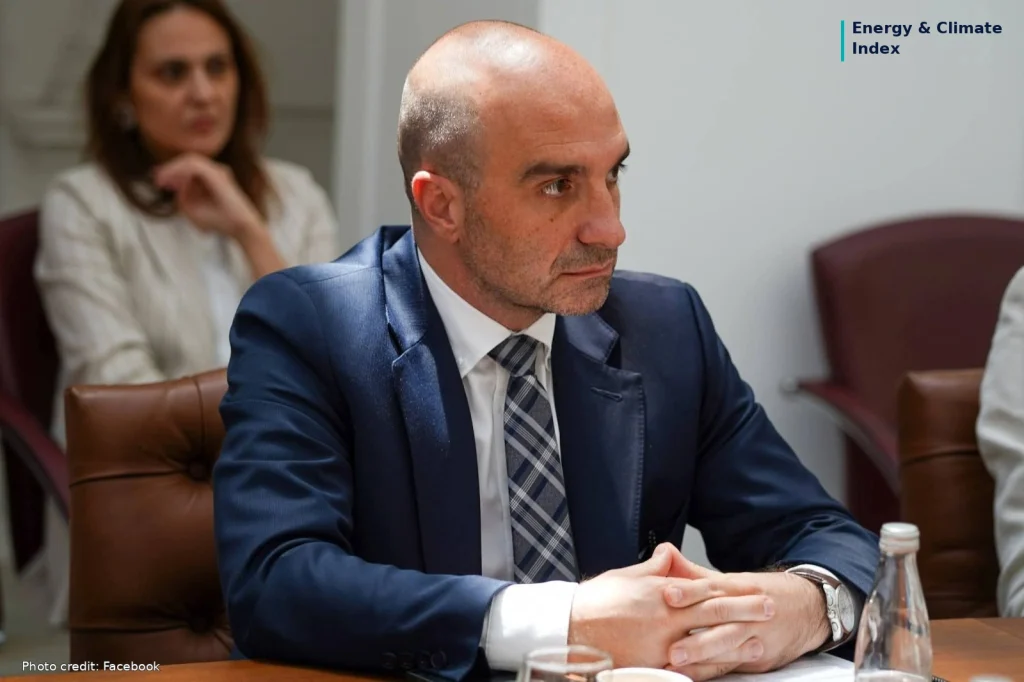
We spoke with Deputy Minister of Energy Miroslav Labudović about preparations for the coming winter, the condition of domestic power generation facilities and the projects expected to shape the future of North Macedonia’s energy sector.


Does North Macedonia have a concrete plan for the coming winter if natural gas and electricity prices in Europe rise sharply again? What scenarios is the government currently preparing for?
Today, the world is facing one of the most serious energy crises since the Second World War. According to the International Energy Agency, this is the largest disruption to oil supplies in the history of the global oil market, even greater than the oil crises of the 1970s. The natural gas market has also been severely affected.
An energy crisis is closely linked to an economic crisis and presents a serious challenge for all countries, particularly in Europe, including North Macedonia. Energy prices directly affect industry, transport, inflation and ultimately people’s living standards.
As a country, we are not a major consumer of natural gas. Our annual consumption is approximately 300 million normal cubic metres (Nm³), which is relatively small compared with European countries. On the other hand, we must recognise that we are entirely dependent on imports of this energy source.
In North Macedonia, natural gas is primarily used for electricity generation at TE-TO and ESM’s KOGEL facility, as well as for heat production, particularly district heating in Skopje. Around 65,000 households are connected to district heating systems operated by ESM. The Skopje heating plants alone consume approximately 25–30 million Nm³ of natural gas annually.
We are already witnessing a significant increase in natural gas prices on European markets, which is putting additional pressure on heat production costs.
However, what I want to emphasise is that the government is prepared for such situations. We have demonstrated in the past that when serious price disruptions occur, the government responds with concrete measures to mitigate their impact on citizens. We have also seen this through interventions in fuel prices.
Of course, when discussing the coming winter, we must also consider weather conditions. There is a considerable difference between a mild winter and an exceptionally cold one. Natural gas and electricity consumption depend directly on these conditions. That is why we are closely monitoring weather forecasts, price developments on European energy exchanges and the situation in conflict zones, so that we can anticipate potential developments in good time.
This winter will certainly be challenging, not only for North Macedonia but for Europe as a whole. Our priority is to get through it with stable energy supplies, without electricity or heating shortages, and with the smallest possible financial impact on citizens.
In the electricity sector, our generation facilities have stabilised, giving us greater flexibility to manage risks. The situation with natural gas is more sensitive because it is not a domestic resource.
Additional security comes from our stable oil reserves, as well as the petroleum products pipeline from Greece to the OKTA refinery in North Macedonia, which is currently completely full and significantly increases our available capacity.
As a country, we cannot influence global energy prices, but we can prepare, anticipate risks and respond when necessary.
Ultimately, citizens expect two things from us: reliable energy supplies and protection against sudden price shocks. That is precisely what our efforts are focused on.
What is the condition of ESM’s generation facilities ahead of the winter season? Are REK Bitola, REK Oslomej and the hydropower plants technically and operationally prepared for increased generation during periods of peak demand?
I would say that ESM is entering this year’s heating season with significantly better organisation of electricity generation and extensive preparations across its facilities.
REK Bitola is carrying out its planned maintenance and overhaul activities to improve the availability of its generating units during winter. At the same time, work has been undertaken to rehabilitate and return part of the mining equipment to operation. Equally important is the return to mining operations in accordance with the approved mining plan, because stable electricity generation also depends on securing sufficient coal supplies in good time.
REK Oslomej is also included in the preparations for winter, while the Negotino thermal power plant remains an additional facility that could play a role during periods of increased demand, depending on its technical availability.
Water levels in our hydropower reservoirs are above the annual average for this time of year. According to the operational information available to us, reservoir levels are approximately 55% of capacity. This represents a significant reserve ahead of winter, particularly considering that, after relatively favourable hydrological conditions during winter and spring, we experienced drought and substantially reduced water inflows during the summer.
There is another issue that I believe is particularly important: how electricity generation and available resources have been managed throughout the year.
During the first quarter, particularly in January and February, ESM took advantage of opportunities to purchase electricity from TE-TO at relatively lower prices because of low natural gas prices, which are now approximately 180% higher, rather than relying continuously on its own coal-fired generation. When purchasing electricity is more economically advantageous, this approach allows us to conserve domestic resources, particularly coal, and plan the operation of our generating units more effectively.
A similar approach was applied during periods of high solar generation, when electricity prices on the organised market fell to exceptionally low levels during certain hours.
Why should we consume domestic resources during hours when we can purchase electricity at a lower price? This is the essence of rational resource management. What matters is not only how much electricity we generate, but also when we generate it and at what cost.
This is particularly important for hydropower plants. Stored water has greater value for the system when used during periods of peak demand and higher market prices than when it is used during periods of low electricity prices.
I would also like to highlight another important figure. According to MEMO, in July, August and September this year, total domestic electricity generation was sufficient to cover the country’s entire net electricity consumption. This includes generation not only from ESM but from all domestic producers. Nevertheless, it is an important indicator of the contribution made by domestic generation facilities.
To summarise, maintenance and overhaul activities are being carried out at REK Bitola, measures are being taken to improve mining equipment and coal extraction, REK Oslomej is being prepared, and significant water reserves are available in hydropower reservoirs.
Of course, it would not be responsible to claim that equipment failures, outages or other difficulties cannot occur during winter. These are major industrial facilities, and their availability depends on numerous factors.
What matters is that work has been undertaken throughout the year to improve technical readiness, production planning and resource conservation.
Our objective is to enter winter with the highest possible availability of domestic generation facilities, preserved energy reserves and the ability to respond promptly to increased consumption or disruptions in energy markets.
Does the government have mechanisms to protect households and industry from another potential price shock?
Certainly. In fact, the government has already demonstrated that it has mechanisms to mitigate the consequences of price shocks. We have seen this in the oil and petroleum products sector, where various fiscal measures, including reductions in VAT and excise duties, have been introduced to ease upward pressure on prices and, consequently, protect citizens’ living standards.
However, we must be realistic. North Macedonia is a small economy and cannot influence price movements in global energy markets. What we can and must do is respond in good time and mitigate the consequences of those developments.
Our approach is not to wait until a problem occurs before looking for solutions. On the contrary, we closely monitor developments in international markets, analyse potential risks and consider different scenarios so that we can introduce appropriate and economically justified measures at the right moment.
Of course, this is not straightforward, particularly in a period of considerable global uncertainty. But that is precisely where the challenge and responsibility of those governing the country lie. Our responsibility is to be prepared, anticipate potential consequences and make decisions that provide the greatest possible stability.
At the same time, protecting households and industry must go hand in hand. Higher energy costs for businesses inevitably translate into higher prices for goods and services, and ultimately citizens bear the consequences once again.
Our focus is therefore on ensuring stable energy supplies and, within the government’s available resources, preventing the burden of the global energy crisis from falling entirely on citizens and the Macedonian economy.
Following several unsuccessful attempts to develop Čebren, the Prime Minister announced that the country is close to deciding to build this strategic project itself. What will determine that decision? What do the new analyses show?
Čebren and Galište is a megaproject in the energy sector, or, as some have recently taken to calling it, the “mother of all projects”. And indeed, this is a project of enormous strategic importance for North Macedonia, not only from an energy perspective but also in terms of economic development.
Discussions are currently under way with international financial institutions regarding opportunities to finance and implement the project. What is particularly encouraging is the interest shown by some of these institutions in supporting its development.
Nevertheless, we must proceed carefully. The process is still at the stage of discussions, assessment of financing models and evaluation of economic viability. This is an exceptionally large investment, and the decision must be based on thorough analyses, a clearly defined financing structure and long-term sustainability.
ESM is leading this process, and I believe it would be inappropriate at this stage to disclose details of the discussions or announce deadlines. Once the conditions for making a final decision have been met, ESM will communicate all relevant information.
The objective is for the project to be developed through ESM and to remain under Macedonian ownership. We want to build something that belongs to us, that remains in state ownership and that we can manage in the interests of future generations.
Furthermore, our ambition is to involve as many Macedonian resources as possible throughout all stages of implementation, including workers, engineers, consultants and companies. Naturally, a project of this complexity will also require international expertise, but our intention is to ensure that a significant share of the economic benefits remains in North Macedonia and supports domestic resources and capabilities.
I would also draw a historical parallel. The Matka hydropower plant was commissioned in 1938 and will soon mark 90 years of operation. The Mavrovo hydropower system began operating in 1957 and will celebrate its 70th anniversary next year. Both facilities remain part of our electricity system today.
This demonstrates the lasting value of such investments. They are not built for a single political term or a single generation. They are built to serve the country and its citizens for decades.
The challenge is enormous, but the opportunity is also historic. Through Čebren and Galište, we could create lasting value for the Macedonian electricity system, increase its flexibility and provide additional security in an environment of growing renewable electricity generation.
That is why I believe we must do everything necessary to establish an economically justified and financially sustainable model for implementing the project.
It is better to make a well-prepared decision and finally begin construction than to find ourselves, thirty years from now, still discussing why Čebren and Galište were never built.
For which major energy projects has the government already secured financing arrangements or reached advanced discussions with international financial institutions? What is the value of these investments, and which projects could realistically enter implementation over the next two to three years, or within five years?
We currently have a substantial investment portfolio in the energy sector. Some projects already have signed financing agreements with international financial institutions, others are under implementation, while feasibility studies and financing models are being prepared for the remaining projects.
I would like to make an important distinction here. Having a project concept is not the same as having secured financing, and neither is the same as having a project for which a contractor has already been selected. It is therefore important to explain precisely what stage each investment has reached.
I would start with ESM and investments in new electricity generation capacity.
For the Bitola 3 solar photovoltaic power plant, with a planned capacity of 130 MW, financing agreements totalling €87 million have already been signed. This includes €50 million from the German development bank KfW and €37 million from the European Bank for Reconstruction and Development (EBRD).
There is also the Bitola 2 solar photovoltaic power plant, with a planned capacity of approximately 60 MW and a signed €47.3 million loan agreement with KfW.
For the Bitola 1 and Oslomej 2 solar photovoltaic power plants, with a combined capacity of 30 MW, a contractor has already been selected and implementation activities have begun. According to the current schedule, commissioning is planned by the end of 2027.
It is important to point out that all the new solar photovoltaic power plants in Bitola and Oslomej will be built on former coal mining sites.
Financing has also been secured for the second phase of the Bogdanci wind farm, an investment of approximately €38 million, as well as for the rehabilitation of six hydropower plants, a project worth approximately €46 million supported by KfW and the European Union.
At the same time, we are working on new projects with considerable potential. These include the Miravci wind farm, with a planned capacity of approximately 100 MW, for which the necessary measurements and studies are being prepared, and a 40 MW floating solar photovoltaic power plant on the Špilje reservoir.
Another particularly important project, in my view, is the planned battery energy storage system in Bitola, with a storage capacity of approximately 400 MWh. Its estimated investment value is around €98 million. The project is being prepared in cooperation with the EBRD, and its implementation will be important for improving the utilisation of electricity generated from renewable energy sources.
I would also mention the planned gas-fired combined heat and power plant in Bitola. The World Bank has already provided $2.4 million in support for project preparation. This investment has the potential to contribute to the long-term transformation of the Bitola energy complex, although the final investment model and financing arrangements have yet to be confirmed.
However, I would emphasise that we cannot talk about energy transition without investing in the transmission network at the same time.
MEPSO has a development portfolio comprising 18 projects, with an estimated value of approximately €350 million. Of course, this represents the value of planned and ongoing investments, not an amount for which financing has been fully secured.
Among the most important projects is the resumption of construction of the 400 kV electricity interconnection with Albania, which will strengthen regional electricity connectivity. Following an earlier suspension, construction activities resumed in April this year.
Another particularly important investment is the new Miletkovo substation and the reinforcement of the transmission network in the southeastern part of the country, with a total value of €34.7 million. A €26.4 million loan agreement has already been signed with the EBRD, while the remaining amount is expected to be covered through grants. Once completed, the project will create the technical conditions needed to connect significant new renewable energy capacity to the network.
In addition, a project is being prepared with the EBRD to modernise transmission network management systems, advance digitalisation and strengthen cybersecurity, with an estimated value of approximately €21 million.
This brings us to the central issue: building new power plants is not enough. We must also have a transmission network capable of accommodating that electricity, transporting it securely and ensuring the stable operation of the entire system.
Alongside electricity projects, investments in natural gas infrastructure are also particularly important.
The gas interconnector with Greece, an investment of approximately €60 million, is already under construction by a domestic Macedonian company. It will provide an additional natural gas supply route and access to different sources and markets.
We have also made significant progress on the gas interconnector with Serbia. In September this year, NOMAGAS signed a €29.4 million contract for the design and construction of the Macedonian section. The section is 22.4 kilometres long, extending from Klečovce to the Serbian border. According to the contractual schedule, completion is planned for the final quarter of 2028.
With the implementation of the interconnectors with Greece and Serbia, North Macedonia will become part of the Vertical Gas Corridor. This will create new opportunities for bidirectional natural gas transportation, stronger integration with regional infrastructure and improved conditions for supply diversification.
These investments also have broader regional significance, as North Macedonia can strengthen its role in connecting energy markets across Southeast Europe.
Regarding the timeline, we expect the most tangible progress over the next two to three years on projects for which financing agreements and construction contracts have already been signed. For larger projects that are still in preparation, the coming period will be important for completing studies, securing financing and making investment decisions.
Across the region, we increasingly see models in which state-owned energy companies enter into joint ventures with private and international investors, with Montenegro and Serbia providing concrete examples. Are North Macedonia and ESM ready for this model, and are specific projects already being considered?
Public-private partnerships are a proven model for implementing major capital investments and have been successfully applied in many countries. North Macedonia should certainly be no exception, and we should remain open to cooperation with domestic and international investors.
However, I believe it is particularly important to distinguish between investments in new electricity generation capacity and investments that are strategically important for the country’s energy security.
Our policy is that major capital projects playing a critical role in ensuring stable domestic electricity generation, particularly baseload power, should be developed with the state and ESM taking the leading role. The objective is to retain long-term control over the facilities on which the stability of our electricity system largely depends.
This, of course, does not mean closing the door to private capital. On the contrary, there are various cooperation models, ranging from public-private partnerships and joint ventures to financial, technical and development cooperation with international companies and institutions.
ESM already has experience with public-private partnerships, particularly in the development of solar photovoltaic capacity in Oslomej. This demonstrates that such models are not unfamiliar to us and can form part of our future investment development.
However, every partnership must be economically justified, transparent and, above all, serve the long-term interests of the country. Private investors have a legitimate interest in achieving a return on their investment, but the state has an additional responsibility: ensuring the security, stability and long-term sustainability of the energy system.
For this reason, I would not want to rule out any cooperation model in advance. At the same time, it would not be responsible to assess strategic generation facilities exclusively from the perspective of financial profitability.
Energy sustainability means having sufficient domestic generation capacity, independence in making key decisions and a system that is resilient to external pressures and crises.
This is precisely what our investment policy is designed to achieve: openness to partnerships and new investments, while clearly defining and protecting the national interest.
There is strong interest in developing new solar photovoltaic, wind and battery storage capacity in North Macedonia, but investors frequently point to difficulties with grid connections, permits and network readiness. What is currently the biggest obstacle to accelerating new energy investments?
I would say that the greatest challenge at present is ensuring balanced development of the entire electricity system. Building new generation capacity alone is not enough. We must simultaneously expand and modernise both the transmission and distribution networks while also investing in electricity storage systems.
In recent years, we have experienced exceptionally rapid development of new generation capacity, particularly solar photovoltaic plants. By the end of 2025, North Macedonia had reached approximately 963 MW of installed solar photovoltaic capacity, 720 MW of hydropower capacity and around 146 MW of wind power capacity. This represents a significant increase in domestic renewable energy capacity, but it also creates new challenges for system management.
Let me give a simple example. During the summer, when solar generation is at its highest, substantial volumes of electricity are available on the market, often resulting in very low prices. However, just a few hours later, when solar photovoltaic generation falls sharply, demand for electricity remains, and prices can be considerably higher.
This is precisely one of the issues addressed by the new Energy Law adopted in 2025, which established a legal framework for the development of battery energy storage systems, including standalone storage facilities. By introducing annual plans for the construction of energy facilities, we have also begun planning new investments more systematically, taking into account grid capabilities and the needs of the electricity system.
However, alongside batteries, we must also consider large-scale, long-duration energy storage facilities. Here, I am primarily referring to pumped-storage hydropower plants.
We have already discussed Čebren and Galište, but other opportunities are also being considered, including the Tašmaruništa pumped-storage hydropower project, which would use the Globočica reservoir as its lower reservoir. Opportunities to make further use of existing hydropower systems are also being explored, including the Kozjak–Sveta Petka system.
Such projects would allow us to use surplus electricity to pump water to a higher reservoir and subsequently generate electricity during periods when it is most needed.
At the same time, MEPSO is working on the development and modernisation of the transmission network. This includes new substations, reinforcement of existing infrastructure, modernisation of network management systems and technical solutions for improved voltage regulation. These investments are essential to ensure that the network can reliably accommodate new renewable energy capacity.
Therefore, when discussing grid connections for new power plants, I would not describe the issue solely as an administrative problem. There is certainly room to simplify and accelerate procedures, but we must also respect the technical limitations of the network. We cannot approve the connection of every new facility without first determining how it would affect system stability.
That is precisely the objective of our new planning approach: to establish a clear picture of proposed projects, available grid capacity and the infrastructure investments required.
North Macedonia needs new power plants, but it equally needs a stronger electricity network and energy storage capacity. Only by developing these three elements in parallel can we unlock the full potential of new energy investments without compromising the stability of the system.
Interview was conducted by Viktor Andonov, M.Sc