

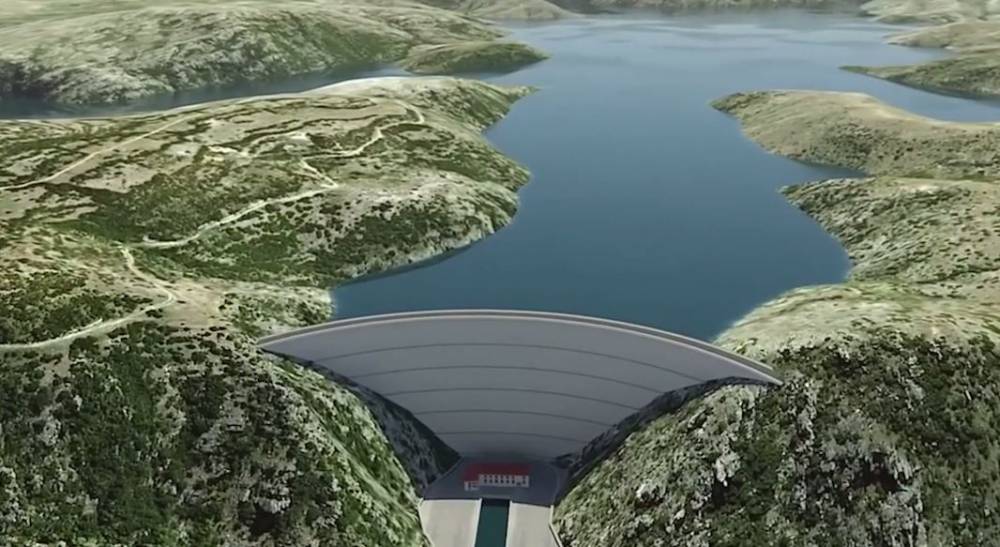
The European Union is increasingly focusing on the development of energy storage systems, which are becoming one of the most important elements for the stability of the future energy system.
According to the latest data from the European Commission’s Joint Research Centre (JRC), the European Energy Storage Inventory now enables monitoring not only of existing projects, but also of the future deployment dynamics of energy storage facilities across Europe.
The platform’s new functionalities provide insight into how storage capacities are expected to grow in the coming years, while also tracking investments, construction pace, and technological trends across different European countries.


The data indicate that Europe is already entering a phase of strong expansion in energy storage. Operational capacities currently stand at around 70 GW, while an additional more than 97 GW is expected to become operational by 2030.
Although pumped-storage hydropower plants continue to dominate as the largest existing form of energy storage, battery systems are currently the fastest-growing segment. The reason is clear, the increasing share of renewable energy sources, particularly solar and wind power plants, is creating a growing need for greater flexibility and balancing capabilities within electricity systems.
In practice, battery systems allow excess electricity generated during periods of strong sun or wind to be stored and later used when production decreases or demand peaks.
The European Commission considers energy storage to be one of the key prerequisites for a successful energy transition, greater security of supply, and reduced dependence on fossil fuels.
At the same time, alongside the growth of renewable energy, investor interest in large battery energy storage systems (BESS) is also accelerating, with several European countries already launching large-scale investments in new storage capacities.
This trend is gradually becoming increasingly relevant in the Western Balkans as well, where the future expansion of solar and wind power plants will be practically impossible without parallel development of battery systems and modern balancing mechanisms for electricity systems.
Large Pumped-Storage Projects in the Western Balkans: The Region Enters a New Cycle of Energy Investments?
n addition to battery systems, Western Balkan countries are increasingly focusing on the development of large pumped-storage hydropower plants, which are considered the most stable technology for long-term electricity storage.
In Serbia, the most advanced project is the reversible hydropower plant “Bistrica”, with a planned installed capacity of around 628–630 MW. The project foresees energy storage capacity of around 55 GWh, with the possibility of future expansion up to 310 GWh, which could position Bistrica among the most significant electricity storage systems in the wider Southeast European region. Serbia’s EPS has already entered the phase of spatial planning, studies, and permitting preparations, and the project is considered crucial for integrating new wind and solar capacities into the Serbian energy system.
At the same time, Serbia is once again revitalizing the long-discussed mega-project “Djerdap III” (Iron Gate III), considered for decades one of Europe’s largest potential pumped-storage hydropower plants. Several options are currently under consideration, with capacities ranging from 1,400 MW and 1,800 MW up to 2,400 MW. If realized in its largest form, the project could significantly reshape the regional energy landscape.
In North Macedonia, the “Chebren” project remains the country’s most significant hydropower project. The latest models foresee a capacity of at least 333 MW, with the possibility of expansion to approximately 458 MW through an additional unit. The estimated investment value is around EUR 1 billion, according to information from the last unsuccessful international tender process that ended in 2024. Besides electricity generation, the project is also expected to play an important role in providing system flexibility and integrating renewable energy sources. Government representatives have repeatedly announced during the past year that the project is once again being offered to foreign investors, although there is still no concrete information regarding the implementation timeline or project structure.
In Albania, attention is focused on a potential pumped-storage project linked to the Devoll river cascade, where Norwegian company Statkraft is already conducting prefeasibility analyses. According to available information, the project could reach a capacity of approximately 1.2 GW, potentially making it one of the largest storage systems in Southeast Europe. Additional pumped-storage opportunities between the Fierza and Koman reservoirs are also being explored.
Bosnia and Herzegovina already operates one of the region’s largest pumped-storage hydropower plants “Capljina”, with an installed capacity of approximately 420–440 MW. The facility has been operational since the 1980s and is currently undergoing modernization and rehabilitation processes aimed at extending its operational lifetime and improving system flexibility.
These projects demonstrate that the Western Balkans region is gradually following the broader European trend the large-scale development of renewable energy sources can no longer be envisioned without substantial energy storage capacities. Despite long development timelines and high investment costs, pumped-storage hydropower plants are once again becoming a strategic energy priority across the Balkans.
Viktor Andonov, M.Sc in electrical engineering
Former energy advisor to the President of the Government of North Macedonia