

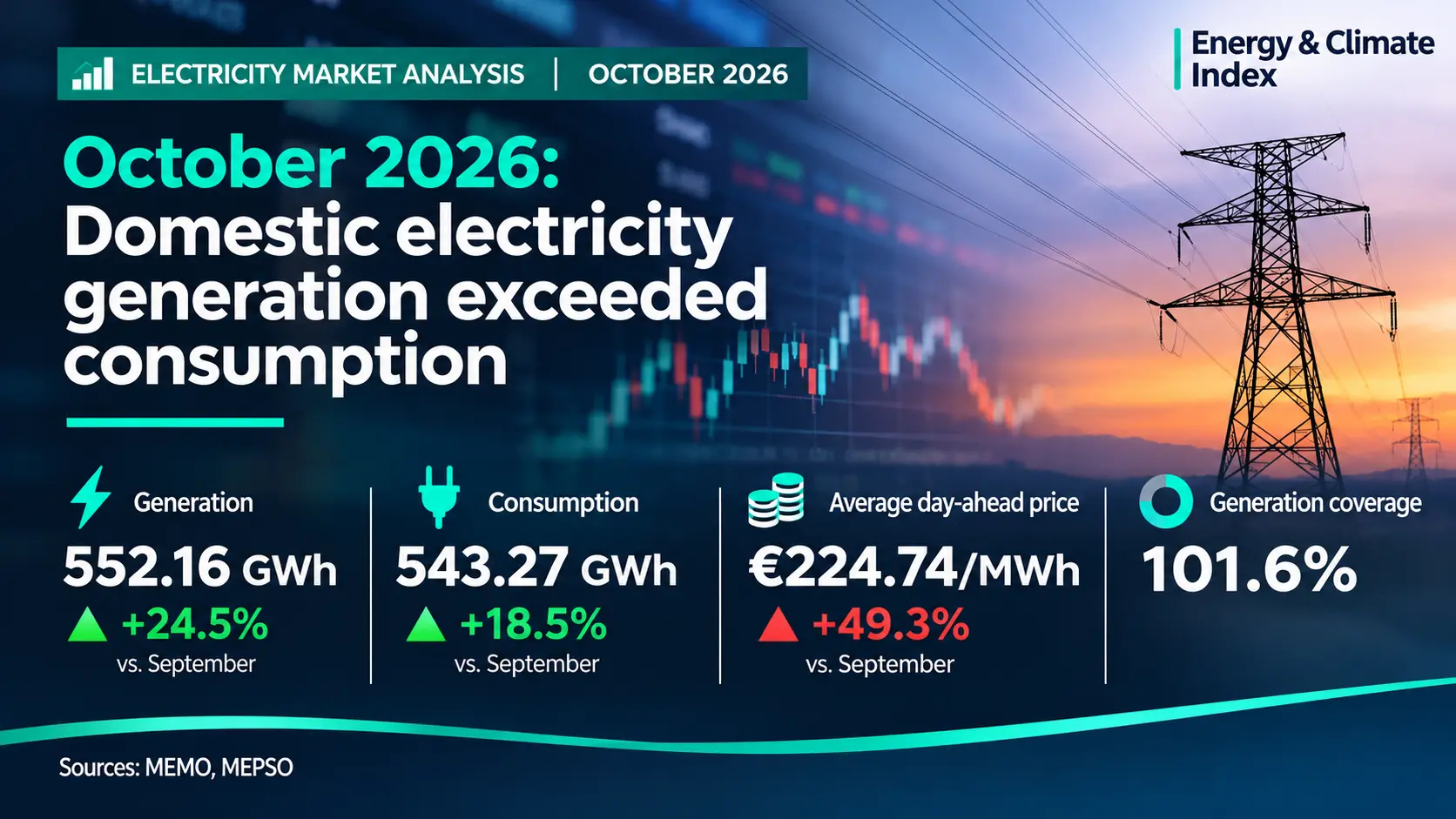
October 2026 marked a significant shift in North Macedonia’s electricity balance. Following a decline in generation and consumption in September, domestic power plants increased their output by almost a quarter, while electricity consumption rose by 18.5%.
According to MEMO data, domestic electricity generation reached 552.16 GWh, compared with gross consumption of 543.27 GWh. At the same time, the average day-ahead market price increased to €224.74/MWh, up from €150.49/MWh in September.
Domestic generation grew faster than consumption
October’s electricity balance showed a significant improvement in domestic generation coverage. Electricity generation increased by 24.5%, while gross consumption rose by 18.5% compared with September.


As a result, the ratio of domestic generation to gross electricity consumption reached 101.6%, compared with 96.7% in the previous month. MEMO’s official statistical presentation caps coverage at 100%, but the direct ratio between the reported quantities indicates that generation exceeded gross consumption.
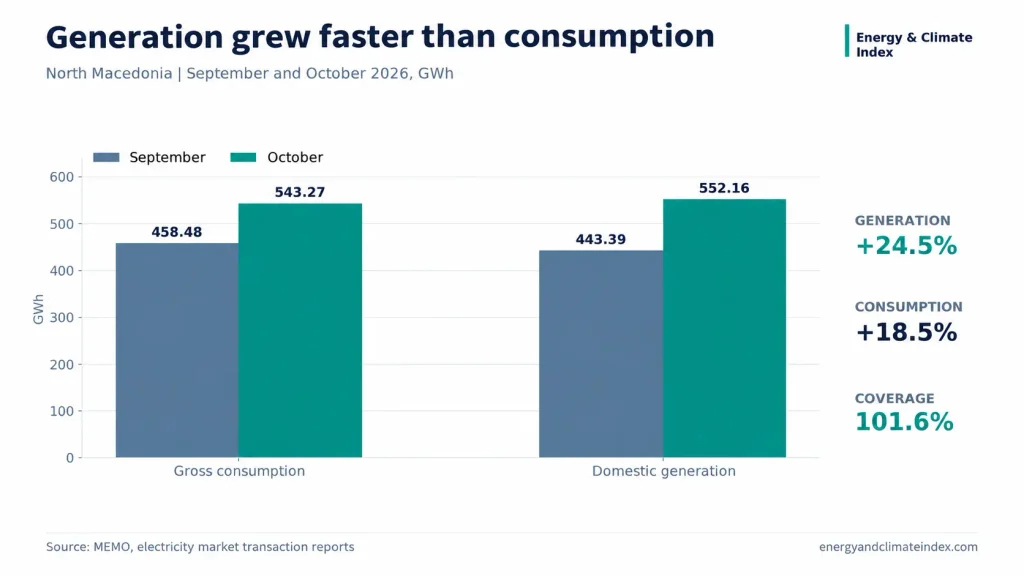
This represents a positive development in the monthly electricity balance, but it does not mean that the system was entirely independent of regional markets during every hour.
MEPSO data show that significant bidirectional physical electricity flows were recorded across interconnections in October. Therefore, monthly generation coverage should not be equated with hourly self-sufficiency or with the volume of commercial electricity imports and exports.
Thermal and hydropower plants increased electricity generation
More detailed data from MEPSO reveal the main sources of additional electricity generation.
Within the generation covered by the monthly transmission system balance, hydropower output increased from 82 GWh to 137.9 GWh, while thermal power generation rose from 163.6 GWh to 239.2 GWh. Renewable energy facilities connected to the transmission network recorded a smaller increase.
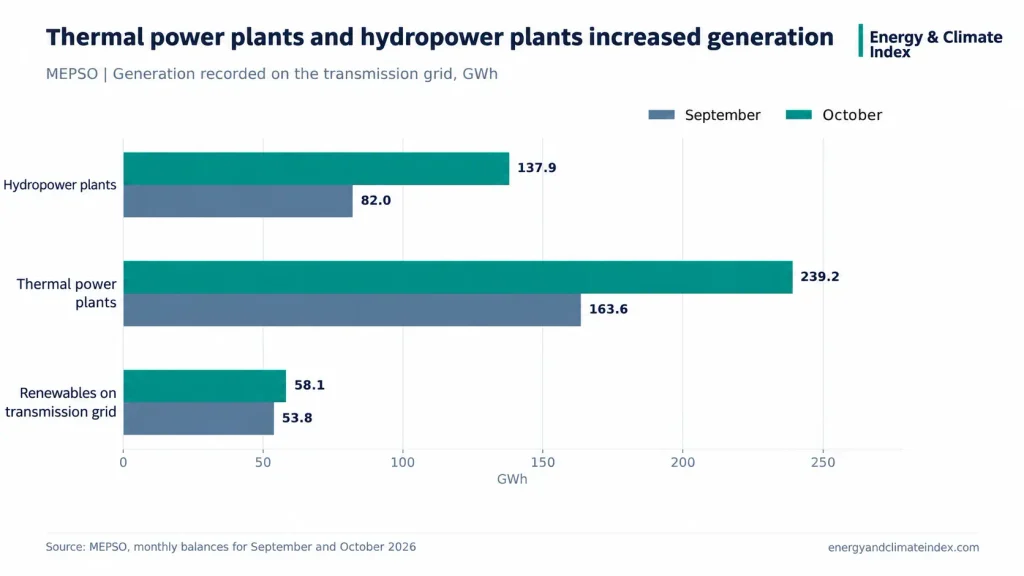
These figures show that the largest additional contributions came from hydropower and thermal power plants. Their combined increase was substantially greater than the changes recorded for other technologies within the same reporting scope.
In the structure of electricity market transactions, ESM remained the largest producer, accounting for 43.5% of total domestic generation, while independent producers contributed 33.4%. Aggregators accounted for 17.5%, followed by producers operating under feed-in tariffs at 5.6%.
Notably, independent producers increased their generation by more than half compared with September, while aggregators recorded a decline of approximately one quarter. This further highlights the seasonal changes in the generation mix.
Why did electricity prices rise by almost 50%?
Despite the improved domestic electricity balance, the average wholesale price increased to €224.74/MWh in October, representing a 49.3% rise compared with September.
The explanation cannot be found solely in the total volume of electricity generated during the month. Day-ahead electricity prices are determined for individual market time intervals, depending on supply and demand, the availability of generation capacity and conditions for regional electricity trading.
MEMO’s October data show that the evening price profile remained the most expensive, averaging €267.1/MWh, significantly above the average baseload price.
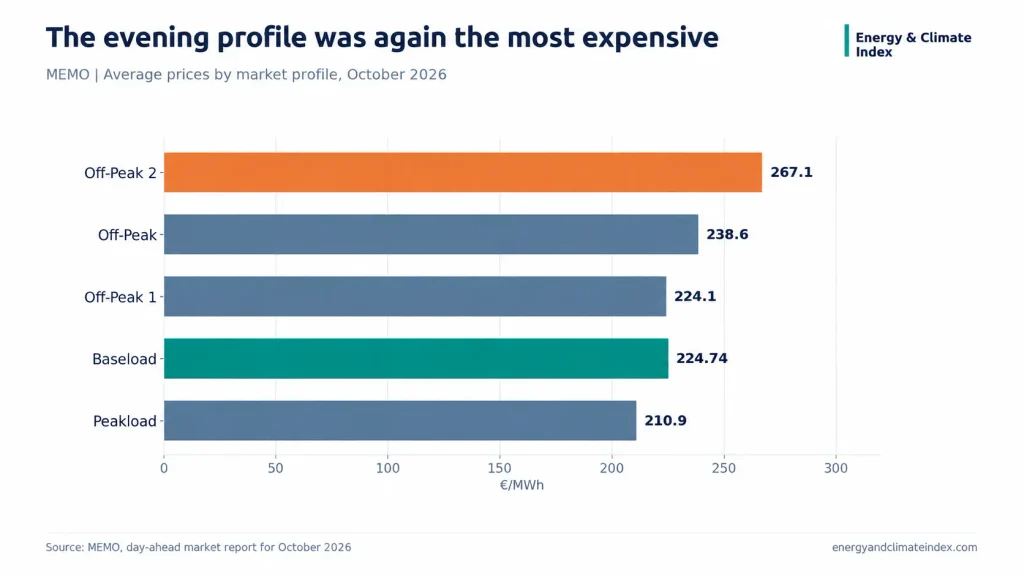
During hours of higher photovoltaic generation, additional electricity supply can ease price pressure. However, as daylight hours decrease during autumn, photovoltaic generation becomes more limited, particularly in the evening.
This increases the importance of hydropower plants, thermal power plants, gas-fired generation facilities and cross-border electricity trading in meeting hourly demand.
Electricity prices also increased across neighbouring markets
The regional comparison demonstrates that October’s electricity price increase was not limited to North Macedonia.
In Serbia, Bulgaria, Greece and Hungary, average day-ahead market prices were also substantially higher than in September. Among these markets, Serbia recorded the largest percentage increase.
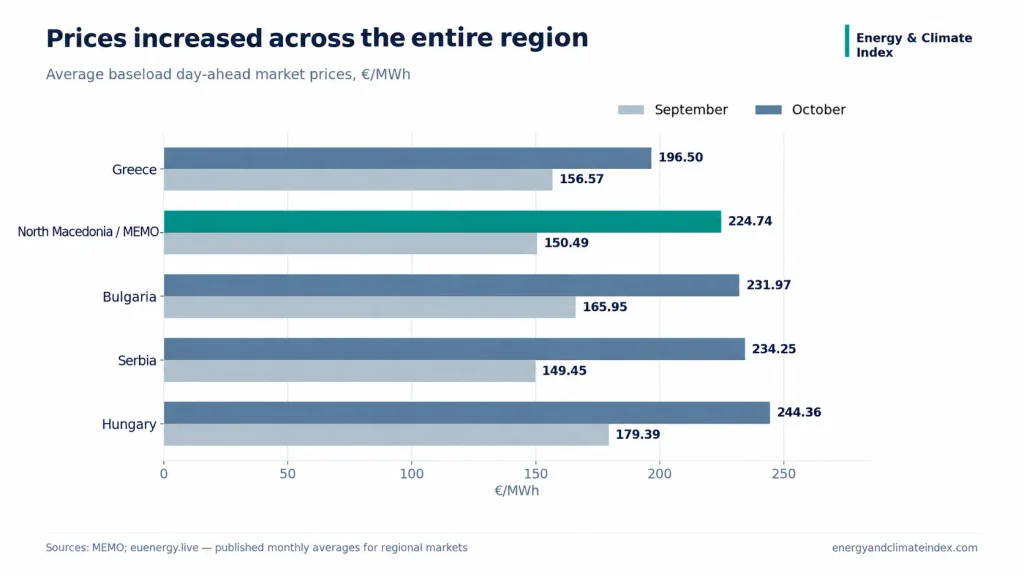
In October, MEMO’s average price was higher than that of Greece but remained below the prices recorded in Bulgaria, Serbia and Hungary.
This is particularly relevant for North Macedonia, whose electricity system is interconnected with regional markets and whose wholesale electricity prices cannot be analysed in isolation from developments in neighbouring bidding zones.
What does October indicate for the final two months of the year?
October confirmed that North Macedonia’s electricity balance can improve significantly when hydropower and thermal electricity generation increase. At the same time, it demonstrated that stronger monthly domestic generation coverage does not guarantee lower wholesale electricity prices.
In November and December, shorter daylight hours and a potential increase in electricity demand due to lower temperatures will make the availability of domestic generation capacity particularly important.
The key questions will be whether ESM can maintain stable thermal power generation, what contribution the TE-TO gas-fired power plant will make, and whether hydrological conditions will support substantial hydropower production.
Alongside domestic generation, regional electricity prices and the hourly availability of electricity will remain important factors influencing price formation on MEMO.
ECI