

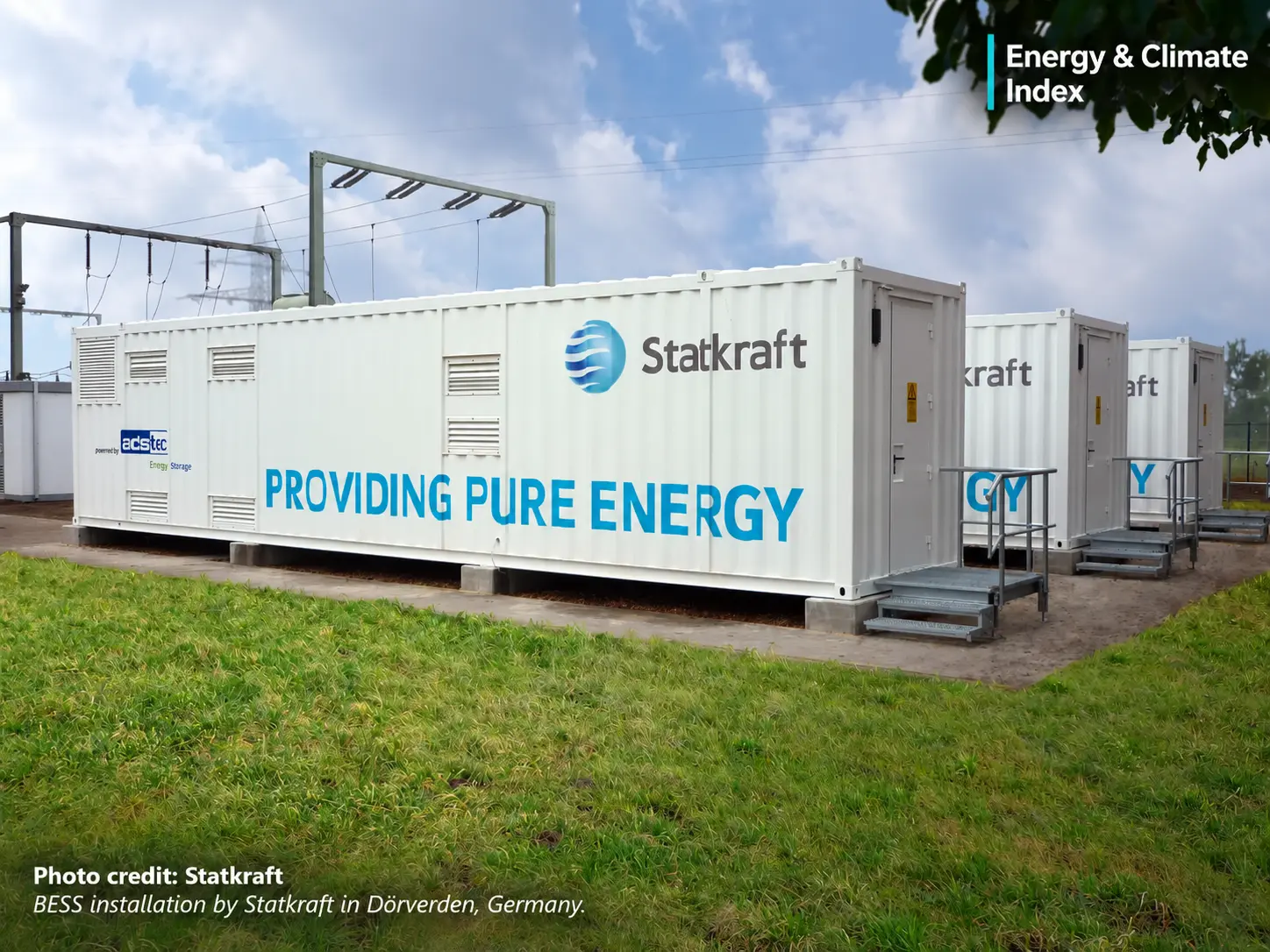
Greenvolt Power and Statkraft have signed a 10-year agreement for the management and market optimisation of two large-scale battery energy storage systems in Poland, with a combined power capacity of 400 MW and storage capacity of 1.6 GWh.
The agreement covers the Ełk and Turośń Kościelna battery storage facilities, each with a power capacity of 200 MW and storage capacity of 800 MWh. They are among the largest BESS projects in Poland and rank among the larger battery storage facilities in the European Union.
Under the agreement, Statkraft will optimise and trade the flexibility provided by the two battery systems across electricity markets. For Greenvolt Power, the agreement provides an additional long-term and predictable revenue stream, alongside revenues already secured by the projects through Poland’s capacity market.


Four-hour, 200 MW battery systems
Both projects have identical core specifications, 200 MW of power capacity and 800 MWh of storage capacity, allowing them to deliver electricity at maximum output for approximately four hours.
Turośń Kościelna was officially commissioned in July 2026. The facility is connected to Poland’s transmission grid at 110 kV and uses LFP battery technology.
From 2028, Turośń Kościelna will also participate in Poland’s capacity market under a 17-year contract, with an obligation to provide 170 MW of capacity.
The Ełk project, also rated at 200 MW / 800 MWh, is in its final stage, with commercial operations scheduled for the fourth quarter of 2026.
Together, the two facilities will provide Greenvolt Power with 400 MW of battery power capacity and 1.6 GWh of energy storage capacity in north-eastern Poland.
Statkraft will turn flexibility into market revenues
A key element of the new agreement is the cooperation model between the owner of the battery assets and the company responsible for their market optimisation.
Statkraft will determine how the flexibility of the two systems is deployed across different segments of the electricity market. The batteries can be charged when electricity prices are lower or when generation in the system is high, and discharge electricity during periods of higher demand and prices.
In addition, the rapid response capabilities of BESS assets allow them to provide balancing and other system services.
For Greenvolt Power, the 10-year tolling agreement adds another revenue mechanism alongside Poland’s capacity market. This is particularly important for large-scale battery projects, as combining multiple revenue streams reduces exposure to short-term electricity price fluctuations and improves the financial predictability of the investment.
€218 million financing package for the two projects
Greenvolt previously secured significant financing for the Ełk and Turośń Kościelna projects.
In August 2026, the group announced an agreement with UniCredit for a financing package totalling €218 million. It includes €153 million in bridge facilities and an additional €65 million guarantee facility.
Greenvolt said the agreement demonstrates that large-scale battery storage systems are increasingly being treated as a mature infrastructure asset class capable of attracting bank financing.
Together, Ełk, Turośń Kościelna and Siedlce will reach a combined 1 GW of power capacity and 4 GWh of energy storage capacity, further strengthening the role of battery storage in Poland’s electricity system.
This development is particularly significant as electricity generation from wind and solar PV continues to grow. Battery storage systems can shift part of this generation from periods of high supply to hours of stronger demand, while simultaneously providing fast-response flexibility to the electricity grid.
ECI