

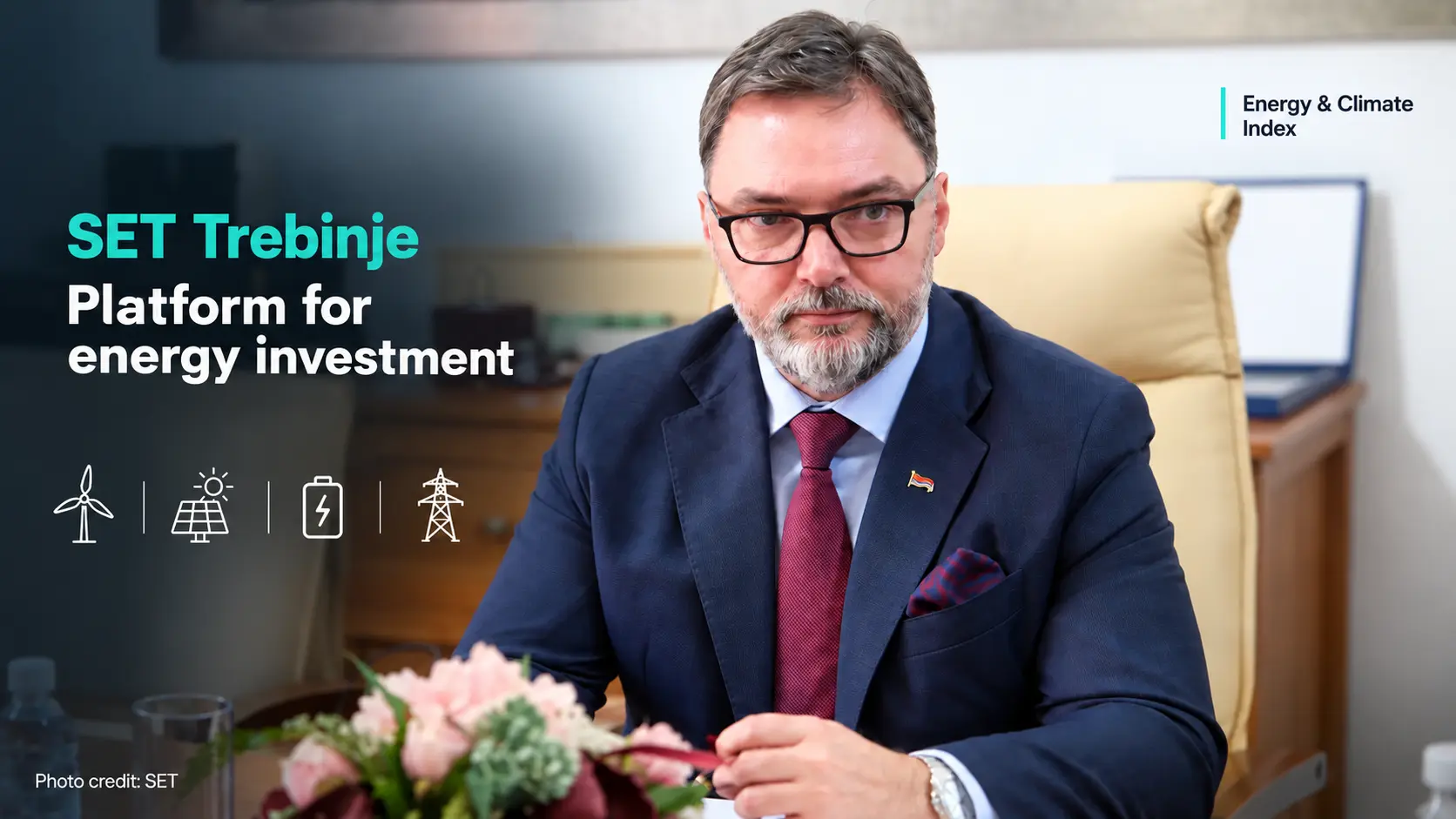
The energy transition in Bosnia and Herzegovina and Republika Srpska should be viewed as a development opportunity, rather than merely a cost of adapting to new European rules. This is one of the main messages from Staša Košarac, Deputy Chair of the Council of Ministers of Bosnia and Herzegovina and Minister of Foreign Trade and Economic Relations, in an interview with SET Trebinje.
In the interview, Košarac discusses energy investment, the modernisation of electricity infrastructure, renewable energy, CBAM, the future electricity market in Bosnia and Herzegovina, and the role of the Trebinje Energy Summit in connecting institutions, companies, investors and international financial institutions.
According to Košarac, energy is one of the key areas for economic development because Bosnia and Herzegovina has significant natural and generation potential, while at the same time its industry must adapt to the new requirements of the European market.


Investment-ready projects, not just potential
One of the most important messages from the interview is that it is no longer enough simply to present investors with the existence of energy potential. According to Košarac, investors require a clear picture of projects: available infrastructure, regulatory conditions, financing options, partners, technical parameters and realistic implementation conditions.
He believes that regional development agencies can play an important practical role in connecting local communities, businesses, institutions and potential investors. The Ministry, meanwhile, can contribute by linking domestic institutions with international financial institutions, development partners and business entities.
“It is particularly important that we approach investors with prepared projects and clear information, rather than just potential,” Košarac says.
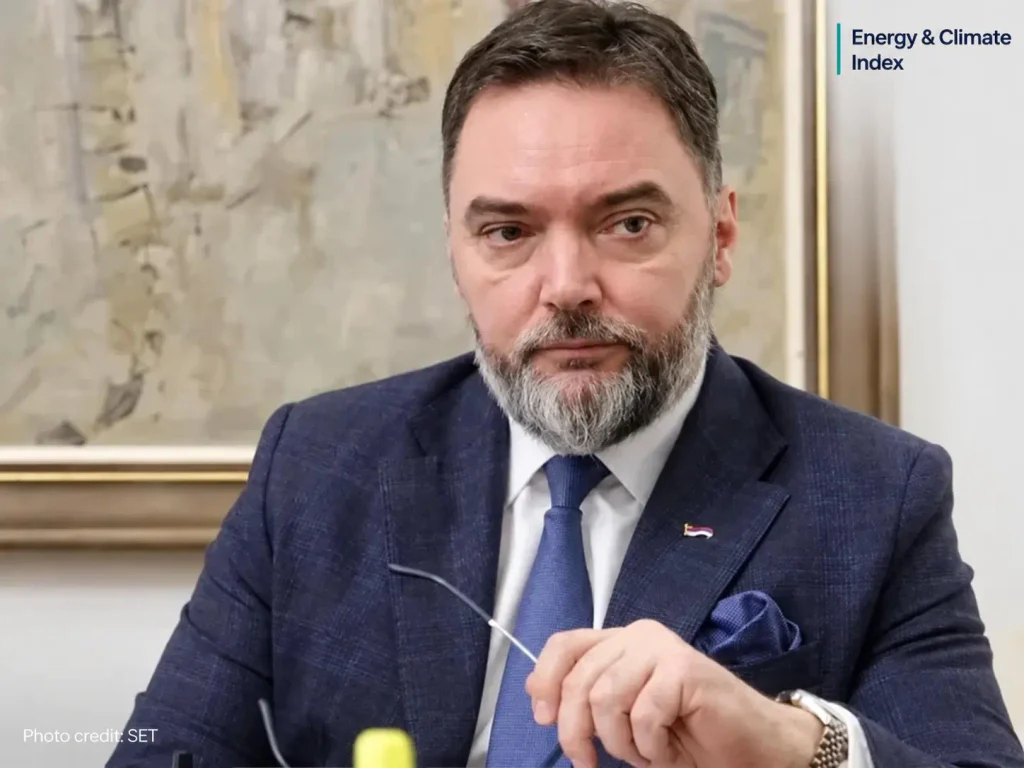
As a concrete example of infrastructure investment, he points to the reconstruction and modernisation of the distribution network operated by ODS “Elektrokrajina” Banja Luka. In September, the Council of Ministers of Bosnia and Herzegovina approved a proposed €38 million loan agreement with the EBRD.
The project envisages the reconstruction of around 700 kilometres of medium-voltage and 1,000 kilometres of low-voltage network, as well as increased capacity for connecting new consumers and distributed renewable energy sources.
Košarac argues that projects of this kind demonstrate how international financing can create direct benefits for the local economy through investment, the engagement of domestic companies, improved infrastructure and new business activities.
SET as a platform for concrete investment
Košarac also places particular emphasis on the role of the Trebinje Energy Summit. According to him, modern energy projects are no longer a matter only for power utilities and ministries. Their implementation involves investors, banks, international financial institutions, system operators, regulators, local communities and the professional community.
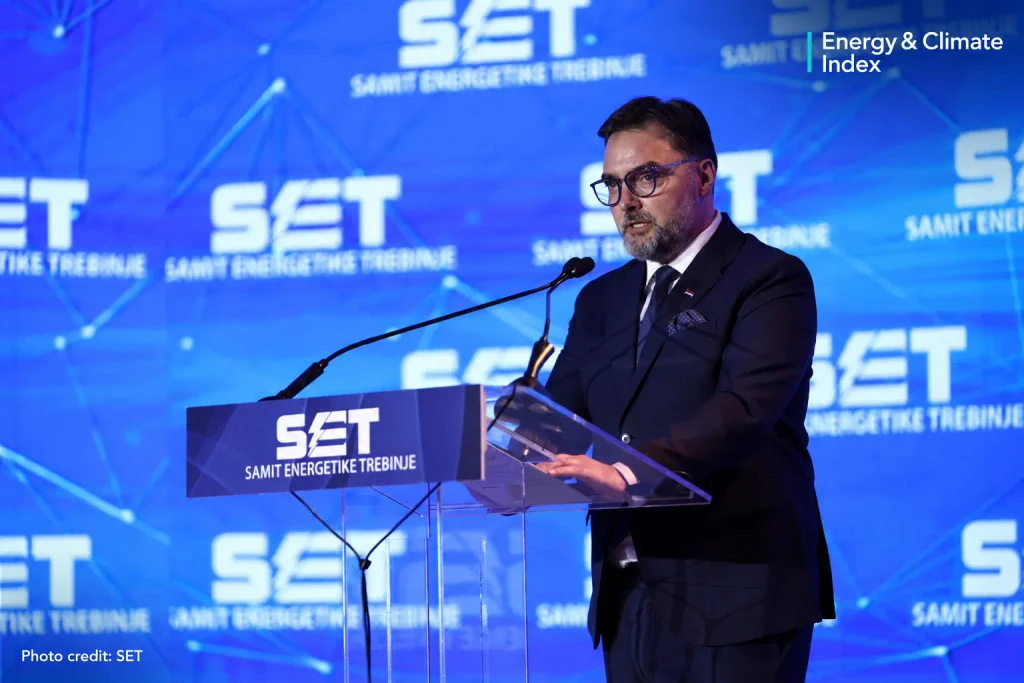
For this reason, SET has value as a place where different stakeholders can discuss concrete projects rather than only general trends.
Košarac believes that the next stage in the Summit’s development should place an even stronger emphasis on investment-ready projects. He expects initiatives to be presented with clearly defined investment values, technical parameters, infrastructure status, grid connection possibilities and financing models.
The objective, according to him, is for discussions held at the Summit to continue after the event through concrete contacts, meetings with financial institutions and tangible next steps.
CBAM is changing competitiveness
CBAM, the EU Carbon Border Adjustment Mechanism, occupies a prominent place in the interview. Košarac notes that from 1 January 2026, CBAM entered its definitive phase and also covers electricity.
According to him, this means that the competitiveness of producers and exporters will no longer depend solely on the quantity and price of electricity produced, but also on how embedded emissions are calculated and demonstrated, as well as on the emissions intensity of generation.
For this reason, Bosnia and Herzegovina and Republika Srpska need to work simultaneously on modernising electricity infrastructure, developing renewable energy sources, improving investment preparation and aligning the market and regulatory framework with European rules.
Košarac stresses that the green transition should not be reduced to the costs of adjustment. Instead, he believes it should be used as a process through which investment is increased, domestic potential is utilised and the competitiveness of the economy is strengthened.
The market and regional integration
The interview also addresses the organisation of the electricity market. Košarac highlights the Law on the Regulator, Transmission and Electricity Market in Bosnia and Herzegovina, which was approved by the Council of Ministers in 2025.
According to him, the proposed solutions should contribute to a more orderly wholesale market environment, the establishment of a power exchange and stronger integration with regional and European markets.
This is important because the energy transition does not end with the construction of new generation capacity. The electricity grid, market mechanisms, flexibility and regional integration must develop in parallel.
Energy as a foundation for broader economic development
The central message of the interview is that energy potential should not be viewed solely as an opportunity to generate electricity. It should become a foundation for broader economic development, new investment, greater participation by domestic companies, new technologies, better infrastructure and stronger integration with regional and European markets.
By the next SET, Košarac expects more investment-ready projects and more direct contacts with investors and international financial institutions. At the same time, businesses need to prepare in advance for CBAM, new technologies, grid development, flexibility and a higher share of renewable energy.
His concluding message is clear: the value of energy resources will increasingly be measured by how successfully they are transformed into concrete investment, modern infrastructure, new business activity and long-term economic development.
In this context, it will be crucial for institutions, companies and financial partners to transform existing energy potential into projects capable of attracting capital, technologies and strengthening the long-term competitiveness of the regional economy.
The full interview with Staša Košarac was originally published by SET Trebinje.
ECI