

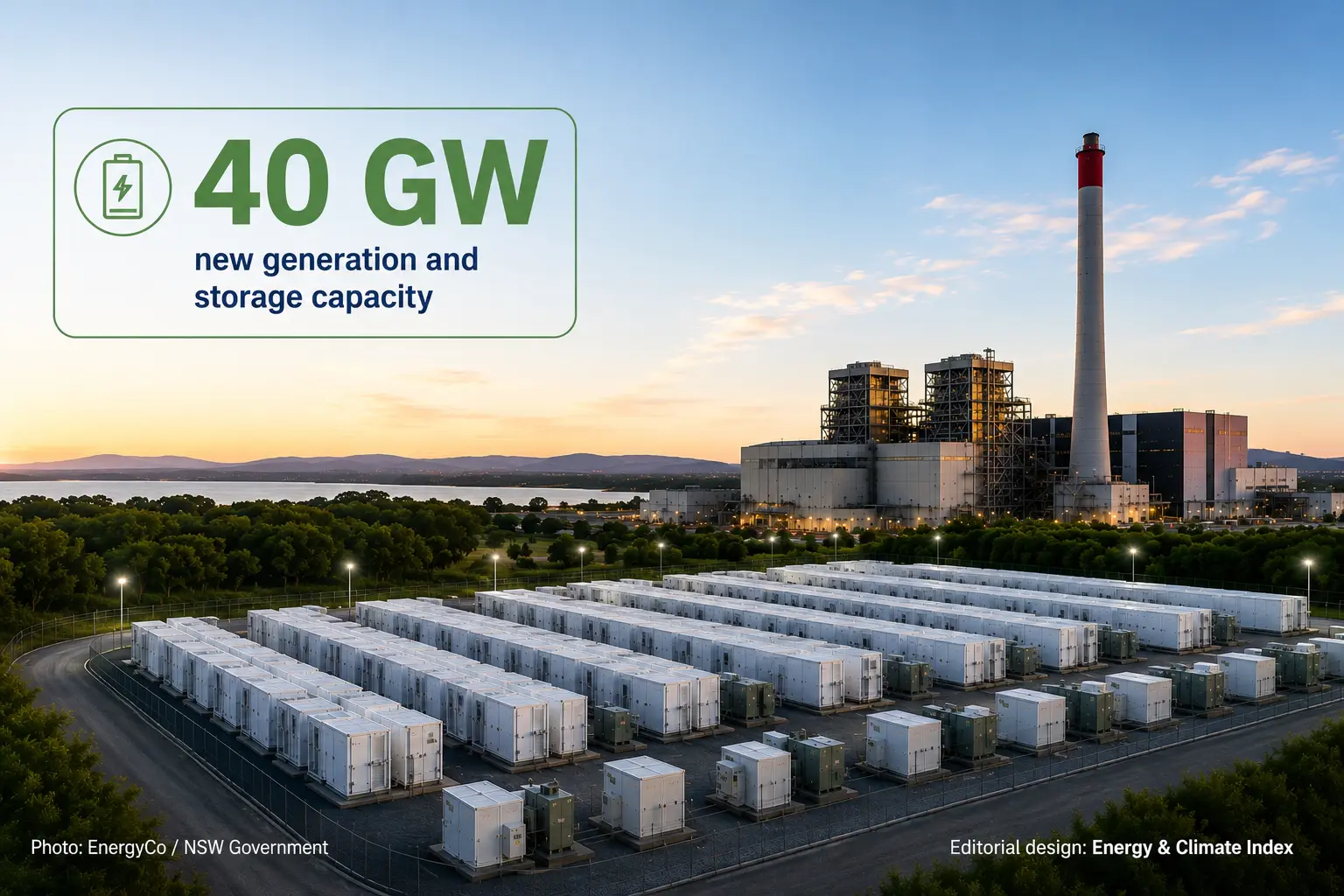
Australia’s electricity system is entering one of the largest transformations in its history. Around 40 GW of new generation and storage capacity is already classified as committed or anticipated, with the projects expected to be delivered by the early 2030s.
The Australian Energy Market Operator’s (AEMO) new Electricity Statement of Opportunities 2026 shows that the significantly expanded investment pipeline has improved the reliability outlook for the National Electricity Market (NEM). According to the operator, no reliability gaps are currently forecast before 2030.
However, Australia is facing a major shift: around 15 GW of coal and gas generation is scheduled to retire over the next decade, while electricity consumption is expected to increase by more than 40%.


Record 9.1 GW connected in one year
The improved outlook is not based solely on future projects. A record 9.1 GW of new generation and storage capacity was fully commissioned in the NEM during the 2025/26 financial year.
At the same time, AEMO identifies around 40 GW of committed and anticipated projects expected to be delivered by the early 2030s.
This combination is expected to help replace generation retiring from the system while simultaneously meeting growing electricity demand.
AEMO CEO Daniel Westerman said the reliability outlook has improved due to record levels of new generation and storage entering the system, alongside a strong investment pipeline.
However, AEMO stresses that maintaining reliability will depend on continued investment in generation, storage, transmission infrastructure and distributed energy resources.
15 GW of coal and gas to leave the system
The scale of the transition is perhaps best illustrated by the amount of capacity scheduled to retire.
Around 15 GW of coal and gas-fired generation is expected to close over the next decade. At the same time, the electrification of households, businesses and industry will continue to drive electricity demand higher.
New investment therefore has to do more than simply replace ageing power plants. Australia’s electricity system must simultaneously compensate for a significant amount of retiring generation and supply a market expected to consume more than 40% more electricity over the next decade.
AEMO warns that another wave of investment will be required beyond 2030 to maintain system reliability.
Data centres emerge as a major new electricity consumer
One of the most significant factors in the new forecasts is the rapid growth in electricity consumption from data centres.
AEMO expects data-centre electricity consumption in the NEM to increase from around 5 TWh in 2025/26 to 34 TWh by 2035/36.
This means the share of electricity supplied through the grid consumed by data centres could increase from around 3% to approximately 13% in just one decade.
The growth of data centres, together with the broader electrification of the economy, further increases the importance of timely investment in new generation, battery storage and grid infrastructure.
Reliability depends on timely delivery
Despite the improved outlook, AEMO does not suggest that the transition is complete or that the risks have disappeared.
The key condition is that planned investments are converted into operational capacity on time. In addition to new generation, further investment will be required in storage, transmission infrastructure and the system services needed to maintain a stable electricity system.
According to AEMO, potential reliability gaps identified beyond 2030 are not forecasts of electricity shortages or supply interruptions. Rather, they provide an early signal of where additional investment or other measures will be required.
ECI