

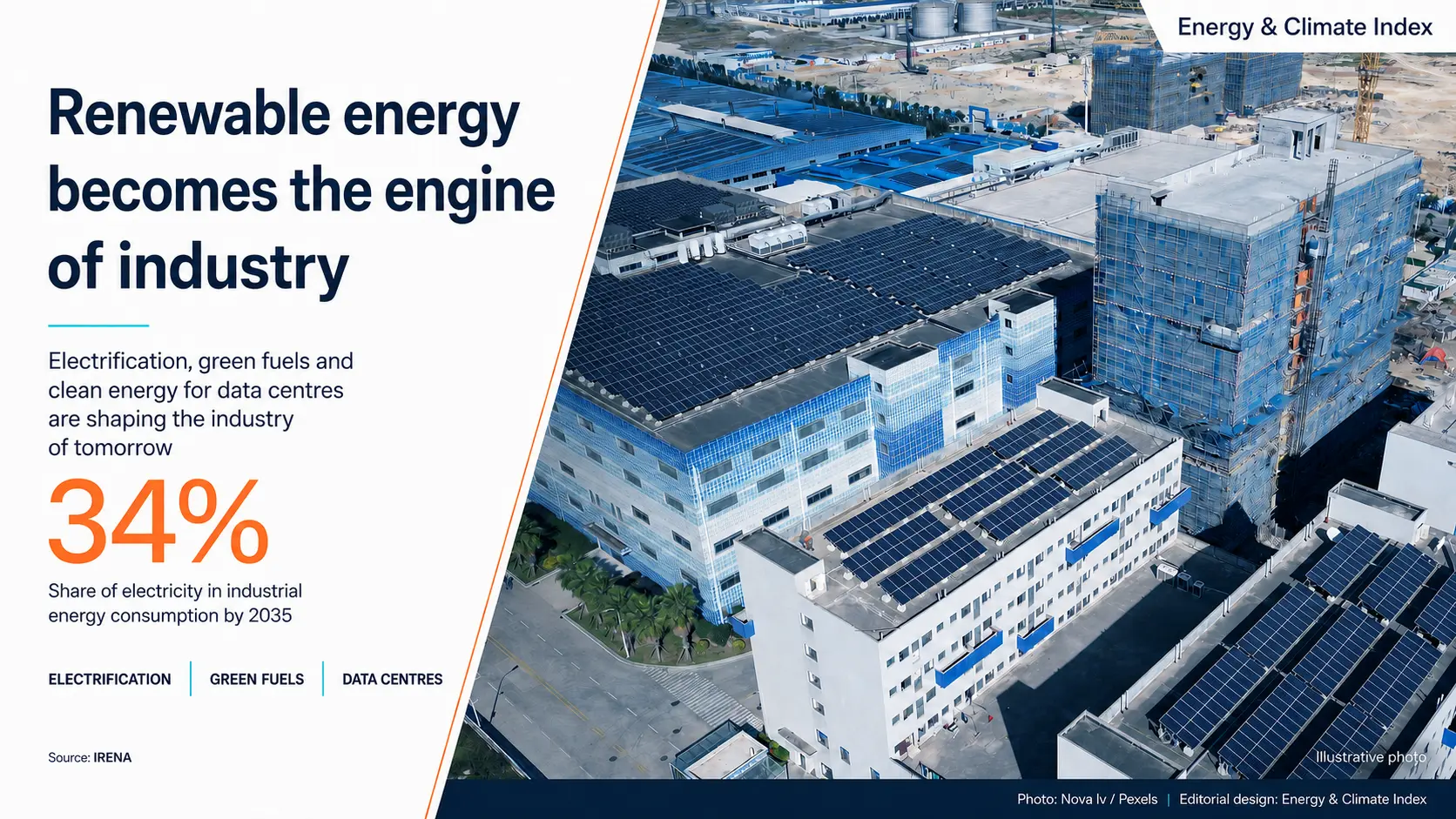
Renewable energy is no longer merely a tool for reducing emissions. It is becoming a key factor in industrial competitiveness, energy security and the stability of production costs, according to the International Renewable Energy Agency – IRENA.
In its latest expert analysis, IRENA identifies three ways in which renewable energy will shape the industries of tomorrow: the direct electrification of production, the use of renewable fuels in processes that are difficult to electrify and the provision of clean electricity for rapidly expanding digital infrastructure.
Electricity could cover 34% of industrial energy consumption
The first and most efficient pathway is the direct replacement of fossil fuels with electricity generated from renewable sources.


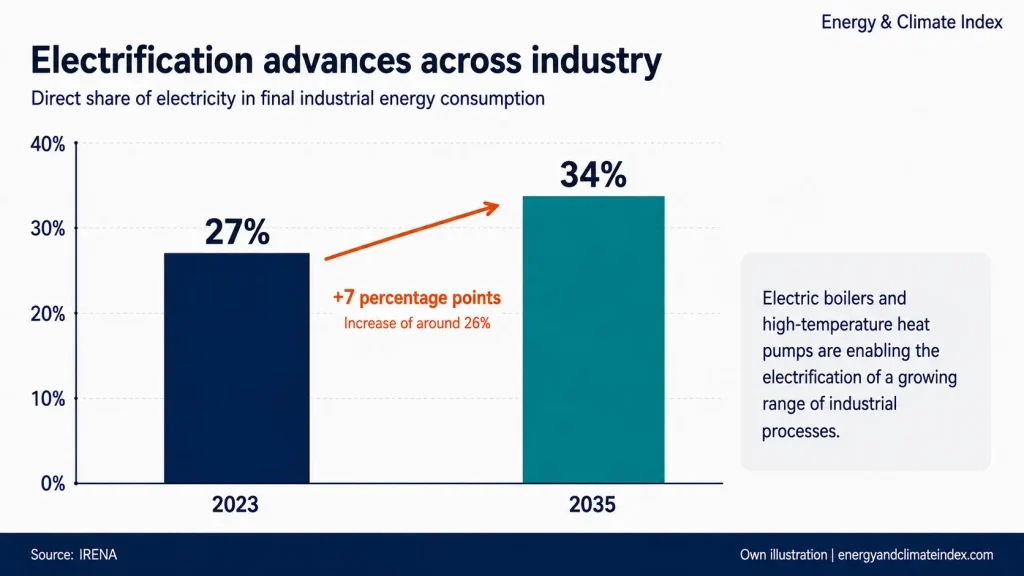
Electric boilers and new generations of high-temperature heat pumps are enabling the electrification of an increasing number of industrial processes. According to IRENA, the direct share of electricity in final industrial energy consumption could rise from 27% in 2023 to 34% by 2035.
IRENA’s industrial projection aligns with the broader global initiative to place electrification at the centre of the energy transition. Ahead of COP31, a new global target was proposed for electricity to cover 35% of worldwide final energy consumption by 2035. Unlike the 34% projection, which refers specifically to industry, the 35% target covers the full spectrum of global final energy consumption.
This transition is particularly important for industries seeking to reduce their exposure to volatile coal, oil and natural gas prices. Locally or regionally generated renewable electricity can provide greater cost predictability and reduce dependence on disruptions in global fuel markets.
This direction is already receiving strong support from the private sector. More than 100 leading global companies, with combined revenues of around USD 1.5 trillion, have called for faster electrification and for it to be placed at the centre of national strategies for energy security and competitiveness. For businesses, switching to renewable electricity is not only a climate measure but also a way to reduce exposure to price shocks and supply disruptions.
However, the feasibility of electrification depends on the required temperature, the design of the production process, electricity prices and access to a reliable round-the-clock power supply.
Hydrogen and bioenergy for processes that are difficult to electrify
Direct electrification will not immediately be applicable across all sectors. Steel, cement and chemical production require high temperatures, while some processes also use fossil fuels as feedstocks.
In these segments, IRENA sees an important role for green hydrogen, biofuels and biogas. Renewable hydrogen can reduce dependence on fossil fuels in iron and steel value chains, while biogas and other bio-based fuels can replace part of the conventional fuels and feedstocks used in the chemical industry.
The key message is that limited supplies of green hydrogen and sustainable biomass should be directed primarily towards processes that cannot be efficiently electrified.
Data centres will compete with industry for clean electricity
The third challenge is the rapid expansion of artificial intelligence and digital infrastructure. Artificial intelligence can improve renewable energy forecasting and power-system management, but the data centres supporting it require large volumes of reliable electricity.
IRENA expects competition for available renewable electricity to intensify between data centres and traditional energy-intensive industries. The outcome will depend on location, available solar and wind resources, grid capacity and the speed at which new power plants can be connected.
One possible solution is the development of renewable microgrids near data centres, combined with battery storage and backup capacity. This would allow part of the new electricity demand to be supplied locally, without placing the entire additional load on the existing power grid.
Energy and industrial policy must be planned together
The analysis shows that future planning cannot treat renewable energy generation, grid development, industrial zones and data centres as separate policy areas.
New generation, transmission and storage capacity should be developed in line with the expected demand from steel plants, the chemical industry, manufacturing clusters and digital infrastructure.
High installed capacity alone will not be sufficient to secure industrial competitiveness. The decisive factors will be where and when clean electricity is available, how much it costs and whether the system can support continuous and reliable industrial operations.
In other words, the advantage will belong to companies and economies that successfully decouple industrial growth from volatility in fossil-fuel markets and secure timely access to reliable renewable energy.
Viktor Andonov, M.Sc