

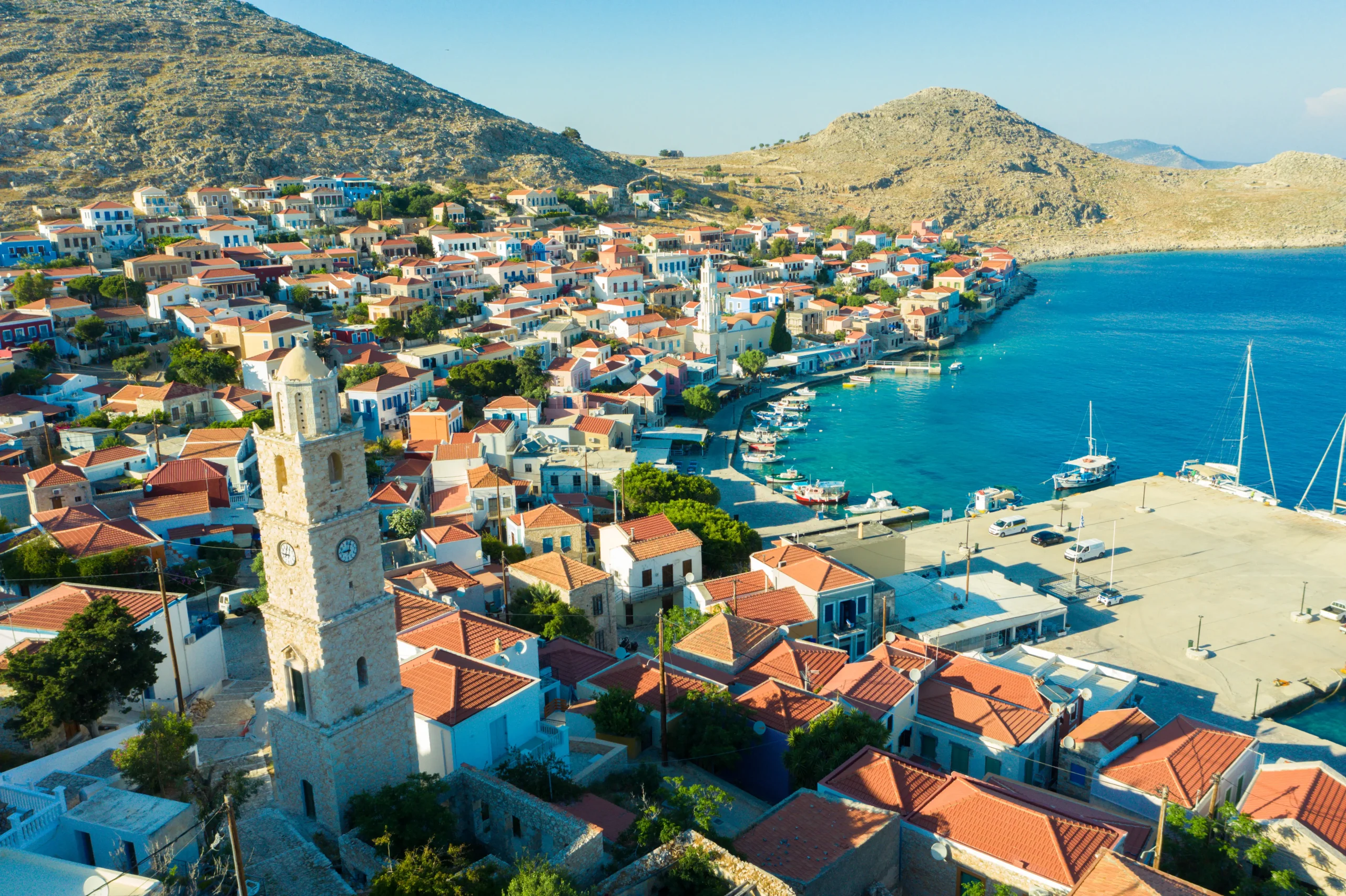
A community-owned photovoltaic power plant, electric vehicles, a solar-powered boat and smart infrastructure have transformed Halki into Greece’s first GR-eco island
Halki, one of the smallest inhabited islands in the Dodecanese, has become a prominent European example of how solar energy can deliver direct economic benefits to local residents. The island, covering 28 square kilometres and home to around 330 permanent residents, has developed a model combining local electricity generation, an energy community, electric mobility and digital public services.
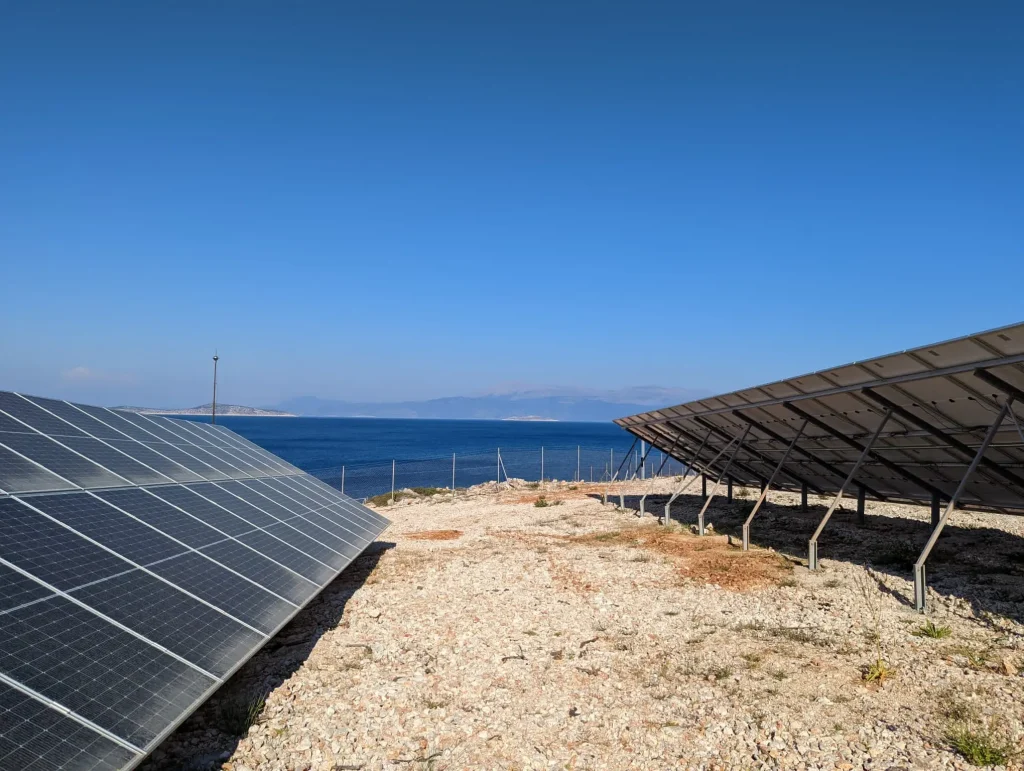
photo credit: ec.europa.eu
The project was officially launched on 5 November 2021 as the first implementation under Greece’s national GR-eco Islands initiative. The programme aims to transform small Greek islands into models of a green economy, energy autonomy, digital innovation and sustainable mobility.


The project was implemented in cooperation with the French companies Citroën, Vinci Energies and Akuo Energy, as well as the Greek companies ALD Automotive, PPC, Vodafone and Papastratos, under the auspices of the Greek Government and the Embassy of France in Greece.
A power plant with 2,246 photovoltaic modules
Halki’s main energy project is a photovoltaic power plant with a nominal capacity of 999.47 kWp. It was built on approximately two hectares of land near Kania Beach and the island’s new port.
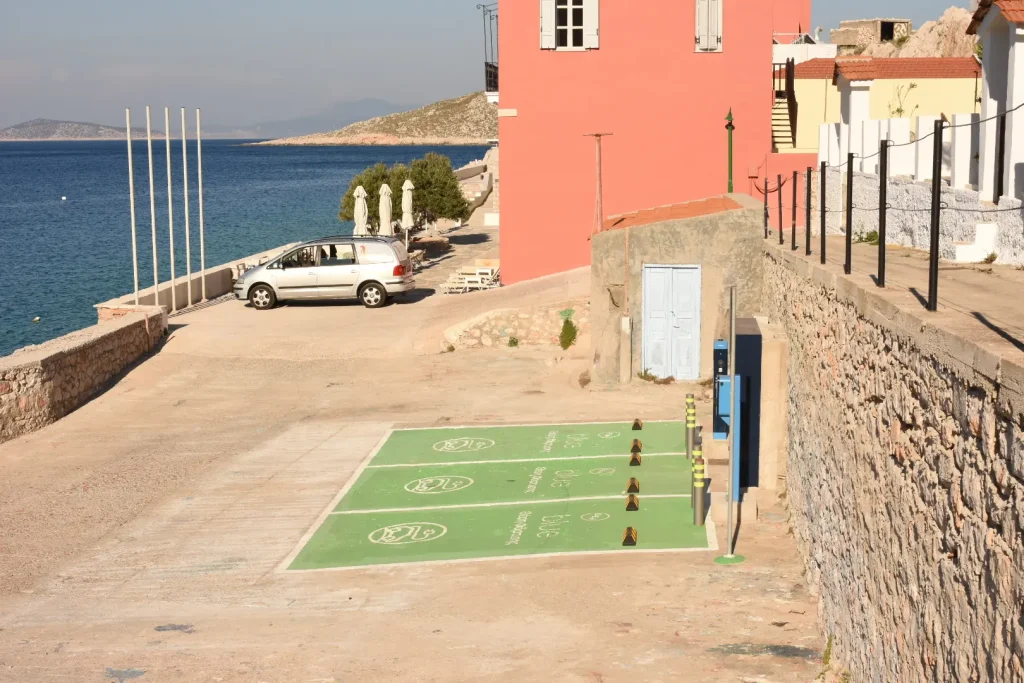
photo credit: ec.europa.eu
The plant consists of 2,246 photovoltaic modules, each with a nominal capacity of 445 Wp, and four inverters. It is connected to the 20 kV medium-voltage network and equipped with a remote monitoring and control system.
The island’s annual electricity demand was estimated at approximately 1,700 MWh. The plant’s capacity was selected based on this demand, enabling local photovoltaic generation to cover the annual electricity consumption included in the project.
The ChalkiON Energy Community currently reports annual clean electricity generation of approximately 1.8 GWh and 178 member-owners.
Residents are both producers and consumers
The project’s particular value lies in the fact that the photovoltaic plant is not operated solely as a commercial generating facility. It is owned and operated by the local ChalkiON Energy Community, which brings together residents, businesses and the municipality.
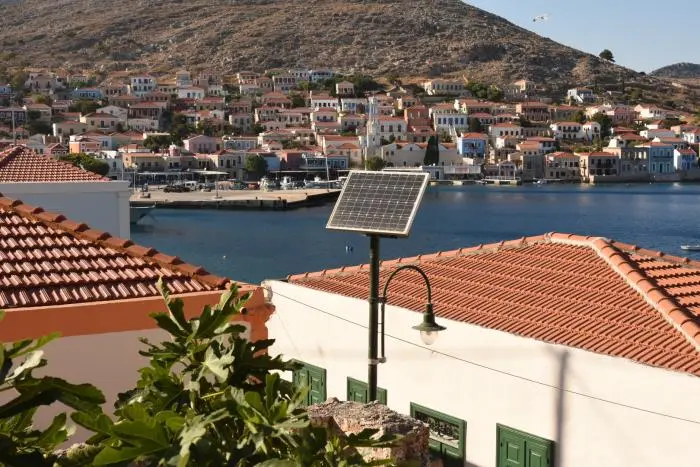
photo credit: ec.europa.eu
Through virtual net metering, electricity generated by the shared plant is allocated to community members and credited against their electricity bills. This allows residents to benefit from locally generated solar electricity without installing photovoltaic modules on their own roofs.
Each member has one vote, allowing the local community to participate in decisions concerning the organisation’s future development.
According to data published by the Clean Energy for EU Islands initiative, the project has enabled an average 55% reduction in electricity bills for participating residents, businesses and municipal facilities. Total annual savings are estimated at between €180,000 and €250,000.
By replacing part of the electricity generated from oil-based fuels in the Rhodes electricity system, the project is expected to reduce emissions by approximately 1,800 tonnes of CO₂ annually.
Electric cars and a solar-powered boat
Halki’s energy transformation has also been extended to transport. During the first phase, six electric vehicles were supplied for use by the municipality, police and coastguard. Four charging stations were installed at the port.
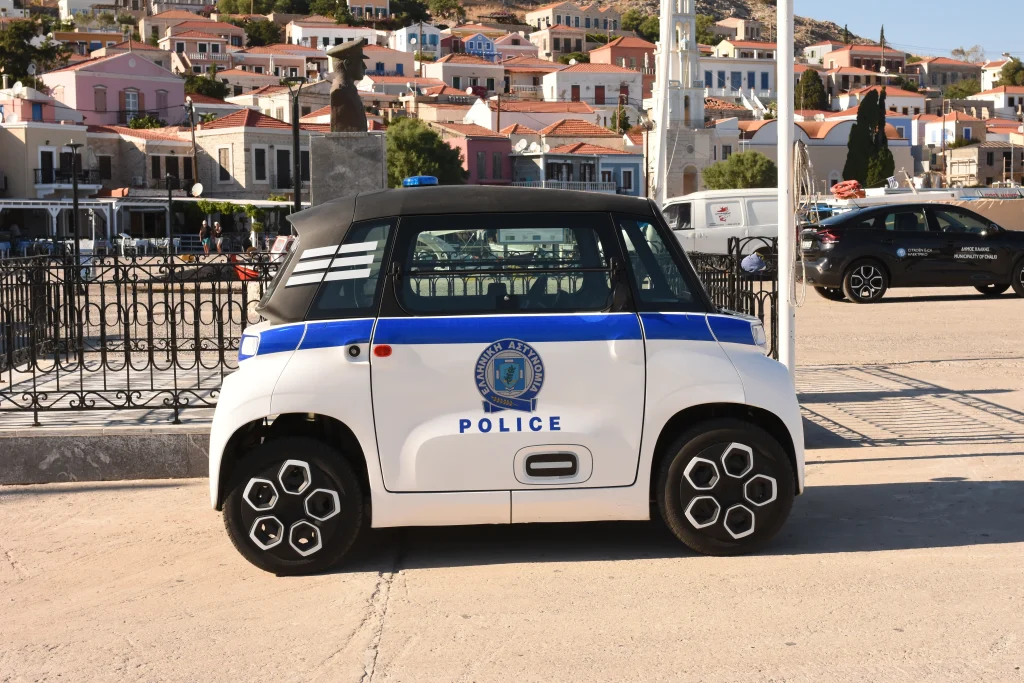
photo credit: ec.europa.eu
A particularly distinctive feature is an electric boat designed in accordance with traditional Greek shipbuilding architecture. The vessel is 10 metres long, can carry 12 passengers and has a maximum speed of eight knots.
It is powered by integrated photovoltaic modules and can also be charged directly from the electricity grid. Built by a family-owned shipyard on the island of Patmos, it is intended for local transport and tourist excursions around Halki.
The project has also introduced digital systems for monitoring municipal vehicles and their energy consumption. In this way, electrification is combined with improved management of the entire public vehicle fleet.
From smart lighting to telemedicine
Halki has used the energy project as a foundation for broader technological modernisation. Public lighting has been upgraded with energy-efficient luminaires and smart management systems, reducing consumption and improving operational control.
The island has also developed 5G and broadband telecommunications infrastructure, wireless internet access and digital services supporting distance learning and telemedicine. Educational programmes in science, technology, engineering and mathematics have also been planned for the island’s students.
Some of the island’s solar-powered stations provide free Wi-Fi and charging facilities for mobile phones and electric wheelchairs. This gives clean-energy infrastructure a direct practical and social function.
A model continuing to develop
The energy community is considering additional projects, including expanded photovoltaic capacity, small wind installations and an innovative district cooling network that would use seawater as an energy source. The objective is to extend the model to more residents and additional areas of local energy consumption.
Halki has also been selected as a pilot location in the European AQUAMAN project, which focuses on the sustainable management of water scarcity on Mediterranean islands and in coastal tourism destinations. The project brings together nine partners from six countries.
Halki demonstrates that the energy transition of a small community can extend far beyond the construction of a photovoltaic power plant. When residents participate as owners and beneficiaries, the advantages can be seen in lower electricity bills, cleaner transport, modern public services and stronger local economic development.
It is precisely this combination of solar energy, community ownership, electric mobility and digital infrastructure that has made Halki one of Europe’s most compelling models for the green transformation of small islands.
ECI