

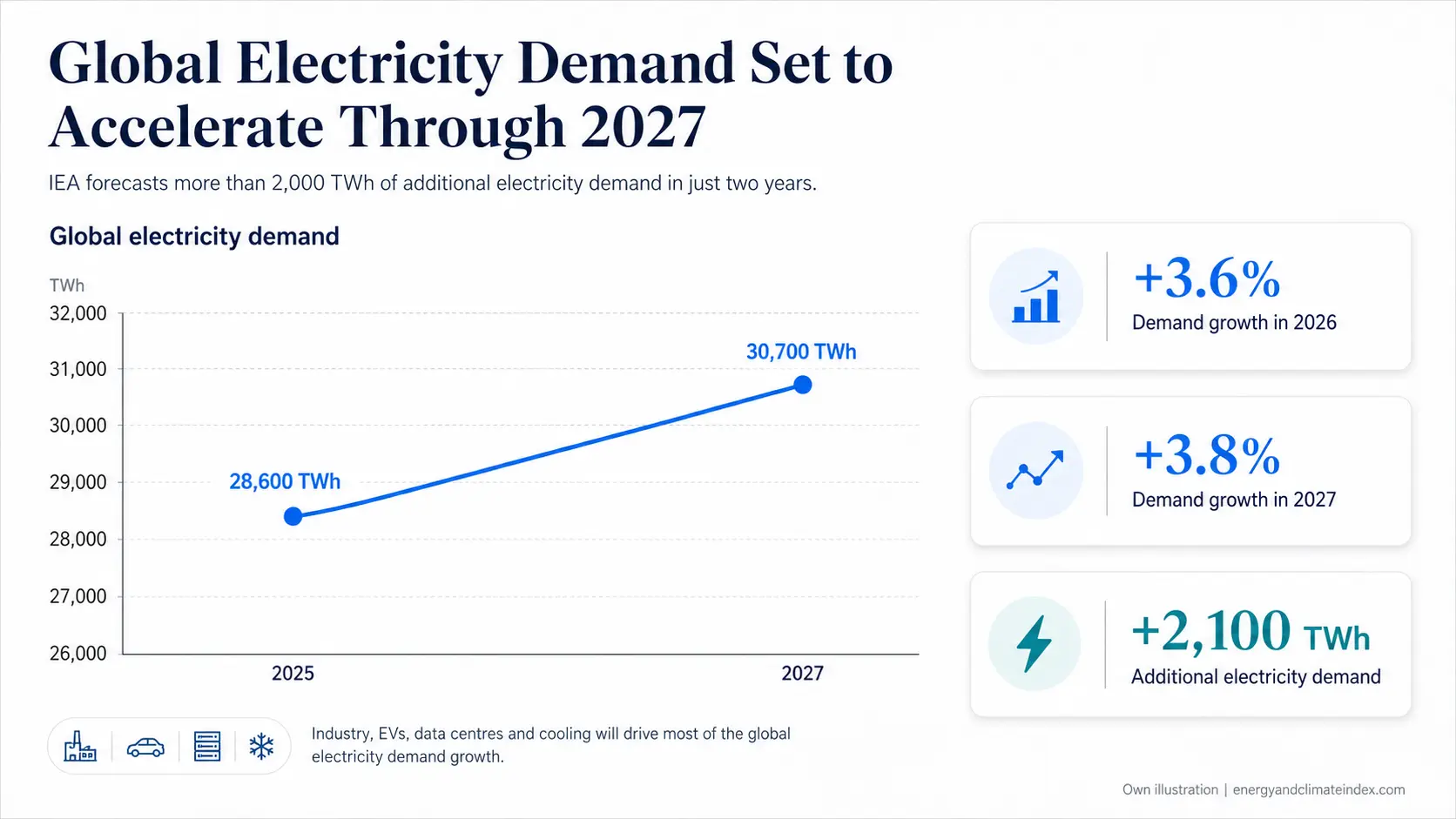
Global electricity demand is expected to continue growing at an accelerated pace over the next two years, driven by industry, transport electrification, data centres, air conditioning and digitalisation.
At the same time, renewable energy is set to become the world’s largest source of electricity generation for the first time, overtaking coal.
These are among the key findings of the latest report by the International Energy Agency (IEA), which says power systems are entering a new phase of transformation following recent geopolitical and market shocks.


Electricity demand to increase by more than 2,000 TWh in just two years
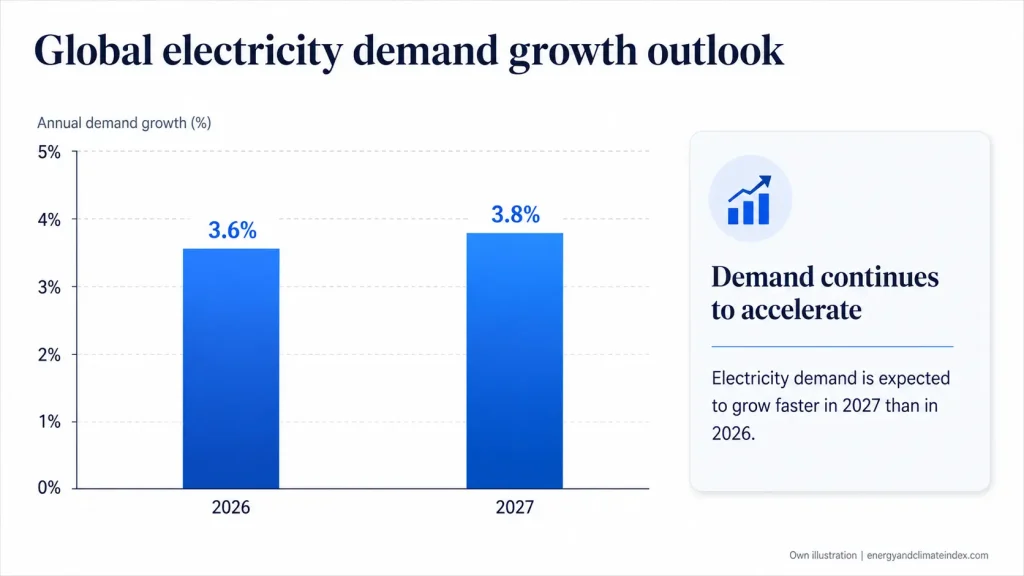
The IEA forecasts that global electricity demand will grow by 3.6% in 2026 and 3.8% in 2027.
As a result, worldwide electricity consumption is expected to reach around 30,700 TWh by 2027, compared with 28,600 TWh in 2025, representing an increase of more than 2,000 TWh in just two years.
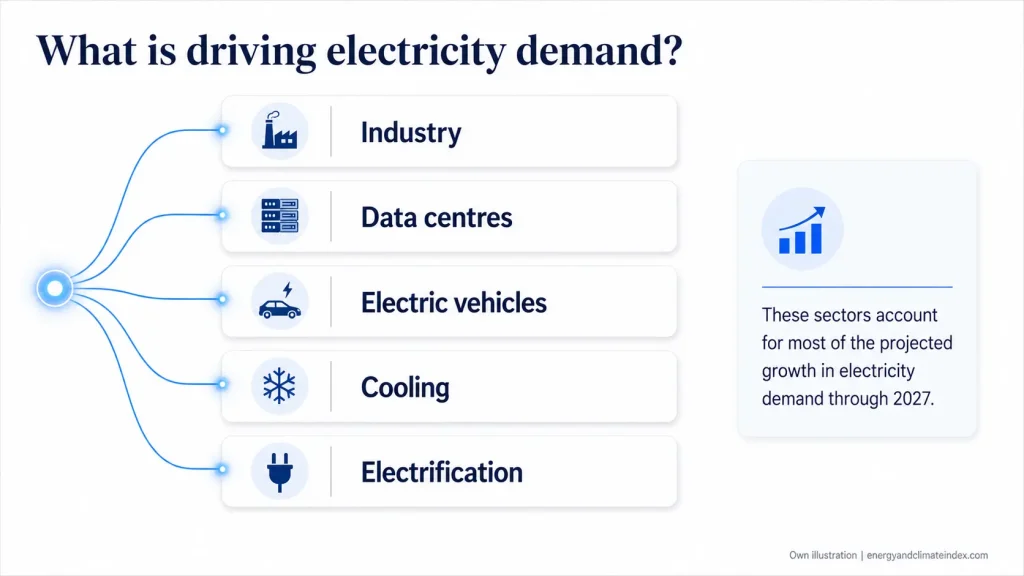
The main drivers of demand growth will be:
- Industry;
- Data centres;
- Electric vehicles;
- Air conditioning and cooling;
- The continued electrification of the economy.
Renewables to overtake coal for the first time
One of the report’s most significant projections is that 2026 will mark a historic milestone, with renewable energy becoming the world’s largest source of electricity generation.
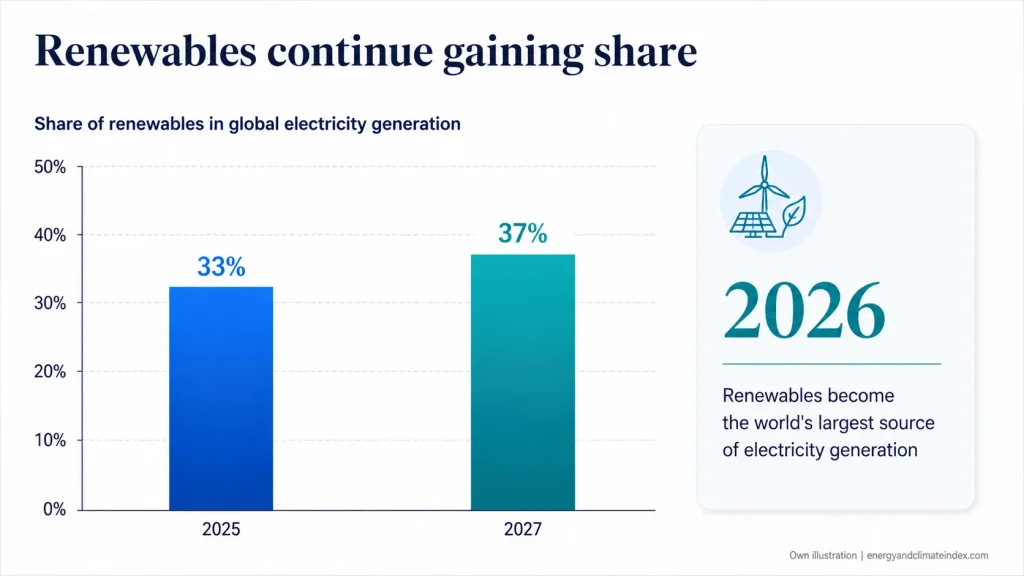
Renewable electricity generation is expected to grow by more than 8% in 2026, while its share of global electricity generation will increase from 33% in 2025 to around 37% by 2027.
Solar remains the fastest-growing power source
The IEA expects solar power to remain the main driver of electricity generation growth.
Solar generation is projected to increase by around 600 TWh in 2026, matching the record expansion achieved in 2025.
This will allow solar power to overtake wind and become the second-largest renewable source of electricity worldwide, behind only hydropower.
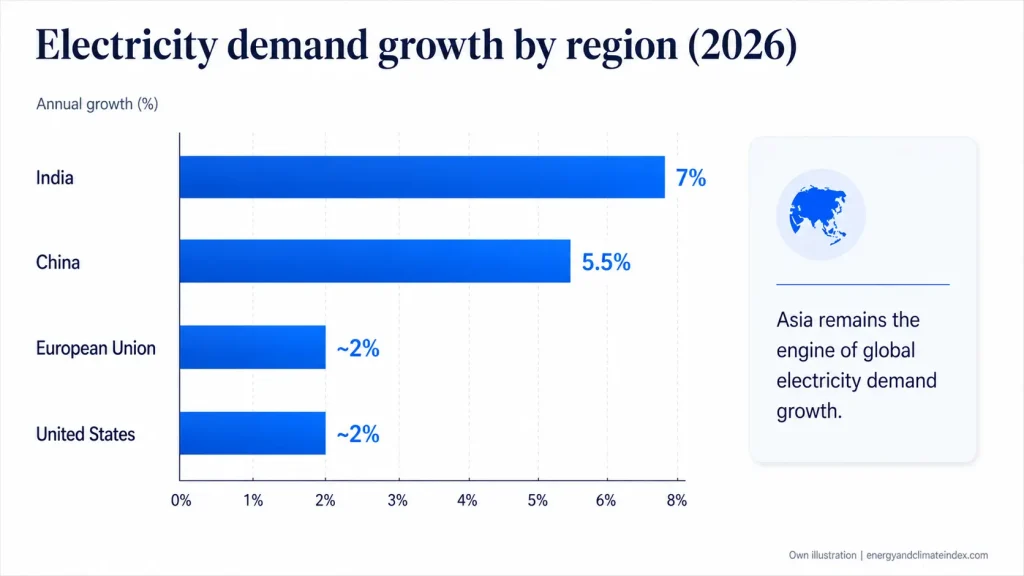
China and India continue to lead demand growth
Asia will once again account for the strongest increase in electricity demand led by India and China.
Geopolitical tensions continue to influence electricity markets
The agency warns that disruptions in the global LNG market caused by the conflict in the Middle East have once again increased pressure on electricity markets.
During the second quarter of this year, average spot electricity prices in the European Union and Japan were more than 30% higher than during the same period last year.
At the same time, elevated natural gas prices have led to a temporary increase in coal-fired electricity generation in parts of Europe and Asia.
Batteries and system flexibility become increasingly important
As solar and wind power continue to expand, the IEA stresses that electricity systems will need substantially greater flexibility.
According to the agency, the increasing occurrence of negative electricity prices will require greater deployment of:
- Battery energy storage systems;
- Demand response;
- More flexible electricity grid management.
Power-sector emissions expected to stabilise
Although CO₂ emissions from the power sector are projected to increase by around 1% in 2026, the IEA expects them to stabilise in 2027, supported by the continued expansion of renewable energy and nuclear power.
ECI