

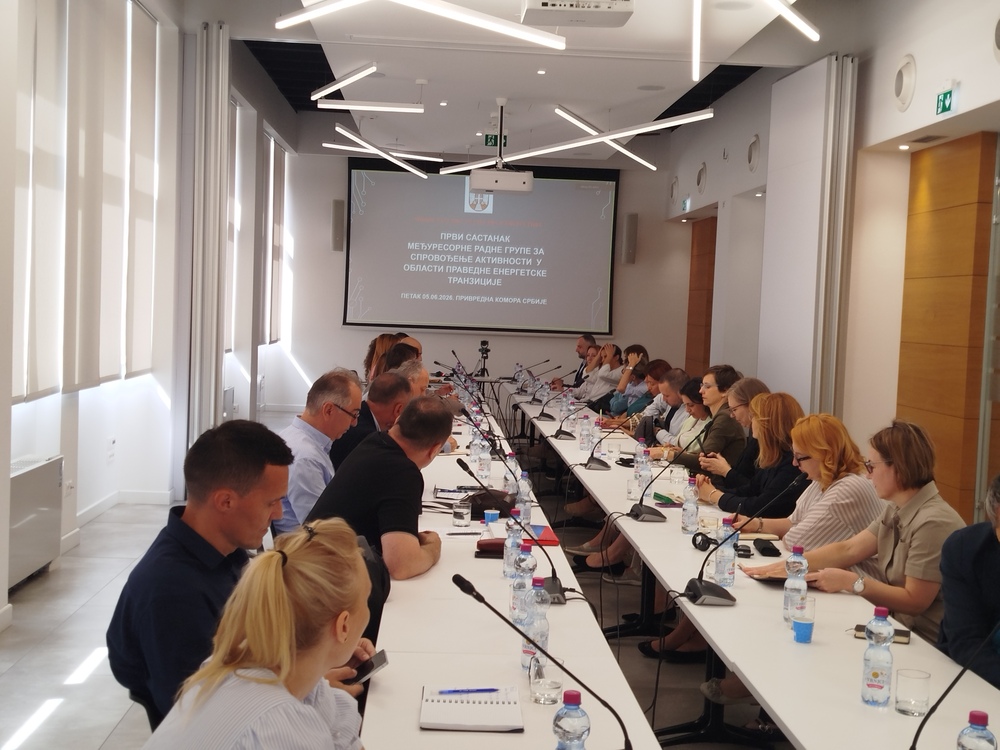
Serbia is opening one of the most sensitive issues in the energy transition. This is no longer only about new power plants, more renewable energy or grid modernization. Instead, the focus is now shifting to workers, mining regions and local communities that depend on coal.
The first meeting of the Interministerial Working Group for the implementation of activities in the field of just energy transition was held at the Chamber of Commerce and Industry of Serbia. The working group should support the preparation and coordination of measures that will follow the gradual transformation of the energy sector.
The transition must not create new losers
Just energy transition is especially important for the countries of the Western Balkans. The reason is clear. Coal still plays an important role in electricity generation. At the same time, it remains important for local economies.


Therefore, the process cannot be reduced only to the closure of old capacities. New jobs, retraining programmes, investments and clear plans are needed for the regions that will be most affected.
In addition, the state must involve municipalities, public companies and trade unions on time. Without such an approach, the transition could create resistance and slow down the entire process.
Serbia enters a more difficult phase of energy policy
In recent years, Serbia has announced several major energy projects. These include new renewable energy capacities, a gas-fired power plant, pumped-storage hydropower plants and grid investments.
However, just transition is a more complex issue. It is not measured only in megawatts and investments. On the contrary, it is also measured by whether workers will receive a new perspective and whether regions will get a new economic model.
That is why the creation of the working group is an important step. Still, the real test is yet to come. Serbia will need to show whether this process will deliver concrete programmes, deadlines and financial mechanisms.
The Western Balkans must open the same issue
This issue is not important only for Serbia. Other countries in the region face similar challenges.
Therefore, just transition should become a central topic in regional energy policy. Without a social plan, the energy transition will be more difficult, more expensive and more politically sensitive.
In the end, the question is not only when the use of coal will decline. The main question is what will happen to the people and regions that have depended on it for decades.
Editorial Office