

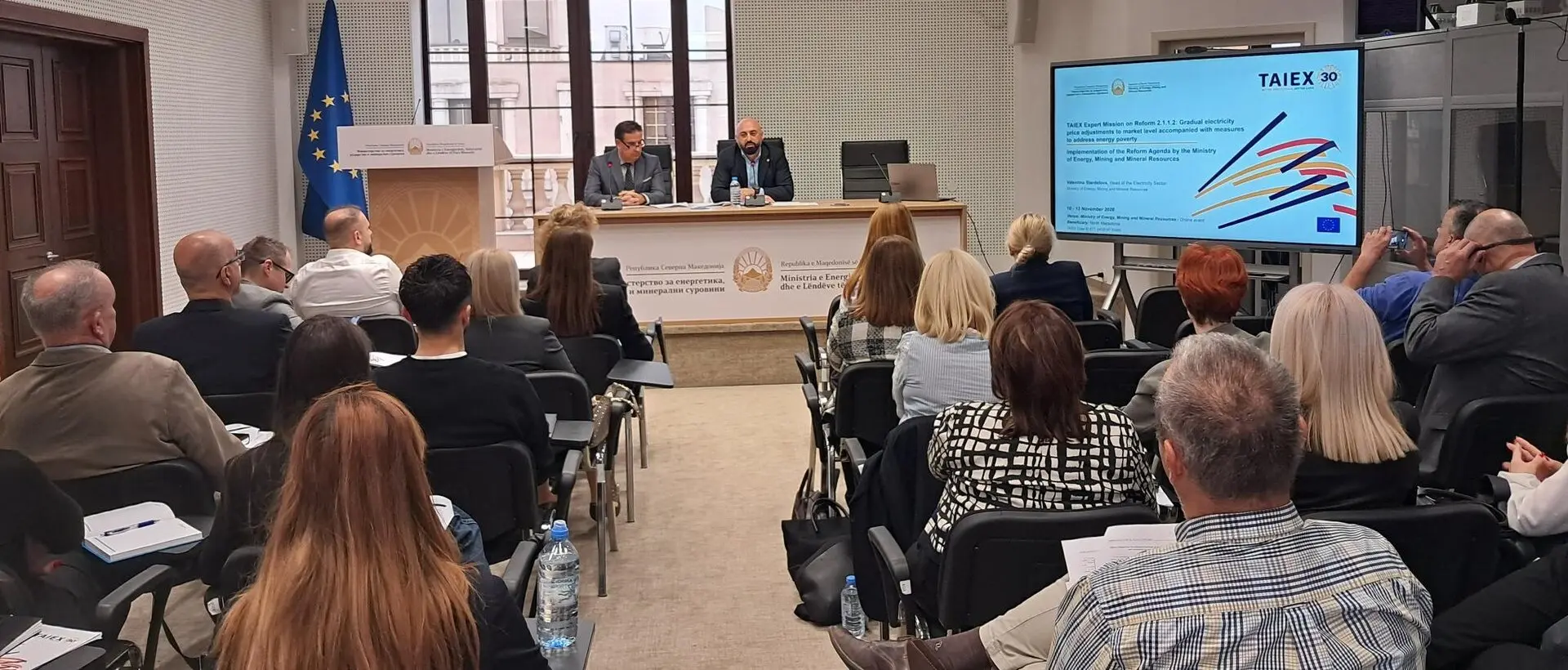
A four-day expert mission supported by the European Commission focuses on protecting vulnerable consumers, electricity block tariffs and implementing the Reform Agenda 2024–2027.
North Macedonia’s Ministry of Energy, Mining and Mineral Resources, in cooperation with the European Commission, launched an expert mission on 10 November focusing on energy poverty and electricity market reforms. The mission is being conducted through the EU’s Technical Assistance and Information Exchange instrument (TAIEX) and will continue until 13 November 2026.
The central focus is the implementation of reform measure 2.1.1.2 under the Reform Agenda 2024–2027, which envisages the gradual adjustment of electricity prices towards market levels, alongside the introduction and improvement of measures to address energy poverty.


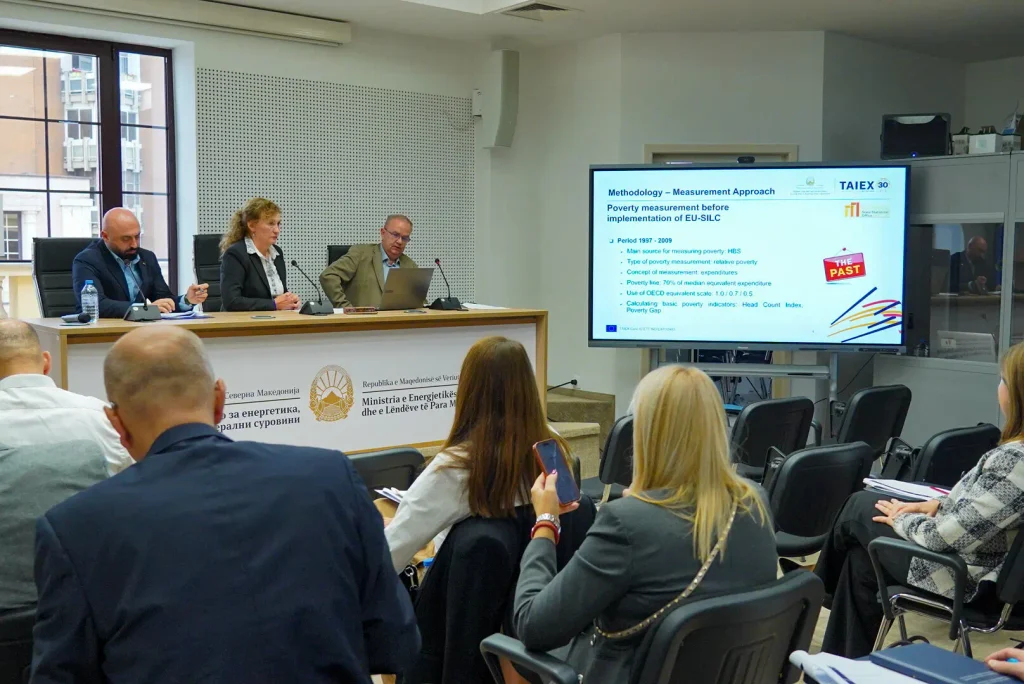
Market-based electricity prices and consumer protection
One of the key aspects of the expert mission is the assessment of the existing regulatory framework for retail electricity prices and the application of block tariffs as a mechanism for protecting households.
Discussions will examine European experience in electricity price regulation, as well as different approaches to protecting households and microenterprises in the electricity market.
The gradual alignment of electricity prices with market levels is among North Macedonia’s reform commitments. However, its implementation is expected to be accompanied by appropriate social protection mechanisms for consumers most exposed to energy poverty.
The Ministry’s official announcement does not specify a timetable for electricity price adjustments or announce any immediate increase in household electricity tariffs.
Developing a methodology to measure energy poverty
According to the Ministry, North Macedonia has already made progress in establishing an institutional framework to address energy poverty.
Relevant definitions have been incorporated into national legislation, a methodology for measuring energy poverty has been adopted, and annual programmes to protect vulnerable electricity consumers are being implemented.
During the mission, representatives of the Ministry of Energy, the Ministry of Social Policy, Demography and Youth, the Energy Regulatory Commission and the State Statistical Office will present progress in fulfilling the country’s reform commitments.
Particular attention will be given to linking social protection measures with energy efficiency programmes as a long-term approach to reducing energy costs for vulnerable households.
Sharing experience from Greece and Bulgaria
The expert mission also involves representatives of Greece’s Regulatory Authority for Waste, Energy and Water (RAAEY) and Bulgaria’s Ministry of Energy, who will share their national experience in protecting vulnerable consumers.
Discussions will cover short- and long-term financial support mechanisms, energy efficiency measures and the establishment of observatories to monitor energy poverty.
European approaches to consumer protection under the Citizens Energy Package will also be examined, alongside market-based instruments aimed at improving energy efficiency.
Balancing electricity market reforms with social protection
The expert mission raises an important question for the future development of North Macedonia’s electricity market: how to gradually align electricity prices with market levels without increasing energy poverty.
From an energy policy perspective, a key consideration will be whether existing support mechanisms can be improved to ensure that assistance is more effectively targeted towards households most in need.
The outcomes of the four-day mission are expected to contribute to strengthening consumer protection mechanisms and advancing North Macedonia’s commitments under the EU Reform Agenda.
ECI