

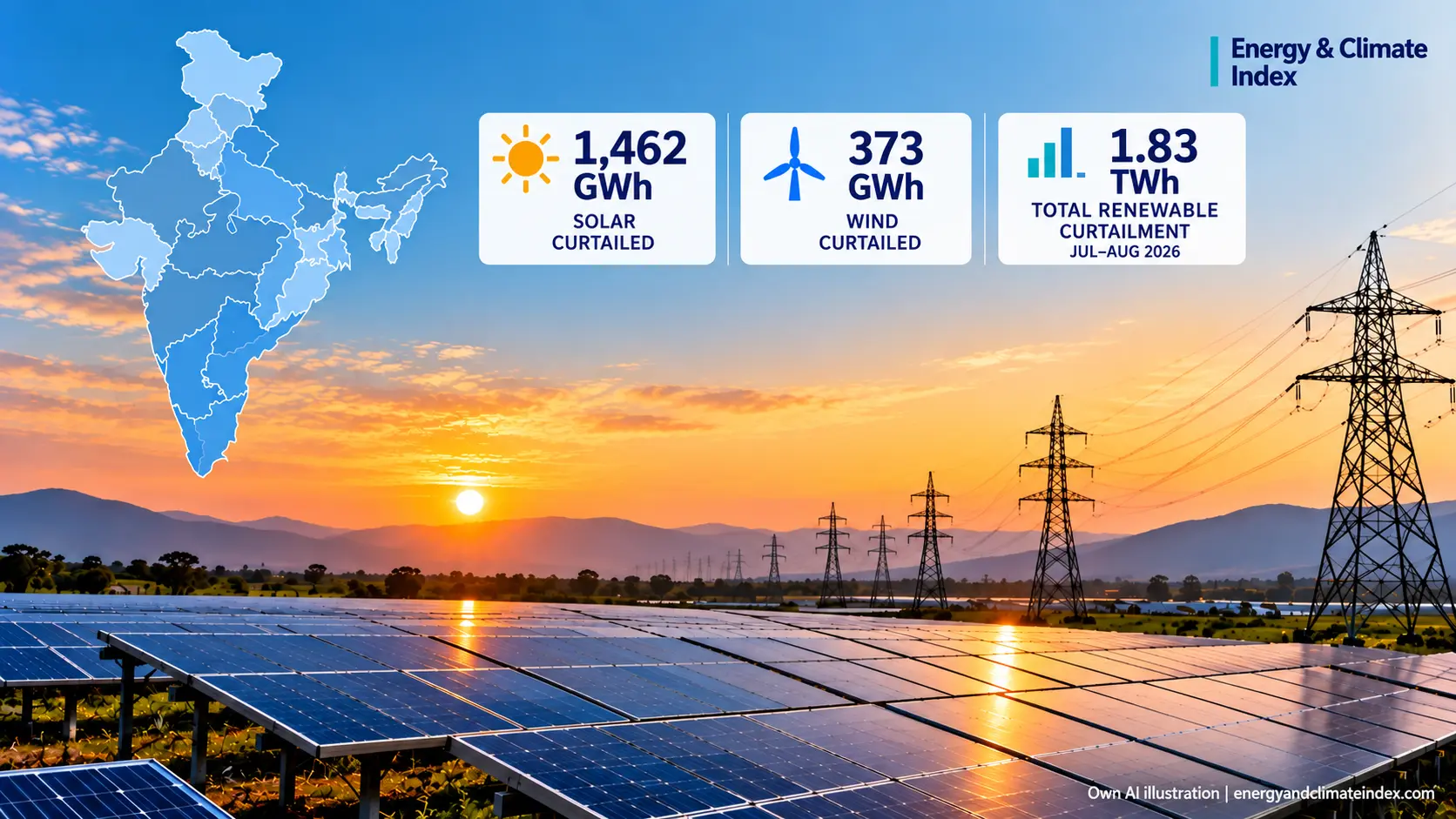
India curtailed 1,835 GWh of renewable electricity generation in July and August 2026, according to the latest quarterly report by the Centre for Research on Energy and Clean Air (CREA), published on 12 October. Most of the curtailment affected solar power plants, amid rapid growth in renewable electricity generation and limited capacity to integrate additional output into the power system.
Of the total curtailed generation, 1,462 GWh came from solar power plants and 373 GWh from wind farms. These restrictions highlight the challenges of aligning new generation capacity with available transmission infrastructure and power system flexibility.
The report shows that solar electricity generation increased by 39% in the third quarter compared with the same period a year earlier, while peak electricity demand reached approximately 270 GW.


Solar power plants account for the largest share of curtailment
Solar power plants accounted for nearly 80% of total renewable electricity curtailment in July and August, with the remainder attributed to wind farms.
Curtailment occurs when available electricity cannot be fully absorbed or delivered by the power system. Possible causes include limited transmission capacity, operational requirements to maintain grid stability, and insufficient flexibility to balance electricity generation and consumption.
In such situations, system operators may instruct power plants to temporarily reduce output, even when weather conditions would allow higher electricity generation.
Curtailment directly affects the utilisation of renewable energy assets and their revenues. Its economic impact depends on power purchase agreements, market conditions and compensation arrangements for curtailed generation.
The growth of solar electricity generation in India is also increasing the need for transmission infrastructure capable of transporting electricity from regions with high concentrations of renewable energy capacity to major demand centres.
Battery storage capacity reaches 9.1 GWh
According to data presented in the quarterly report, operational battery energy storage systems in India have reached approximately 9.1 GWh of storage capacity.
Battery systems allow electricity to be stored during periods of high renewable generation and delivered when demand increases. Their integration can help reduce renewable energy curtailment and improve the utilisation of existing electricity infrastructure.
However, their ability to reduce curtailment also depends on the location of battery installations, their power ratings, storage capacity and grid connection conditions.
Alongside investments in battery storage, India continues to develop its transmission infrastructure and new power system management mechanisms to support the integration of additional renewable generation capacity.
Renewable energy growth increases pressure on the grid
India is among the world’s largest markets for new solar and wind power installations. The rapid expansion of installed capacity is changing the electricity generation mix and increasing the need for power system flexibility.
Daily fluctuations in solar electricity generation are particularly significant, as large volumes of electricity become available within relatively short periods.
Under these conditions, the availability of transmission infrastructure, battery storage and other flexible resources plays an important role in determining how much renewable electricity can be absorbed by the power system.
The July and August figures show that, despite substantial growth in solar and wind electricity generation, part of the available renewable energy potential remains unused because of operational and infrastructure constraints.
The continued development of India’s electricity system includes parallel investments in new generation capacity, transmission infrastructure and energy storage, aimed at enabling a greater share of renewable energy in total electricity generation.