

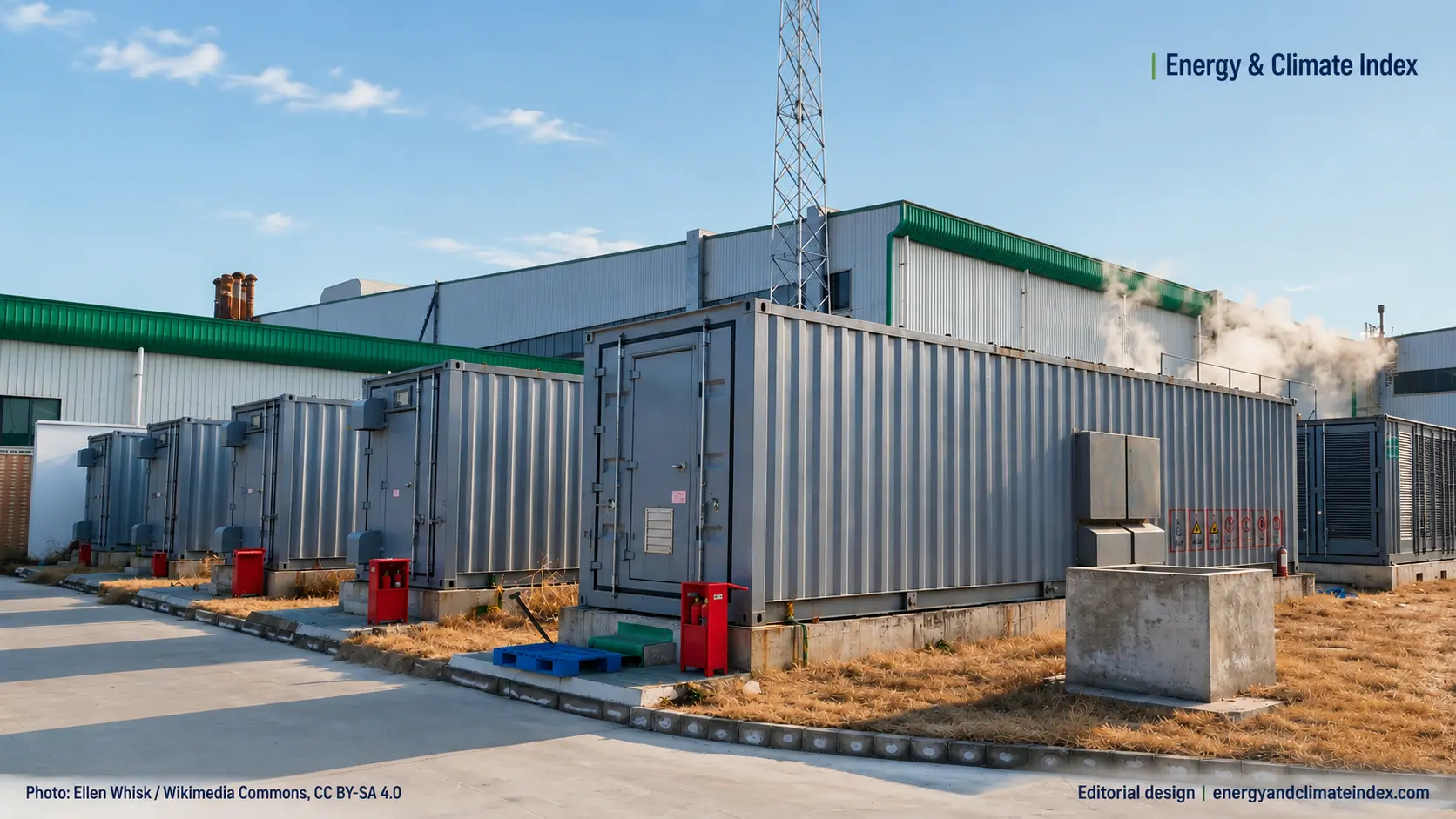
The rapid expansion of battery storage capacity is beginning to visibly change the way Australia’s electricity system operates. Batteries are increasingly taking over the role traditionally played by gas-fired power plants during the most critical part of the day, the evening hours, when solar generation falls sharply while electricity demand remains high.
The latest data from Western Australia show how quickly this shift is taking place. An analysis of market data for the period from 10 to 21 August shows that, in individual 30-minute intervals, batteries regularly supplied more than 20% of electricity generation during the evening hours, with their share approaching 30% in some periods.
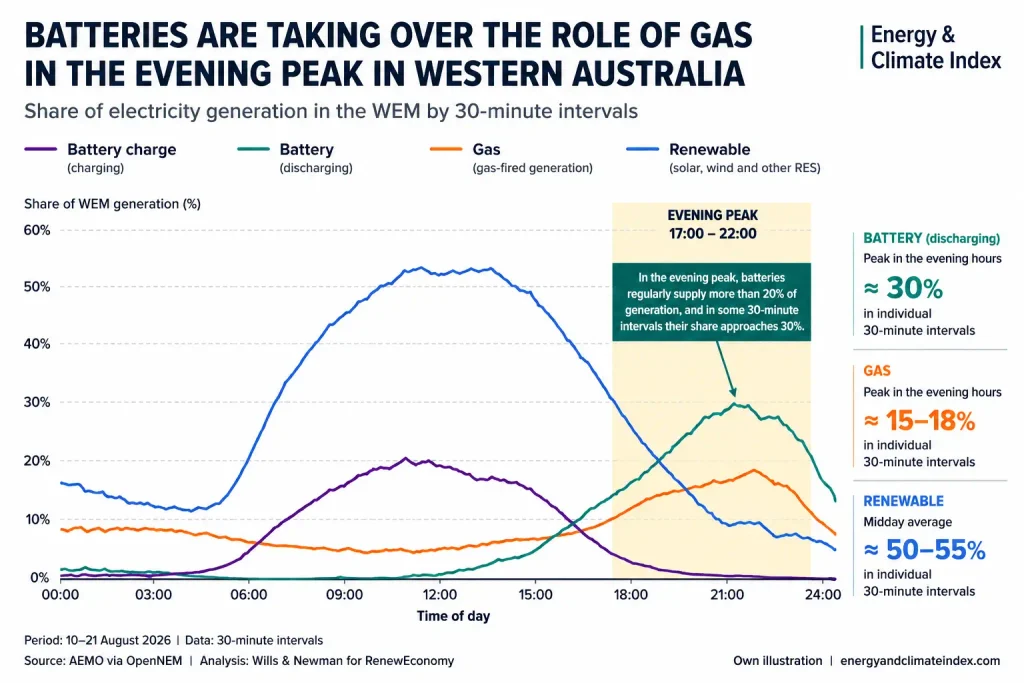
This is no longer a marginal role in the electricity system. Batteries are becoming a significant source of electricity precisely during the hours when gas-fired power plants have traditionally had their greatest market value.


Solar during the day, batteries in the evening
The emerging pattern is relatively straightforward. During the day, high generation from solar power plants creates conditions for batteries to charge, while the stored electricity is then returned to the system in the late afternoon and evening hours.
This reduces the share of demand that would otherwise need to be met by flexible gas-fired power plants.
This is not merely a conclusion drawn from short-term August data. The Australian Energy Market Operator (AEMO) has already identified a structural change in the way the market operates.
In Western Australia, average battery discharge in the first quarter of 2026 was 305% higher than a year earlier. Batteries were mainly charged during the day and discharged electricity during the evening peak.
In the past year alone, more than 1,000 MW of battery capacity was added to Western Australia’s electricity system. AEMO considers batteries to already play a critical role, with their capacity theoretically capable of meeting almost half of a typical daily peak in electricity demand.
Batteries are already influencing prices
The shift is even more visible in the National Electricity Market (NEM), which covers eastern and southern Australia.
In the first quarter of 2026, batteries more than tripled the amount of electricity shifted from daytime to evening hours and delivered 1,115 MW during the evening peak. Over the preceding 12 months, 4,445 MW of new battery capacity was added, more than doubling total installed capacity.
But perhaps the most important indicator is their influence on price formation.
According to AEMO, batteries were the technology most frequently setting market prices in the first quarter, doing so in around 32% of NEM trading intervals.
At the same time, the market operator found that increased battery discharge during the evening hours reduced reliance on gas-fired generation and hydropower and contributed to lower wholesale electricity prices.
The economic role of gas is changing
This is where the broader question about the future of new gas-fired power plants emerges.
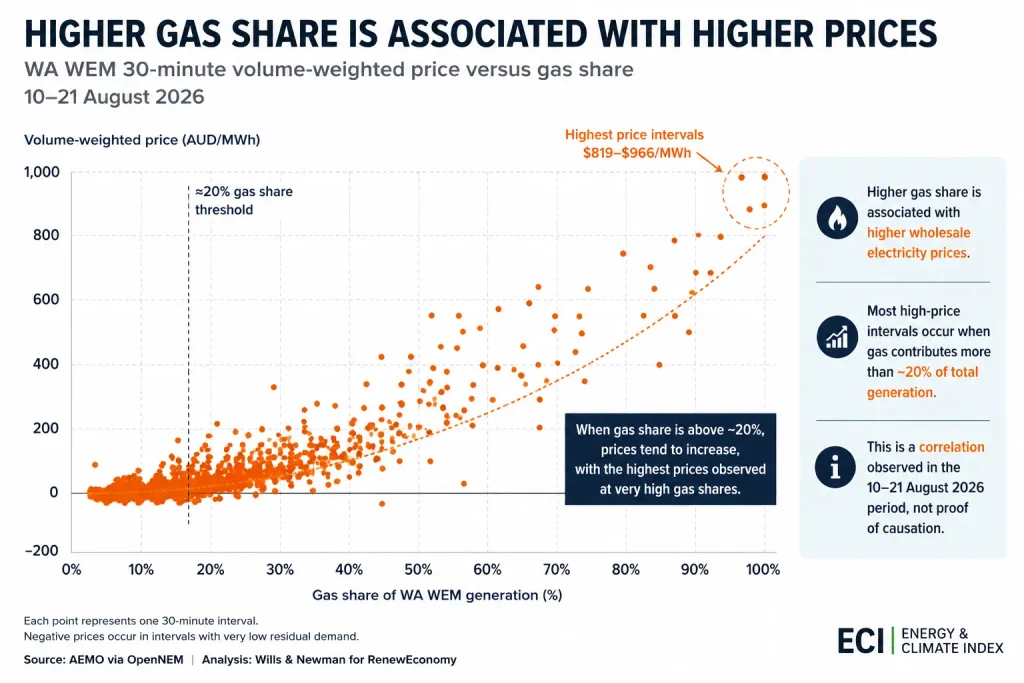
Gas-fired power plants have traditionally been valuable because of their ability to rapidly increase generation when the system needs additional electricity. Batteries, however, can respond even faster and deliver previously stored electricity precisely during periods of high demand and high prices.
As more battery capacity enters the system, less room remains for gas-fired power plants during these hours.
This does not mean that gas is disappearing from the electricity system. Its role is gradually changing, from a technology regularly used to cover the evening peak to a backup source needed during longer periods of low renewable generation or other critical conditions in the system.
AEMO itself, in its 2026 Integrated System Plan, projects that the lowest-cost pathway to a reliable electricity system through to 2050 is a combination of renewable energy, transmission infrastructure and storage, with gas providing backup support.
Western Australia is becoming an important test case for the electricity system of the future
This development is particularly significant because Western Australia’s electricity system is isolated and cannot rely on interstate imports when domestic generation is insufficient.
At the same time, rooftop solar capacity is expected to almost double, from around 3,100 MW in 2026/27 to approximately 6,000 MW in 2035/36. According to AEMO’s forecast, distributed battery capacity is expected to increase from around 550 MW to approximately 2,300 MW over the same period.
Australia is therefore becoming one of the most interesting real-world examples of the next phase of the energy transition.
The question is no longer simply how much renewable electricity can be generated. Increasingly, what matters is when that electricity can be delivered.
And by shifting low-cost daytime electricity into the evening peak, batteries are beginning to move directly into a part of the electricity market that for decades was largely reserved for gas-fired power plants.
ECI